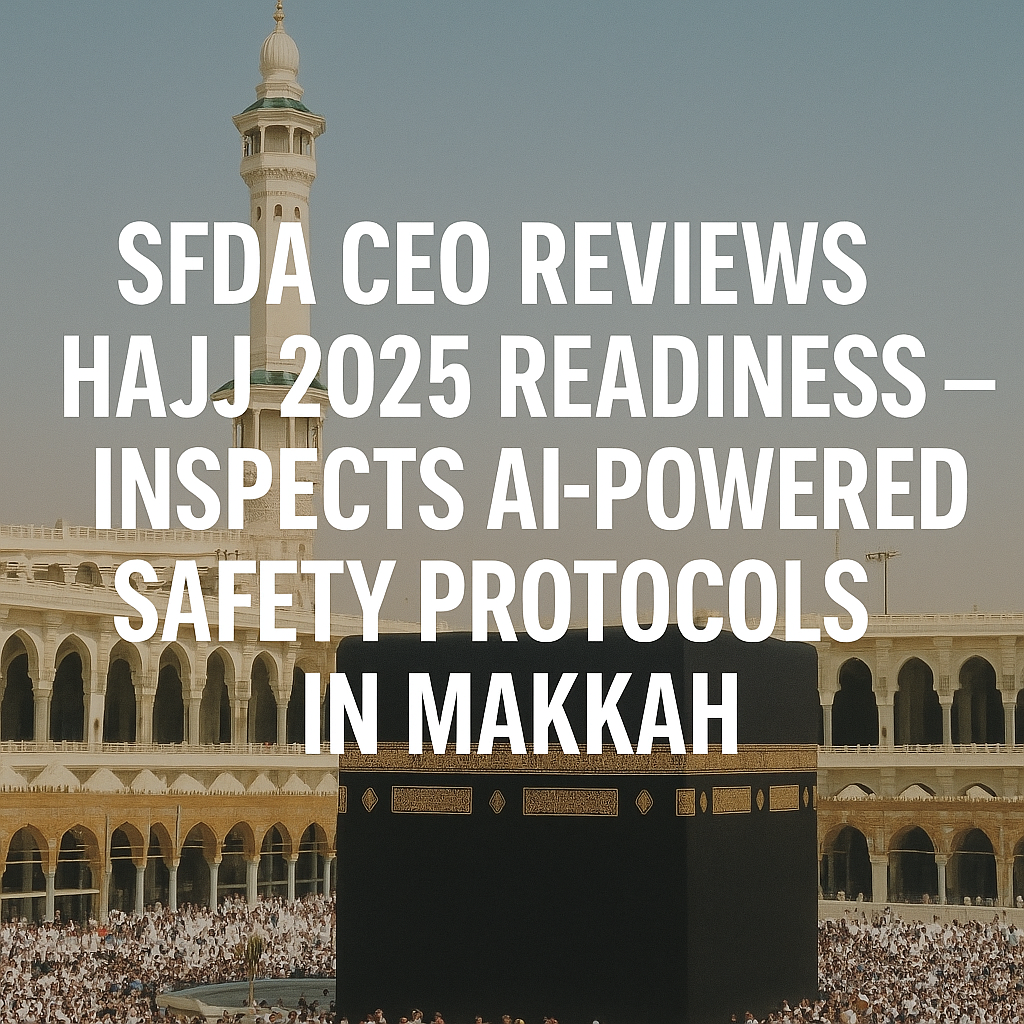
SFDA CEO Reviews Hajj 2025 Readiness — Inspects AI-Powered Safety Protocols in Makkah
News Report | Makkah | Special Correspondent
Dr. Hisham S. Aljadhey, Chief Executive Officer of the Saudi Food and Drug Authority (SFDA), has conducted a comprehensive inspection of the operational readiness for Hajj 2025 in the holy city of Makkah. His visit focused on evaluating the implementation of modern technology, especially AI-powered safety and quality protocols, to ensure the health and safety of millions of pilgrims expected this year.
🔹 AI Technology Boosts Real-Time Monitoring
As part of Saudi Arabia’s commitment to a safe and seamless pilgrimage experience, the SFDA has deployed advanced artificial intelligence systems to monitor the quality of food and pharmaceutical products. These systems provide real-time surveillance of factories, warehouses, and distribution networks to ensure that all consumables meet the highest health standards before reaching pilgrims.
🔹 Visit to Hajj Operations Center in Makkah
Dr. Aljadhey visited the SFDA Hajj Operations Center, where he reviewed inspection operations and digital systems in place to manage the massive logistics of the pilgrimage. The center is equipped with smart analytical tools and digital regulatory technologies, supporting field teams in identifying violations, tracking risks, and maintaining a seamless response system during the Hajj season.
🔹 Collaboration with Public Health Agencies
During his visit, Dr. Aljadhey met with key officials from the Public Health Authority (Weqaya) and the National Health Emergency and Crisis Management Center. These meetings emphasized the importance of inter-agency coordination, aiming to strengthen public health measures, prepare for emergencies, and maintain overall safety for the millions of pilgrims expected during Hajj.
🔹 Smart Surveillance and Emergency Readiness
To further enhance safety, the SFDA is utilizing drones and AI tools to monitor crowds, detect anomalies, and respond swiftly to emergencies. Field inspectors are equipped with body-worn cameras to document inspections and ensure transparency. The real-time monitoring capabilities of these systems allow authorities to act quickly in case of food poisoning, crowd congestion, or any unexpected incidents.


Discover more from NewsNation Online
Subscribe to get the latest posts sent to your email.
आपके लिए सुझाव