
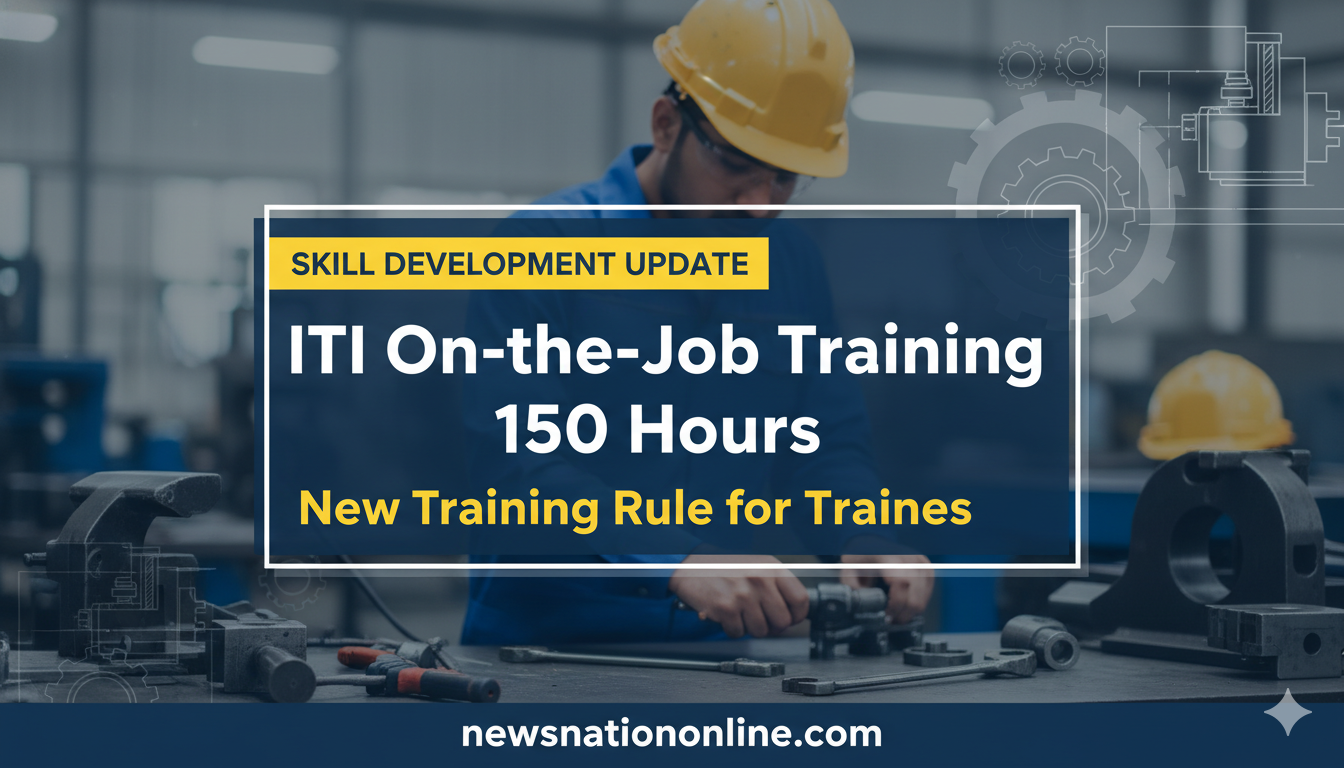
The Government of India has introduced a mandatory requirement of 150 hours of on-the-job training (OJT) for Industrial Training Institute (ITI) trainees under the Craftsmen Training Scheme (CTS). This significant policy move is aimed at strengthening industry-relevant skill development, practical learning, and employability among technical trainees across the country.
Under this updated framework, ITI students enrolled in various trades will now be required to undergo structured on-the-job training within real industrial environments. The initiative is designed to ensure that trainees gain hands-on exposure, real workplace experience, and industry-standard technical knowledge during their training period.
This reform aligns with India’s broader mission of enhancing vocational education, bridging the gap between skill training and employment opportunities, and strengthening the nation’s skilled workforce.
What Is the Craftsmen Training Scheme (CTS)?
The Craftsmen Training Scheme (CTS) is one of India’s most prominent vocational training programs implemented under the Directorate General of Training (DGT) within the Ministry of Skill Development and Entrepreneurship.
The scheme operates through Industrial Training Institutes (ITIs) across the country and provides training in numerous technical trades.
Key Objectives of the Craftsmen Training Scheme
The primary goals of CTS include:
- Developing skilled technical manpower
- Providing industry-relevant vocational education
- Promoting practical and technical expertise
- Improving employability among youth
Through structured training programs, ITI institutes aim to equip students with job-ready skills required in sectors such as manufacturing, electrical engineering, automobile technology, construction, welding, and electronics.
Mandatory 150 Hours On-the-Job Training: A Major Reform in ITI Education
The newly announced policy mandates that all ITI trainees must complete a minimum of 150 hours of on-the-job training during their course duration.
This training will be conducted directly within industrial workplaces, factories, workshops, or technical service environments where students can apply their theoretical knowledge to real-world scenarios.
Key Highlights of the Policy
- 150 hours of compulsory on-the-job training
- Training conducted in recognized industrial establishments
- Focus on practical workplace learning
- Integration with existing ITI curriculum
- Applicable under the Craftsmen Training Scheme
This reform represents a shift toward experiential learning in vocational education, ensuring trainees acquire the technical competencies demanded by modern industries.
Why On-the-Job Training Is Essential for ITI Students
On-the-job training provides trainees with practical exposure that classroom learning alone cannot deliver.
Many technical trades require students to develop hands-on skills, equipment handling experience, and real-time problem-solving abilities.
Benefits of On-the-Job Training for ITI Trainees
The introduction of mandatory OJT offers several advantages:
- Exposure to real industrial environments
- Understanding of workplace safety practices
- Improved technical proficiency
- Direct interaction with experienced professionals
- Enhanced employability prospects
Through industry engagement, students learn how to operate machinery, follow production processes, troubleshoot equipment issues, and meet professional standards expected by employers.
Industries That Will Participate in ITI On-the-Job Training
The success of the 150-hour on-the-job training requirement depends heavily on collaboration between training institutes and industry partners.
Various industries are expected to host ITI trainees for their practical training modules.
Key Industry Sectors for OJT
Industries likely to participate include:
- Manufacturing industries
- Automobile and automotive component sectors
- Electrical equipment manufacturing
- Construction and infrastructure
- Renewable energy sector
- Electronics and semiconductor industries
- Machine tool and fabrication workshops
These sectors offer trainees exposure to advanced machinery, modern production techniques, and contemporary industrial workflows.
Implementation Strategy for the On-the-Job Training Requirement
To implement the mandatory 150 hours of OJT, ITIs will establish partnerships with industries through formal agreements and training collaborations.
Institutes will coordinate with local businesses and industrial clusters to ensure placement opportunities for trainees within appropriate workplaces.
Key Implementation Components
- Industry partnerships and agreements
- Structured training schedules
- Monitoring and evaluation systems
- Certification after completion
Training institutes will track trainee performance through progress reports, skill assessments, and supervisor feedback from industry mentors.
Impact on Skill Development in India
The introduction of mandatory on-the-job training for ITI students represents a major step toward transforming India’s vocational education ecosystem.
This initiative supports the government’s broader goals of Skill India Mission, Make in India, and Atmanirbhar Bharat by strengthening the supply of skilled technical workers.
Expected Outcomes
The policy is expected to deliver multiple benefits:
- Improved workforce readiness
- Better alignment between education and industry needs
- Reduced skill gaps in technical sectors
- Higher employment rates among ITI graduates
By emphasizing practical experience, the training system can produce technicians who are immediately productive in industrial environments.
Role of Industry in Strengthening Vocational Education
Industry participation plays a critical role in ensuring the success of the on-the-job training initiative.
Employers benefit by gaining access to trained talent pipelines, while trainees benefit from real-world exposure and potential employment opportunities.
Companies participating in the program can:
- Identify promising trainees for recruitment
- Provide mentorship and guidance
- Contribute to national skill development goals
Such collaboration creates a mutually beneficial ecosystem between education institutions and industry stakeholders.
How ITI Trainees Will Be Assessed During Training
Evaluation during the 150-hour OJT period will focus on measuring the trainee’s ability to apply theoretical knowledge in practical situations.
Assessment Parameters
Supervisors may assess trainees based on:
- Technical skill application
- Problem-solving ability
- Workplace discipline
- Team collaboration
- Safety compliance
Trainees who successfully complete the program will receive certification acknowledging their practical industry training experience.
Long-Term Benefits for ITI Graduates
For ITI students, completing on-the-job training significantly improves career readiness and professional confidence.
Career Advantages
Graduates with industrial experience often secure:
- Higher job placement rates
- Better starting salaries
- Opportunities for specialized roles
- Faster career growth
Employers prefer candidates who demonstrate both technical knowledge and practical workplace experience.
Strengthening India’s Skilled Workforce Through Practical Training
The decision to introduce mandatory 150 hours of on-the-job training for ITI trainees under the Craftsmen Training Scheme represents a strategic step toward strengthening India’s skill ecosystem.
By integrating classroom education with real industrial experience, the government aims to create a generation of highly skilled technicians capable of supporting India’s industrial growth.
This reform ensures that vocational training is no longer limited to theoretical instruction but instead evolves into industry-driven skill development that meets the needs of modern technology-driven workplaces.
As the program rolls out nationwide, it is expected to play a crucial role in building a more competitive, productive, and future-ready workforce for India’s expanding economy.
Discover more from NewsNation Online
Subscribe to get the latest posts sent to your email.


































































































Leave a Reply