Phonics Spelling Rules: Why Experts Say These Must Be Taught to Young Learners

Education Desk: Phonics spelling rules are increasingly being recognized as one of the most effective ways to teach children how to read and write. Education researchers and literacy experts say systematic phonics instruction helps students understand how letters connect with sounds, enabling them to decode unfamiliar words and improve spelling accuracy.
Phonics is a teaching method that focuses on the relationship between letters (graphemes) and sounds (phonemes) in spoken language. By learning these sound-letter patterns, children gain the ability to read new words instead of memorizing thousands of words individually. According to Wikipedia’s explanation of phonics, the method has become a foundation of early literacy instruction in many education systems.
Experts say phonics teaching supports both reading fluency and spelling development, helping children become confident readers at an early age.

Why Phonics Rules Matter in Education
Educational research shows that structured phonics instruction significantly improves children’s reading outcomes. Studies highlight that phonics-based teaching strengthens decoding skills, vocabulary development, and spelling proficiency. Research published on ResearchGate suggests that phonics instruction can greatly enhance both reading and writing skills among early learners.
Literacy experts also explain that spelling and reading rely on the same mental understanding of word structure. Teaching spelling patterns therefore reinforces reading comprehension and word recognition. Educational resource platform Reading Rockets notes that spelling instruction directly supports reading development.
Key Phonics Spelling Rules Every Student Should Learn

1. Short Vowel Rule
When a word has a single vowel between two consonants, the vowel usually produces a short sound.
- cat
- bed
- sit
- hot
- cup
2. Silent “E” Rule (Magic E)
A final silent “e” changes the vowel before it into a long vowel sound.
- cap → cape
- tap → tape
- rid → ride
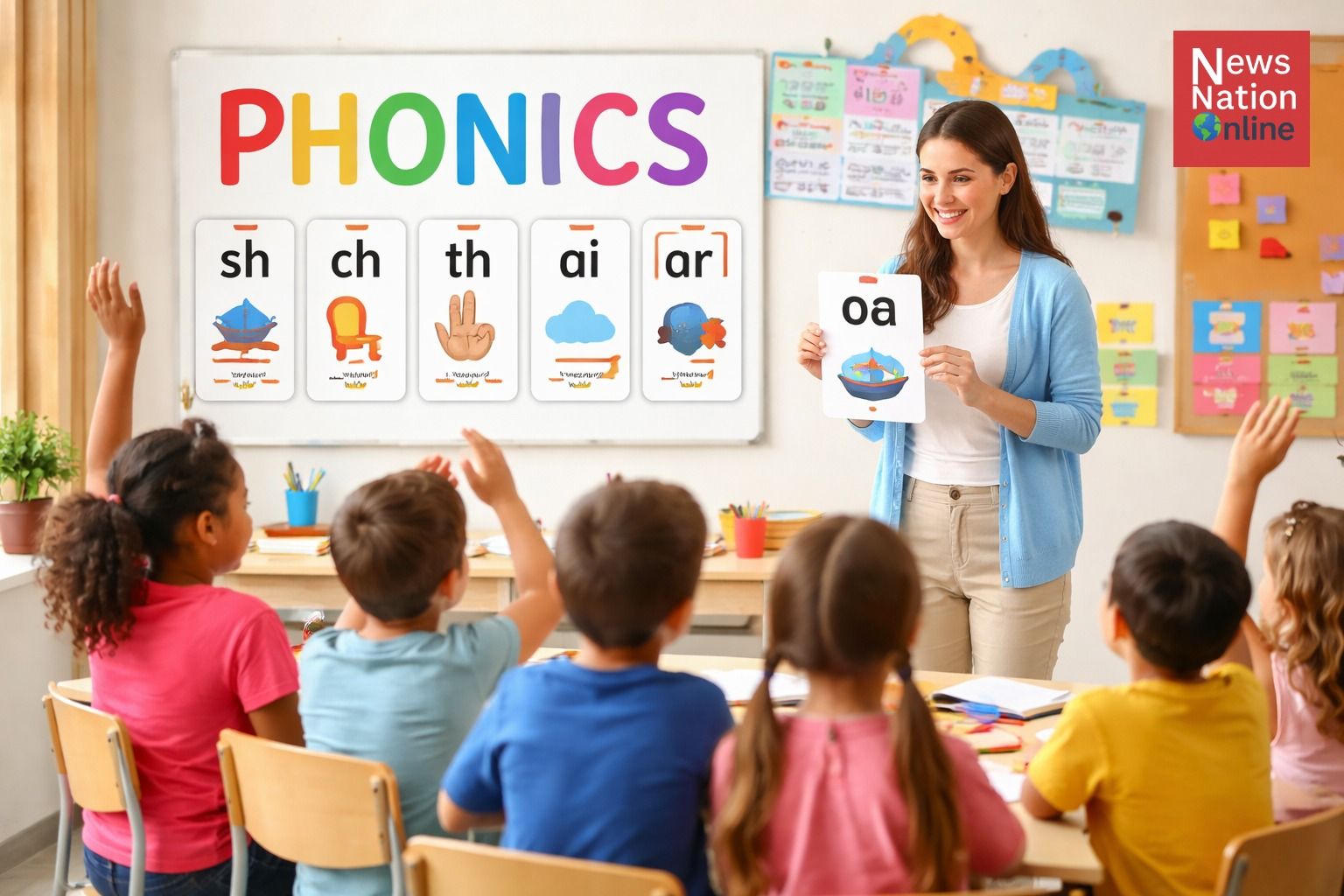
3. Consonant Digraphs
Two consonants combine to create a single sound.
- sh – ship
- ch – chair
- th – thin
- wh – wheel
4. Vowel Digraphs
Two vowels together produce one sound.
- ai – rain
- ea – eat
- oa – boat
- oo – moon
5. R-Controlled Vowels
When a vowel is followed by the letter r, the vowel sound changes.
- car
- bird
- corn
- turn
6. Double Consonant Rule
In many one-syllable words ending with a consonant-vowel-consonant pattern, the final consonant doubles before adding suffixes such as -ing or -ed.
- run → running
- hop → hopping
7. “I Before E” Rule
A commonly taught rule states: “I before E except after C.”
- believe
- field
- receive
- ceiling
8. Plural Spelling Rule
Most nouns become plural by adding -s, but words ending in s, sh, ch, x, or z usually take -es.
- cat → cats
- box → boxes
- wish → wishes
Growing Global Focus on Phonics
Across many countries, educators have increasingly adopted phonics-based literacy programs. Several studies suggest that structured phonics lessons significantly improve reading proficiency among early learners. Education debates—often called the “reading wars”—have gradually shifted toward evidence-based phonics instruction.
Experts emphasize that phonics is not simply about memorizing spelling patterns but about understanding how language works. By mastering phonics rules early, students develop stronger reading comprehension and writing skills.
Building a Strong Literacy Foundation
Education specialists agree that phonics remains one of the most effective strategies for improving literacy in schools. When children learn these spelling rules early, they gain the ability to decode unfamiliar words, write accurately, and become confident readers.
With literacy levels directly linked to academic success, many experts believe teaching phonics spelling rules should remain a core component of early education programs worldwide.

Discover more from NewsNation Online
Subscribe to get the latest posts sent to your email.
आपके लिए सुझाव