
The Meaning and Importance of “As-Salaam Alaikum” in Islam
Introduction
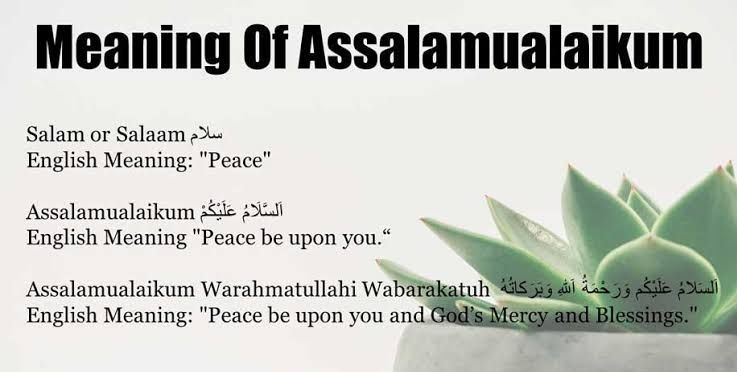
“As-Salaam Alaikum” (السلام عليكم) is a common Islamic greeting that holds deep spiritual, social, and cultural significance for Muslims worldwide. The phrase, meaning “Peace be upon you,” embodies the essence of Islamic teachings—promoting peace, brotherhood, and mutual respect among individuals.
This article explores the meaning, importance, and etiquette of using “As-Salaam Alaikum” in the daily lives of Muslims, based on the teachings of the Quran and Hadith.
Meaning of “As-Salaam Alaikum”
The phrase “As-Salaam Alaikum” is derived from Arabic, where:
“As-Salaam” (السلام): One of the names of Allah, meaning “The Peace, The Source of Security.”
“Alaikum” (عليكم): Meaning “upon you.”
Thus, when a Muslim greets another with “As-Salaam Alaikum,” they are essentially praying for Allah’s peace, protection, and blessings to be upon the person they are addressing.
Response to the Greeting

Islamic etiquette also prescribes a reply to this greeting. The appropriate responses include:
- 1. “Wa Alaikum As-Salaam” (وعليكم السلام) – “And upon you be peace.”
- 2. “Wa Alaikum As-Salaam wa Rahmatullahi wa Barakatuh” (وعليكم السلام ورحمة الله وبركاته) – “And upon you be peace, mercy, and blessings of Allah.”
Responding to the greeting is considered an obligation in Islam, as it fosters goodwill and mutual respect.
Importance of “As-Salaam Alaikum” in Islam
1. Commanded by Allah in the Quran
The greeting “As-Salaam Alaikum” is not just a social courtesy but a religious duty encouraged by Allah. The Quran mentions the importance of greeting others with peace:
“And when you are greeted with a greeting, greet in return with something better than it or return it equally. Indeed, Allah is ever, over all things, an Accountant.”
(Surah An-Nisa, 4:86)
This verse highlights the obligation to respond to greetings with kindness and positivity.
2. Following the Sunnah of the Prophet (PBUH)
Prophet Muhammad (peace and blessings be upon him) emphasized the importance of spreading peace through greetings. He said:
“You will not enter Paradise until you believe, and you will not believe until you love one another. Shall I not tell you of something which, if you do it, will make you love one another? Spread the greeting of peace (Salaam) among you.”
(Sahih Muslim)
This Hadith underscores that offering greetings of peace strengthens bonds of love and unity within the Muslim community.

3. A Symbol of Brotherhood and Unity
Greeting with “As-Salaam Alaikum” fosters a sense of unity among Muslims, regardless of race, nationality, or social status. It acts as a universal bond that reminds believers of their shared faith and mutual responsibilities.
4. Reward in the Hereafter
Offering “Salaam” brings immense rewards in the afterlife. The Prophet (PBUH) mentioned that those who greet others frequently and sincerely are among the best in faith:
“The most miserly of people is the one who is stingy with greetings of peace.”
(Musnad Ahmad)
This highlights the virtue of being proactive in spreading peace through greetings.
5. Protection from Harm
Islam teaches that extending peace through greetings helps in avoiding conflicts, misunderstandings, and enmity. The phrase serves as a verbal assurance of goodwill and safety.
Etiquette of Saying “As-Salaam Alaikum”
Islamic teachings emphasize specific etiquettes when using the greeting:
- 1. Initiate the Greeting: It is encouraged to be the first to greet others as a sign of humility and kindness.
- 2. Greet Both Known and Unknown Individuals: Spreading peace should not be limited to acquaintances alone; it should extend to strangers as well.
- 3. Greet Loudly and Clearly: The greeting should be audible so that it reaches the recipient.
- 4. Greet Upon Entering and Leaving: Prophet Muhammad (PBUH) encouraged Muslims to greet when entering and leaving a gathering.
- 5. Return the Greeting with Equal or Better Response: Responding warmly reflects good manners and fulfills Islamic teachings.
- 6. Greet the Young and the Elderly: Islam encourages respect for elders and love for the younger generation through greetings.
Common Misconceptions About “As-Salaam Alaikum”
Despite its simplicity, there are some misconceptions regarding the usage of the greeting:

- 1. It’s Only for Muslims: While it is a specific Islamic greeting, scholars have noted that it can be used to greet non-Muslims with the intention of spreading peace.
- 2. Shortening the Greeting (“Salaam” or “Salam Alaik”): Some people shorten the greeting, but it’s encouraged to say the full phrase for maximum reward.
- 3. Using Non-Islamic Greetings: While it is permissible to use greetings like “Hello” or “Good morning,” it is preferred to greet fellow Muslims with “As-Salaam Alaikum” first.
Conclusion
The greeting “As-Salaam Alaikum” is a cornerstone of Islamic etiquette that carries profound meaning and significance. It reflects the values of peace, unity, and kindness that Islam promotes. By adopting and practicing this greeting sincerely, Muslims can strengthen their relationships, fulfill religious obligations, and contribute to a harmonious society.
Incorporating “As-Salaam Alaikum” in daily interactions ensures not only social goodwill but also rewards in the Hereafter, making it an essential part of a Muslim’s life.
Discover more from NewsNation Online
Subscribe to get the latest posts sent to your email.
आपके लिए सुझाव






















































































Leave a Reply