
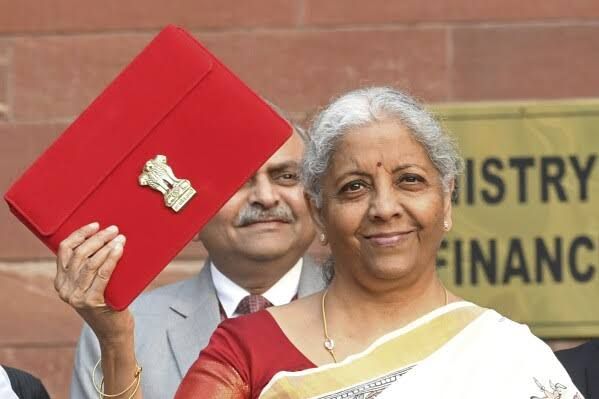
Budget 2025 in a Nutshell: Five Major Takeaways from the Finance Minister’s Speech
The much-anticipated Budget 2025 was presented today by the Finance Minister, outlining key policies aimed at economic growth, job creation, and fiscal stability. The focus remains on tax relief for individuals, boosting employment opportunities, and ensuring fiscal discipline while slightly reducing capital expenditure on infrastructure.
Here are the five key takeaways from the Budget 2025 speech:
1. Tax Cuts: More Money in Taxpayers’ Hands
The government has introduced significant tax reliefs, putting more disposable income in the hands of the middle class. This move is expected to boost consumption, savings, and overall economic growth.

Key Changes in Taxation:
Income Tax Slabs Revised: The new tax regime has been made more attractive with lower tax rates and increased exemptions.
Standard Deduction Increased: Salaried individuals and pensioners will benefit from a higher standard deduction, reducing taxable income.
Higher Rebate for Middle-Class Taxpayers: More individuals in the lower-income bracket will fall under the tax-free slab, reducing the overall tax burden.
Capital Gains and Dividend Taxation Simplified: Certain long-term capital gains tax structures have been eased to promote investment in equity markets.
These reforms aim to increase disposable income, encouraging consumer spending and boosting demand across various sectors.
2. Job Creation & Skill Development
Employment generation remains a key focus of Budget 2025, with new incentives for industries and startups to create more jobs.
Key Announcements:
Boost for MSMEs and Startups: Special tax incentives and easier credit access for Micro, Small, and Medium Enterprises (MSMEs) and startups to enhance employment opportunities.
Apprenticeship & Skilling Programs: Expansion of government-backed skill development programs to equip youth with in-demand skills.
AI & Tech-Based Job Creation: Investments in artificial intelligence, data science, and emerging technologies to drive employment in the tech sector.
With an emphasis on industry partnerships, these initiatives are expected to increase job opportunities for fresh graduates and professionals.
3. Fiscal Discipline Over Infrastructure Push
Unlike previous years where infrastructure spending was a major highlight, this year’s budget prioritizes fiscal consolidation over large-scale capital expenditure.
Key Fiscal Highlights:
Fiscal Deficit Reduction: The government remains committed to bringing down the fiscal deficit, targeting a lower percentage of GDP.
Controlled Infrastructure Spending: While infrastructure projects will continue, the pace of new capital investments has slowed to ensure financial prudence.
Debt Management Strategy: Clear roadmap to reduce national debt over the next few years.
This approach aims to maintain economic stability while ensuring that essential infrastructure projects remain on track.
4. Growth in Manufacturing & Green Energy
The government continues to promote the ‘Make in India’ and ‘Aatmanirbhar Bharat’ initiatives, with a renewed push for green energy and domestic manufacturing.
Key Measures:
Incentives for EVs and Renewable Energy: Increased subsidies for electric vehicles (EVs), solar power adoption, and green hydrogen projects.
Production-Linked Incentive (PLI) Expansion: Additional incentives for manufacturing in electronics, semiconductors, and pharma sectors.
Support for Agriculture & Food Processing: Increased funding for farm mechanization, cold storage, and food processing industries.
These initiatives aim to boost local manufacturing, reduce import dependency, and promote sustainable development.
5. Focus on Digital Economy & AI Integration
The digital revolution and AI-driven growth are at the heart of Budget 2025, with substantial allocations for technology adoption across industries.
Key Digital & AI-Focused Initiatives:
AI in Governance: AI-powered automation in public sector services, taxation, and law enforcement to improve efficiency.
Boost for Digital Payments & Fintech: Expansion of UPI and blockchain-based financial services to drive financial inclusion.
Cybersecurity & Data Protection: Strengthening cybersecurity infrastructure and introducing new data protection regulations.
By leveraging technology, the government aims to enhance efficiency, transparency, and economic growth.
Conclusion: A Balanced Budget with a Focus on Growth & Stability
Budget 2025 strikes a balance between tax relief, job creation, and fiscal prudence. While the reduction in infrastructure spending may raise concerns, the focus on digital transformation, green energy, and AI signals a modern, forward-looking approach.
With lower taxes, increased employment opportunities, and a commitment to fiscal discipline, this budget is expected to fuel economic growth while maintaining financial stability.
As industries and individuals assess the impact of these policies, it remains to be seen how effectively these measures will drive India’s growth trajectory in the coming years.
Discover more from NewsNation Online
Subscribe to get the latest posts sent to your email.
आपके लिए सुझाव





























































































Leave a Reply