
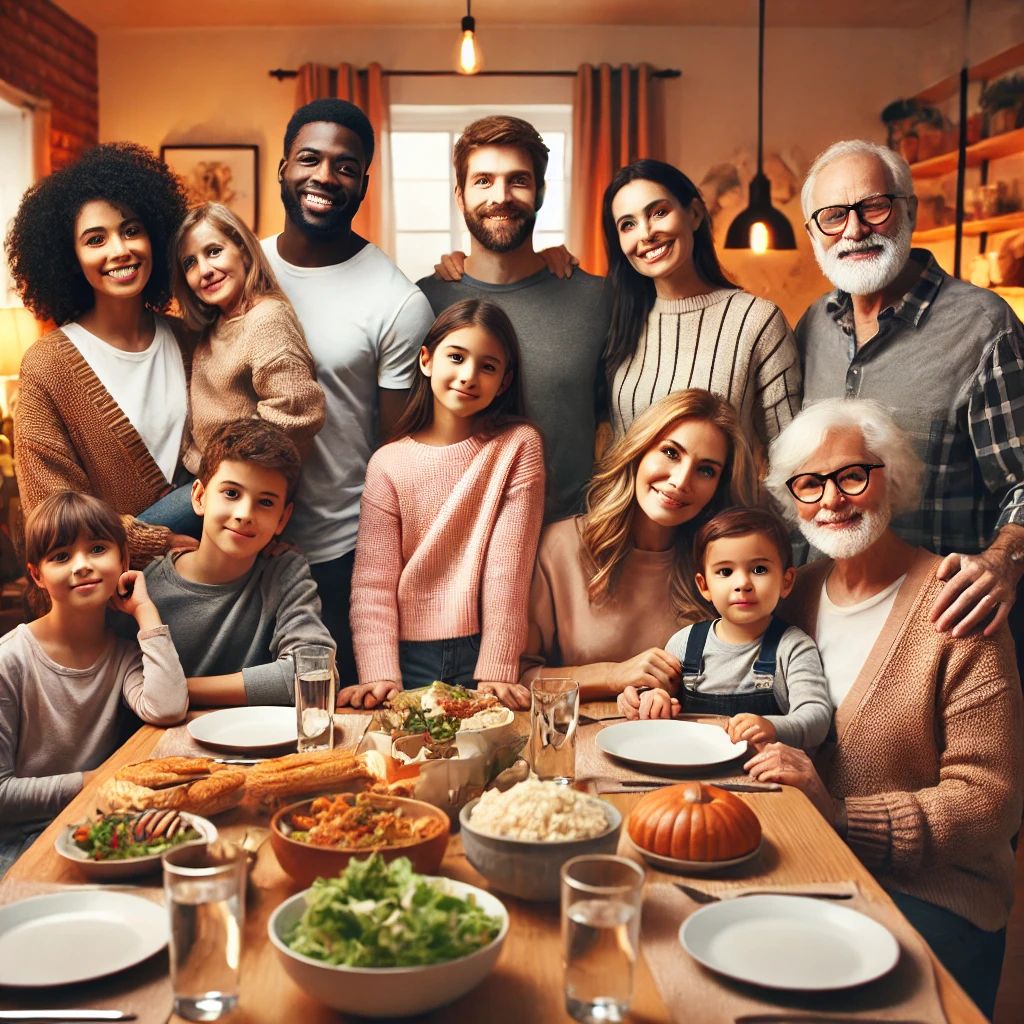
“Redefining Family: Love Knows No Labels”
Introduction:
What makes a family whole? Is it a marriage certificate, a shared last name, or the presence of two parents under one roof? For too long, society has perpetuated the notion of the “broken family”—a term that unfairly stigmatizes any household that doesn’t fit a narrow, traditional mold. But the truth is, family is not determined by paperwork, biology, or societal expectations. Family is built on love, trust, and connection.
In this article, we’ll dismantle the outdated concept of the “broken family” and celebrate the rich diversity of what family means today. Whether it’s a single parent, a blended household, or a chosen family, each is valid, strong, and deserving of recognition. It’s time to embrace a more inclusive understanding of family—one that honors the bonds that truly matter.
There Is No Such Thing as a “Broken Family”
The concept of a “broken family” is often used to describe households that deviate from the traditional two-parent structure. It’s a term loaded with judgment, rooted in outdated social norms, and carries a weight that unfairly stigmatizes families who do not fit a conventional mold. However, the truth is that family is not defined by marital status, legal documents, or societal expectations. Family is a bond, a connection, and a source of love and support—something that transcends labels and circumstances.
In this blog, we’ll explore why the term “broken family” is a misnomer, the importance of redefining family in a modern context, and how to embrace the idea that family is about connection, not conformity.
The Origins of the “Broken Family” Label
Historically, the notion of a “broken family” emerged from a time when the nuclear family—consisting of a married heterosexual couple and their biological children—was idealized. This model became synonymous with stability, morality, and success. Any deviation from this standard, such as divorce, single parenthood, or adoption, was considered a failure. Families that didn’t fit the mold were labeled as “broken,” implying dysfunction or incompleteness.
This outdated perspective ignores the complexities of human relationships and the diverse ways people form meaningful connections. It also fails to recognize that traditional family structures are not inherently superior or more functional than alternative arrangements.
Family Is About Bonds, Not Paperwork
A family is not made or broken by legal documents like marriage certificates, divorce decrees, or adoption papers. While these documents may formalize certain aspects of a relationship, they don’t define the essence of what it means to be family. A family is built on love, trust, and mutual care—intangibles that cannot be measured by legalities.
For example:
A single parent raising children with unwavering love and dedication is no less of a family than a married couple doing the same.
Adoptive parents who create a nurturing environment for their child are just as much a family as biological parents.
Siblings, cousins, and extended relatives who support each other in times of need often embody the true spirit of family, regardless of proximity or formal arrangements.
The Harmful Effects of the “Broken Family” Narrative
Labeling a family as “broken” can have significant emotional and psychological consequences, especially for children. The term suggests that something is fundamentally wrong with their home life, leading to feelings of shame, inadequacy, and low self-worth.
Here are some ways this narrative is harmful:
- 1. Perpetuating Stigma: Families that don’t fit the traditional mold often face societal judgment, making it harder for them to find acceptance and support.
- 2. Impacting Children’s Mental Health: Children who internalize the idea of a “broken family” may struggle with self-esteem and feel as though they are destined to fail in their own relationships.
- 3. Reinforcing Unrealistic Standards: The term implies that only one type of family structure is valid, ignoring the diversity of human experiences and relationships.
Redefining Family in a Modern Context
The world is evolving, and so is the concept of family. Today, families come in all shapes and sizes—blended families, single-parent households, same-sex parents, chosen families, and more. Each of these structures has its unique challenges and strengths, but none are inherently “broken.”
- 1. Blended Families
- Blended families, formed when two separate families come together, are increasingly common. While they may face challenges like navigating new dynamics, they also provide opportunities for growth, understanding, and the creation of new traditions. These families demonstrate that bonds are not limited to blood ties but can be built through shared experiences and mutual respect.
- 2. Single-Parent Families
- Single-parent families often defy stereotypes by proving that one parent can provide a loving, stable environment for their children. Strength, resilience, and resourcefulness are hallmarks of these families, which thrive not despite their structure but because of it.
- 3. Chosen Families
- For many people, especially within LGBTQ+ communities, chosen families provide the love and support that may not exist in biological families. These relationships, built on mutual understanding and acceptance, show that family is about choice and commitment, not obligation or tradition.
- 4. Adoptive Families
- Adoptive families highlight the idea that love makes a family, not biology. Parents and children in adoptive families often share a bond that is as deep and meaningful as any biological connection, proving that family transcends genetics.
Embracing the Diversity of Families
To move away from the concept of “broken families,” we need to embrace the diversity of what family means today. This requires shifting our perspective and adopting a more inclusive mindset.
- 1. Language Matters
- The words we use shape our perceptions. Instead of terms like “broken family,” we can use phrases like “non-traditional family” or simply “family.” These terms are neutral, inclusive, and free of judgment.
- 2. Focus on Strengths
- Every family has its unique strengths and challenges. By focusing on what makes a family strong—love, communication, and mutual support—we can celebrate diversity rather than judge it.
- 3. Teach Empathy
- Teaching children and adults to appreciate different family structures fosters empathy and understanding. Schools, media, and communities can play a role in normalizing all kinds of families.

Family Is Where Love Lives
At its core, a family is where love resides. It’s where people feel safe, valued, and supported. This might be with a parent and child, a group of close friends, or a multigenerational household. The specifics of who, how, or why are irrelevant; what matters is the bond that unites them.
Some of the strongest families are those that have faced adversity together. They may not fit society’s traditional expectations, but they embody resilience, compassion, and a deep commitment to one another. These qualities are what truly define a family—not their structure or documentation.
A Call to Action
Let’s retire the term “broken family” once and for all. It’s time to celebrate the many ways people come together to form meaningful connections. By rejecting outdated labels and embracing the diversity of modern families, we can create a more inclusive and compassionate society.
In the end, family is not about perfection; it’s about love. Whether your family looks like a picture-perfect postcard or a patchwork quilt, it is no less valid, strong, or beautiful. Family is family, and it is never broken—it is simply different. And that difference is something to be celebrated.
Discover more from NewsNation Online
Subscribe to get the latest posts sent to your email.































































Leave a Reply