
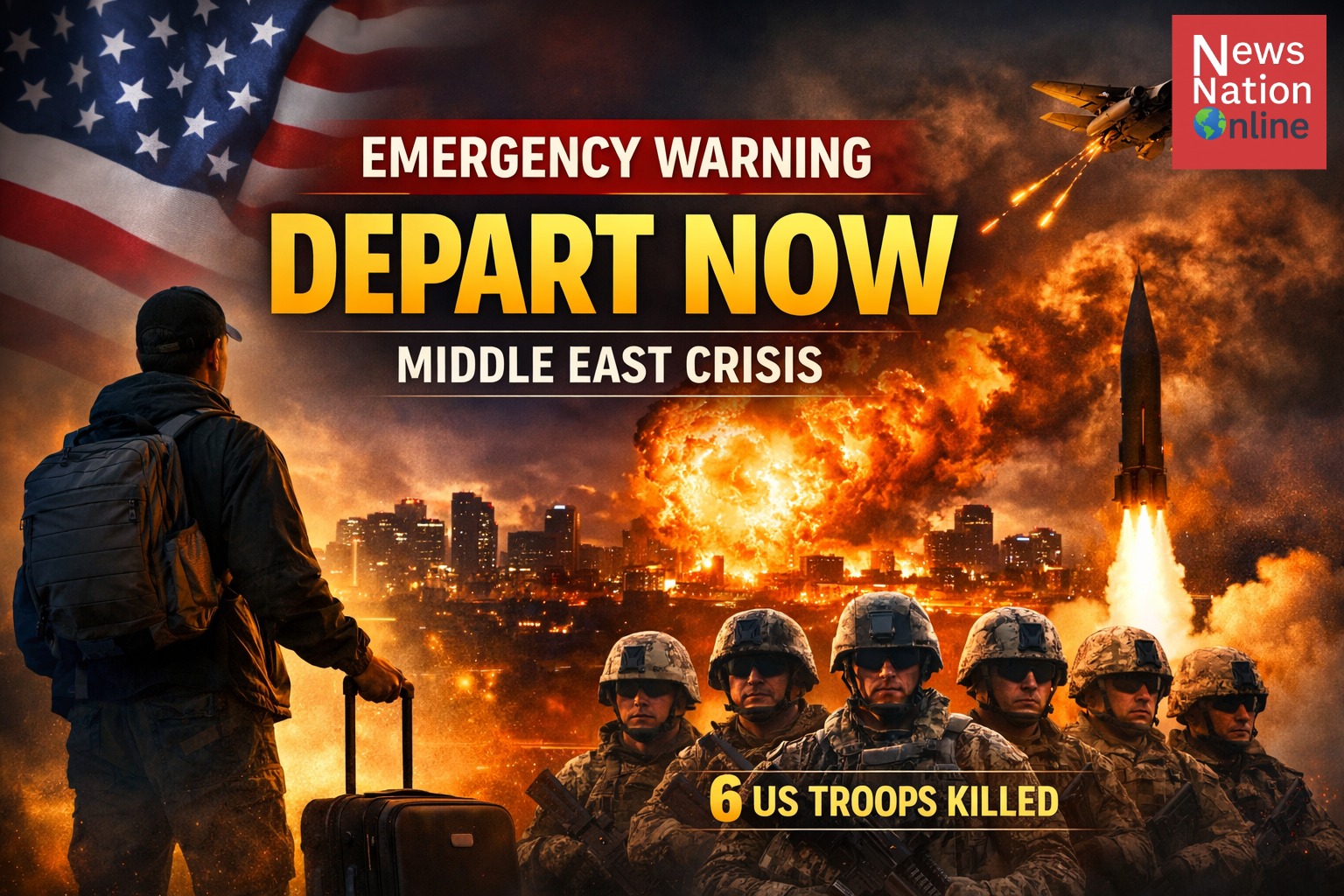
US Issues ‘Depart Now’ Alert for Americans in 14 Middle East Nations; Six Troops Killed as Iran Conflict Widens
The United States has issued an urgent “DEPART NOW” advisory for American citizens across 14 Middle Eastern countries amid rapidly escalating hostilities involving the US, Israel, and Iran. The warning cites “serious safety risks” as missile exchanges, airstrikes, and military operations intensify across the region.
The advisory was updated on March 2 at 4 pm EST, with US officials urging Americans to leave using available commercial transportation while it remains operational.
Six US Service Members Killed in Action
The United States Central Command (CENTCOM) confirmed that six American service members have been killed in action during ongoing combat operations.
According to CENTCOM, US forces recovered the remains of two previously unaccounted service members from a facility struck during Iran’s initial retaliatory attacks. The identities of the fallen troops are being withheld pending notification of their families.
“Major combat operations continue,” CENTCOM said in a statement.
State Department: Safety Is ‘Top Priority’
Marco Rubio urged Americans in the region to depart immediately, emphasizing that citizen safety remains the government’s highest priority.
The State Department has:
- Activated 24/7 emergency assistance lines
- Urged Americans to enroll in the Smart Traveler Enrollment Program (STEP)
- Directed citizens to monitor official travel updates
Officials warned that the security environment remains fluid and could deteriorate further with little notice.

Countries Under the Emergency Advisory
The advisory applies to Americans in:
- Bahrain
- Egypt
- Iran
- Iraq
- Israel
- West Bank
- Gaza Strip
- Jordan
- Kuwait
- Lebanon
- Oman
- Qatar
- Saudi Arabia
- Syria
- United Arab Emirates
- Yemen
Officials indicated that missile threats, drone strikes, and potential attacks on diplomatic facilities remain significant concerns.
Escalation: US–Israel Airstrikes on Iran
The crisis follows coordinated US and Israeli airstrikes launched on February 28 targeting multiple sites across Iran, including:
- Military command centres
- Air defence systems
- Missile launch installations
- Strategic regime infrastructure
Large explosions were reported in Tehran and other major cities.
Reports indicate that Iranian Supreme Leader Ayatollah Ali Khamenei and several senior military officials were killed in the strikes, dramatically escalating tensions.

Iran’s Retaliation Expands Conflict Zone
In response, Iran launched ballistic missiles and armed drones targeting US military assets and allied locations across the Gulf.
Missile interceptions and reported impacts occurred in:
- Israel
- Bahrain
- Kuwait
- Qatar
- United Arab Emirates
- Jordan
Airspace closures and commercial flight suspensions have disrupted travel throughout the region, complicating evacuation efforts.
President Trump: Operations Will Continue
President Donald Trump stated that US military operations would continue until Iran’s missile capabilities, nuclear ambitions, and support for militant groups are neutralized.
The administration maintains that the campaign aims to degrade Iran’s offensive capacity and prevent further regional destabilization.
Regional and Global Impact
The widening conflict has triggered:
- Heightened military alerts across Gulf states
- Diplomatic evacuations
- Volatile global oil markets
- Concerns over maritime security near the Strait of Hormuz
Analysts warn that continued escalation could draw additional regional actors into direct confrontation, increasing the risk of a broader Middle East war.
Situation Developing
With combat operations ongoing and diplomatic efforts strained, officials caution that the security environment remains unpredictable. Governments worldwide are closely monitoring the situation and advising citizens to review travel plans immediately.
Discover more from NewsNation Online
Subscribe to get the latest posts sent to your email.






















































































Leave a Reply