By NewsNationOnline Team | Updated: October 31, 2025

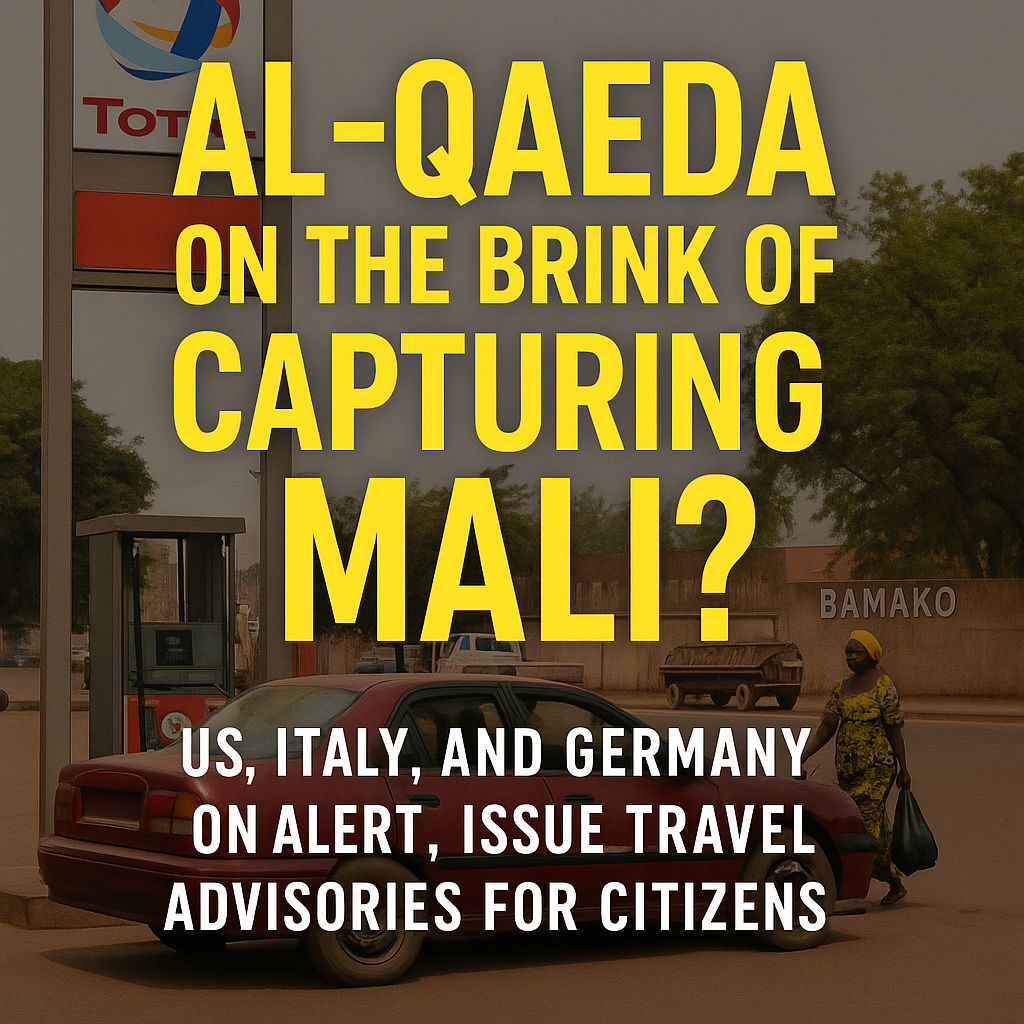
Mali — a landlocked country in West Africa — is facing a security and governance emergency as the Al‑Qaeda‑linked coalition Jamaʿat Nasr al‑Islām wal‑Muslimīn (JNIM) intensifies operations that experts say could force the state into a collapse or a negotiated, de‑facto sharing of power. The move from hit‑and‑run attacks to a deliberate fuel and supply blockade has prompted several Western governments to issue evacuation and travel advisories for their citizens.
What’s happening right now
JNIM has carried out sustained attacks on fuel convoys and supply routes since September 2025, tightening a de‑facto economic squeeze on the capital, Bamako. The blockade has led to severe shortages of petrol and diesel, forced closures of schools and public institutions, disrupted commerce and mobility, and deepened humanitarian stress across urban and rural communities.

Why this matters
- State capacity is eroding: Without reliable fuel and transport, government services, security operations and emergency responses are severely restricted.
- Quasi‑governance risk: JNIM already exerts influence in rural areas; by controlling lifelines it can consolidate power and deliver selective services to gain local legitimacy.
- Regional spill‑over: Instability in Mali risks contagion across the Sahel, threatening neighbouring states and complicating international responses.
The tightening of economic controls — especially on fuel — is a clear escalation in strategy: insurgents are targeting the state’s ability to sustain itself rather than only engaging in episodic violence.
Key actors
- JNIM: A 2017 merger of Sahelian jihadist groups allied with Al‑Qaeda, now employing siege‑type tactics (blockades, convoy attacks) to weaken state structures.
- Malian government / junta: Militarily in control of the capital but logistically strained and politically isolated.
- International actors: Western governments have issued urgent advisories; humanitarian organisations face access and supply challenges.

Timeline of recent events
- September 2025: JNIM announces and begins enforcing a fuel blockade, escalating attacks on tankers and major supply routes.
- October 2025: Fuel shortages spread, schools suspend classes in parts of the country, and civilian life is disrupted.
- Late October 2025: The United States, Italy, Germany and other countries issue travel advisories urging citizens to leave Mali; the U.S. embassy encourages immediate departure for non‑essential personnel.
Humanitarian and regional impact
Short‑term effects include transportation paralysis, food supply chain interruptions and rising displacement. In the medium term, a breakdown of public order would complicate aid delivery and refugee flows into neighbouring countries.
What to watch next
- Whether Bamako can maintain access to fuel and critical supplies.
- Decisions by regional and international actors to intervene or provide logistical support.
- Humanitarian indicators—displacement, food security and access to health services.
- Signatures of any negotiated arrangements between the government and militant groups.
Sources: Reporting from Reuters, The Washington Post, Associated Press, Wall Street Journal, France24 and regional reporting.

Discover more from NewsNation Online
Subscribe to get the latest posts sent to your email.
आपके लिए सुझाव