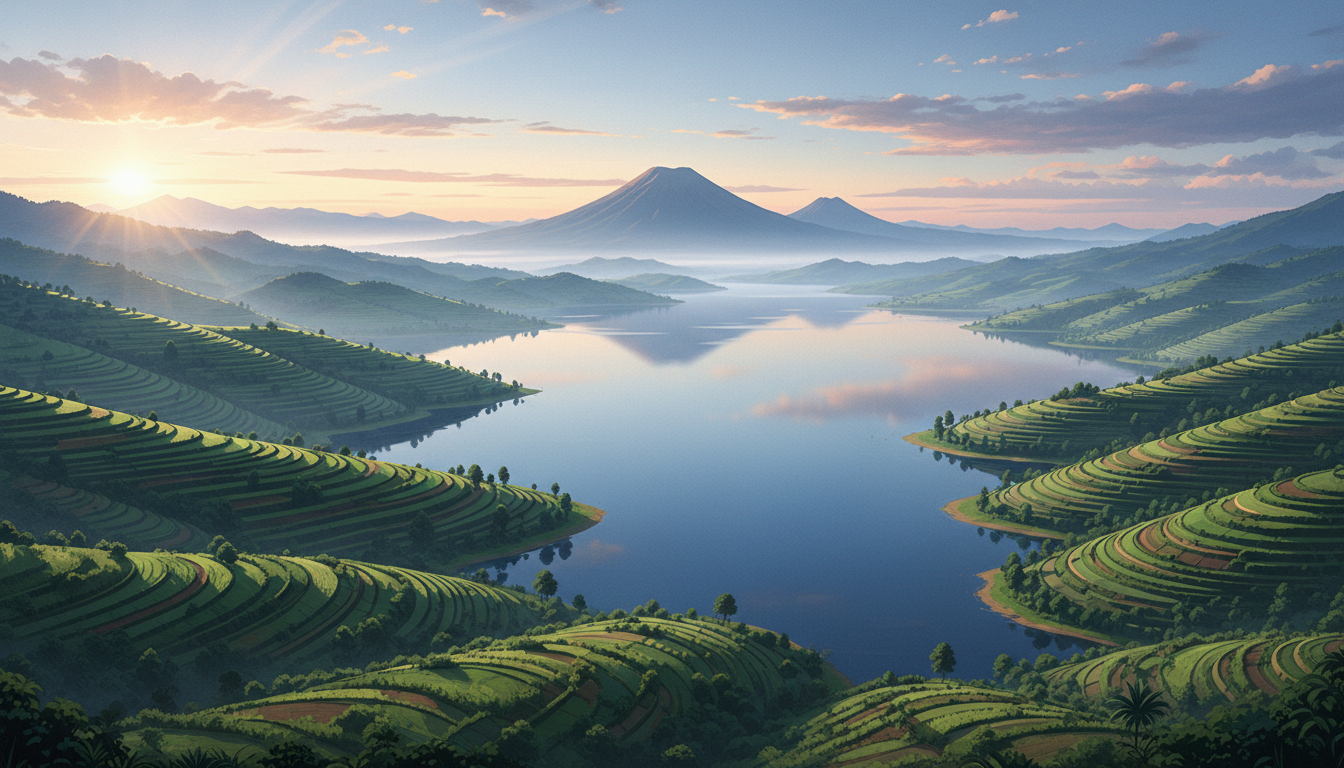
Rwanda’s most compelling destinations are not all gorilla-tracking sites. The country’s varied terrain links volcanic peaks and ancient rainforest with savanna, lake shores, museums and places of remembrance. This guide selects 15 destinations for their distinct cultural, ecological or geographical importance rather than presenting them as a ranking of safe or accessible trips.
1. Volcanoes National Park and the Virunga massif
Northwestern Rwanda is defined by forested volcanoes, bamboo stands and mountain gorilla habitat. Musanze is the principal gateway. Gorilla trekking is tightly managed: travellers need permits and must follow ranger instructions, including health and distancing requirements that protect the apes.
2. Nyungwe National Park
This montane rainforest in southwestern Rwanda became a UNESCO World Heritage property in 2023. Its habitats include forest, peat bogs and moorland, and UNESCO records exceptional threatened biodiversity. The canopy walkway and guided primate experiences offer different perspectives on a landscape also crucial to water catchments.
3. Akagera National Park
In the east, Akagera exchanges highland forest for savanna, woodland, wetlands and lakes. Conservation partnerships have supported the return of lions and rhinos. Wildlife sightings are never guaranteed; guided drives and park rules help protect both visitors and animals.
4. Lake Kivu
Rwanda’s western lake shore offers steep hills, islands and waterfront towns. Rubavu and Karongi are established centres, while the Congo Nile Trail connects landscapes and communities through walking and cycling routes. Water activities should be arranged with reputable operators and current safety advice.
5. Kigali
Rwanda’s capital spreads across green hills. It is a useful introduction to contemporary art, local cuisine, city markets and the country’s difficult modern history. Visitors should give the Kigali Genocide Memorial the time and respectful attention its subject deserves.
6. Musanze
This northern town serves as a base for volcanic scenery and community activities. Beyond gorilla trekking, the surrounding region includes cultivated hills, caves and opportunities to learn about local livelihoods.
7. Karongi
Karongi, historically called Kibuye, occupies an attractive section of Lake Kivu with bays, wooded slopes and islands. It is particularly relevant to readers interested in slower travel and lake geography rather than wildlife itineraries alone.
8. Rubavu
Rubavu, also known as Gisenyi, sits on Lake Kivu close to the border with the Democratic Republic of the Congo. Its location makes current border advisories essential; never assume that a nearby international crossing is open.
9. Nyanza Royal Palace
Nyanza preserves important memories of Rwanda’s monarchy. The reconstructed traditional palace and its distinctive architecture help explain courtly traditions, social organisation and royal symbolism.
10. Huye Ethnographic Museum
Huye is an academic and cultural centre in the south. Its Ethnographic Museum explores material culture and traditions, making it a useful complement to wildlife-oriented travel.
11. Gishwati-Mukura National Park
The protected Gishwati and Mukura forest blocks are significant for primates, birds and ecological restoration. Their story also illustrates how habitat fragmentation and recovery can shape conservation priorities.
12. The Congo Nile Trail
The route through western Rwanda combines lake views, villages and hillside farming. Its sections vary in difficulty and conditions; travellers should plan stages, transport and accommodation carefully.
13. Lake Ihema
Within Akagera, Lake Ihema supports wetland birdlife and aquatic species. It is a reminder that Rwanda’s wildlife is not limited to mountain gorillas and forest primates.
14. Mount Bisoke
A prominent Virunga volcano, Bisoke is known for its crater lake and steep high-altitude hiking. Conditions can be wet, cold and physically demanding, making experienced guides and appropriate equipment important.
15. Genocide memorial sites
UNESCO recognises Nyamata, Murambi, Gisozi and Bisesero as a single World Heritage property. These places commemorate the 1994 Genocide against the Tutsi and should never be presented as casual sightseeing attractions. Visitors should respect photography rules and the experiences of survivors.
Which destination fits your interests?
For conservation and rainforest ecology, Nyungwe and Gishwati-Mukura offer different perspectives. Akagera is the clearest contrast, with savanna and wetland habitats. Kigali, Nyanza and Huye are stronger choices for urban history and cultural heritage. Lake Kivu and its towns suit readers drawn to landscapes and communities. Gorilla trekking is a specialised, permit-controlled activity rather than a spontaneous excursion.
UNESCO status: two properties, not 15
As of October 2026, UNESCO lists two World Heritage properties in Rwanda: Nyungwe National Park and the Memorial sites of the Genocide: Nyamata, Murambi, Gisozi and Bisesero. Both were inscribed in 2023. Volcanoes National Park is internationally important for conservation but is not one of Rwanda’s inscribed World Heritage properties. Consult UNESCO’s official Rwanda listing for changes.
Responsible planning and travel safety
Before booking, verify park fees and permits through authorised channels, check road and weather conditions, and read the latest UK FCDO Rwanda advice or your government’s equivalent. Security concerns near the DRC border can change quickly. Respect protected-area rules, local communities and the solemn nature of memorial sites.
Read more
See our complete Rwanda travel guide and neighbouring guides to Uganda and Burundi. Rwanda’s official tourism website also offers destination descriptions at Visit Rwanda.
Discover more from NewsNation Online
Subscribe to get the latest posts sent to your email.
आपके लिए सुझाव







Leave a Reply