

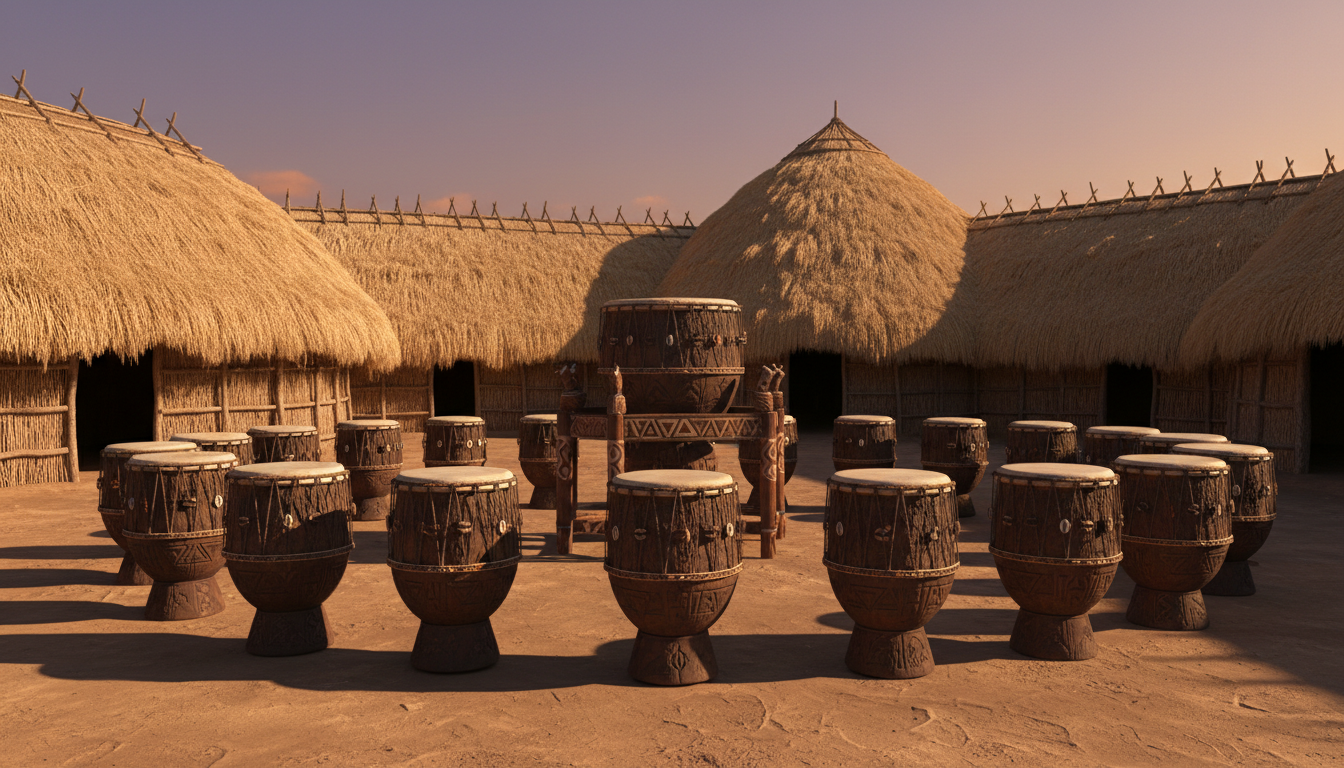

Burundi’s cultural identity has been shaped by centuries of monarchy, ceremonial drumming, agricultural traditions, language and profound political change. Its royal drum dance is internationally recognised by UNESCO, but the country’s history is broader—and more complex—than one famous performance.

1. A kingdom before colonial rule
Burundi’s history did not begin with European administration. A monarchy headed by a mwami developed institutions, political authority and court traditions over generations. Historical accounts differ on the precise chronology of early rulers, so claims of an exact founding year deserve caution.
2. The mwami and the royal court
The mwami was more than a ceremonial figure. Kingship was connected to political organisation, ritual authority and relationships among regional leaders. Royal residences and ceremonial sites help historians reconstruct these institutions, although surviving structures and later reconstructions require careful interpretation.
3. The symbolic role of the drum
Royal drums communicated authority and ceremonial significance. Their sound accompanied important public and court events, and specialist custodians preserved knowledge about their making and performance. Describing them merely as entertainment misses their political and spiritual history.
4. Gishora and royal memory
Gishora near Gitega is strongly associated with royal drumming and the historic court of King Ntare Rugamba. The royal residence of Gishora was added to Burundi’s UNESCO World Heritage tentative list in 2026. Tentative listing is a preliminary nomination step, not inscription as a World Heritage Site.
5. UNESCO recognition of living heritage
In 2014 UNESCO inscribed Burundi’s ritual dance of the royal drum on its Representative List of the Intangible Cultural Heritage of Humanity. UNESCO describes coordinated drumming, dancing, songs and heroic poetry, with skills passed between generations. The inscription recognises a living practice, not ownership of every performance or a particular building.
6. The Umuganuro tradition
The royal sorghum-sowing festival, known as Umuganuro, linked agriculture, political authority and ceremony. Historical interpretations should distinguish practices under the monarchy from later commemorations or tourism presentations.
7. Languages and identity
Kirundi is fundamental to cultural life and shared communication in Burundi. French, English and Swahili also appear in particular educational, commercial and urban settings. Language use differs by community and context, and a visitor should not assume English is universally spoken.
8. Communities and historical complexity
Burundi’s history includes Hutu, Tutsi and Twa communities, among others. These identities have social and political histories that cannot be responsibly reduced to simplistic stereotypes or timeless divisions. Reporting should distinguish historical evidence, colonial categorisation and contemporary lived experiences.
9. German and Belgian colonial periods
Burundi became part of German East Africa and later came under Belgian administration after the First World War. Colonial governance reshaped institutions and social relationships, with long-lasting consequences. Independence came in 1962, but it did not end debates over power, representation and national identity.
10. Independence and the end of monarchy
Burundi became independent on 1 July 1962. The monarchy continued briefly after independence before the republic was proclaimed in 1966. These milestones are distinct and should not be collapsed into a single transition.
11. Violence, memory and reconciliation
Burundi experienced severe episodes of political and communal violence, including in 1972, 1988 and the civil war that began in 1993. These events affected families across generations. Responsible cultural coverage recognises suffering and contested memories without assigning collective blame to entire communities.
12. Gitega as a cultural centre
Gitega’s historical and political role makes it an important point of reference for understanding the country beyond Bujumbura. Museums, royal heritage and nearby Gishora offer complementary perspectives, though current access and opening arrangements must be checked.
13. Dance, song and oral traditions
Burundian cultural expression includes songs, dances, praise poetry and oral histories. Forms differ by region, setting and generation. Oral knowledge is valuable, but researchers should credit tradition bearers and avoid presenting every performance as unchanged since antiquity.
14. Craftsmanship and heritage stewardship
Drum making, traditional architecture, basketry and other forms of craftsmanship involve specialised knowledge. Preservation is not just about displaying objects: it also requires supporting practitioners, sustainable materials and community authority over cultural representation.
15. Burundian culture today
Contemporary Burundi includes urban musicians, writers, artists, educators and diaspora communities who reinterpret heritage in changing circumstances. Culture is not frozen in a royal past. An accurate portrait gives space to both historical practices and living creativity.
UNESCO: intangible heritage versus World Heritage
The ritual dance of the royal drum was inscribed as intangible cultural heritage in 2014. Separately, the Royal Residence of Gishora appears on Burundi’s World Heritage tentative list following a 2026 submission. These are different UNESCO processes: the latter does not mean the physical site has already achieved World Heritage inscription.
How to learn respectfully
Look for accounts from historians, museums and community heritage custodians, not just brief tourist descriptions. Ask permission for photographs and recordings at ceremonial sites. Cultural experiences should respect local rules and the wishes of performers. If planning a visit, consult current government travel advice, as security and access conditions may change.
Related reading
Explore our Burundi destinations guide, hidden gems of Burundi, Bujumbura city guide and Burundi travel overview.
Discover more from NewsNation Online
Subscribe to get the latest posts sent to your email.
आपके लिए सुझाव













Leave a Reply