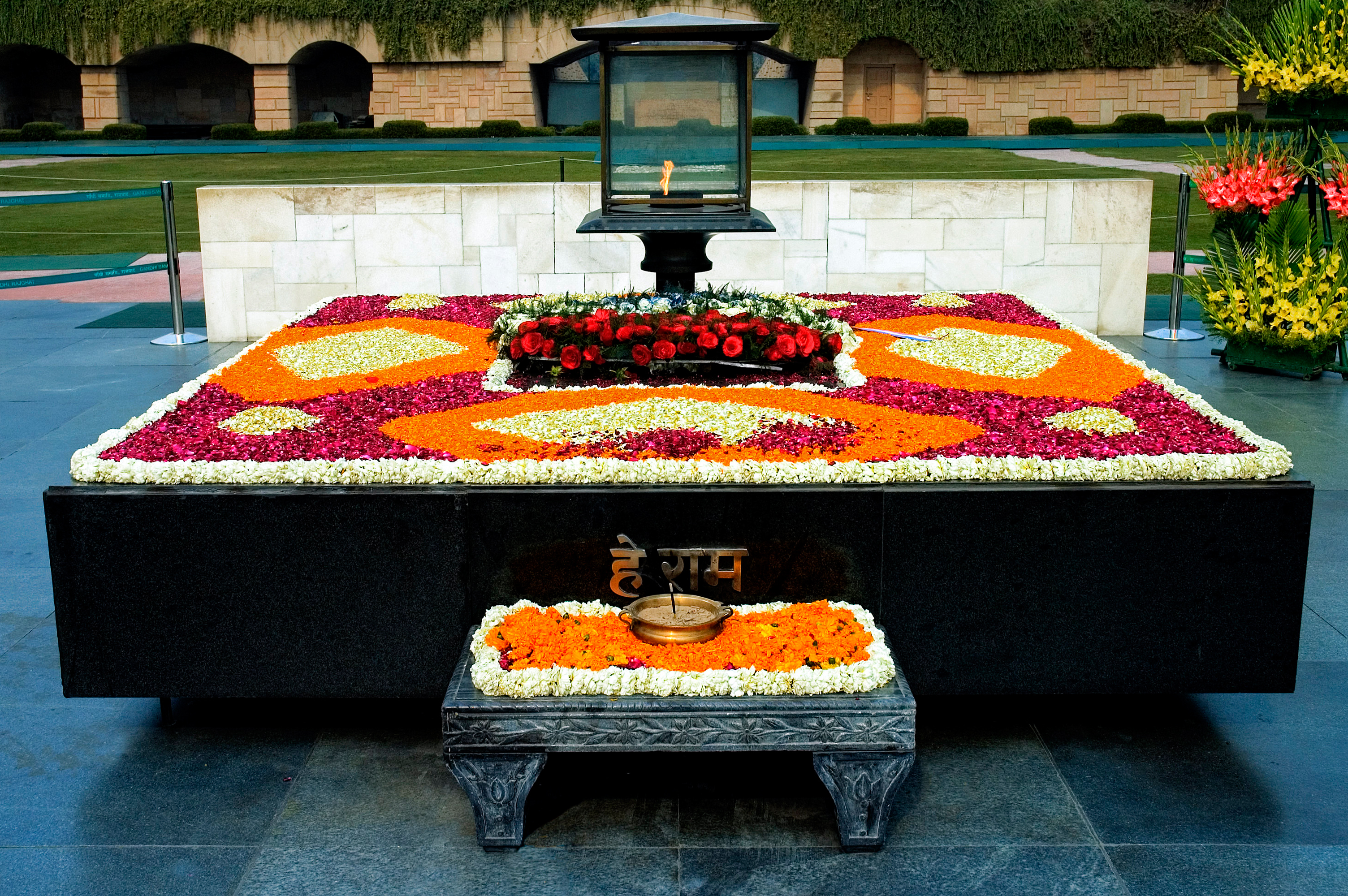
Image: Raj Ghat memorial, Wikimedia Commons. CC BY-SA 2.0, photo by Humayunn Niaz Ahmed Peerzaada.
Making a biographical film about Mahatma Gandhi presented an unusual storytelling problem. His life included years in South Africa, India’s freedom movement, negotiations with British authorities, communal violence, political disagreements and his assassination. Richard Attenborough’s Gandhi had to turn that enormous historical record into a feature-length narrative.
The challenge of compression
The British Film Institute records that Attenborough faced discouragement because Gandhi’s life was considered extremely difficult to encompass in a single film. The problem was not a shortage of important events but the opposite: there were too many.
The production therefore had to select episodes that could explain Gandhi’s political development and personal philosophy while keeping the story understandable for an international audience.
Period detail on a huge scale
The filmmakers did not rely only on dialogue to communicate history. Costumes, locations, props and crowd scenes were used to establish the period visually.
The funeral sequence became the clearest example. Instead of digitally manufacturing a crowd, the production brought hundreds of thousands of people together in Delhi. Guinness World Records lists more than 300,000 extras.
Working with historical memory
A film about Gandhi also had to deal with events that remained part of living public memory in India. The production worked with Indian institutions and personnel while attempting to recreate events from the independence era.
The result is a film interpretation rather than a substitute for historical scholarship. Like any biographical drama, it makes choices about emphasis, chronology and characterisation.
Why historical films need context
Films can introduce audiences to historical figures who might otherwise seem distant. At the same time, viewers benefit from treating a dramatic film as one interpretation and consulting historical biographies, archival material and scholarly sources for a fuller picture.
The BFI’s retrospective and its programme notes provide useful production context.
For readers interested in Gandhi’s historical legacy, NewsNationOnline also has an earlier feature on his efforts for Hindu-Muslim unity.
आपके लिए सुझाव
