
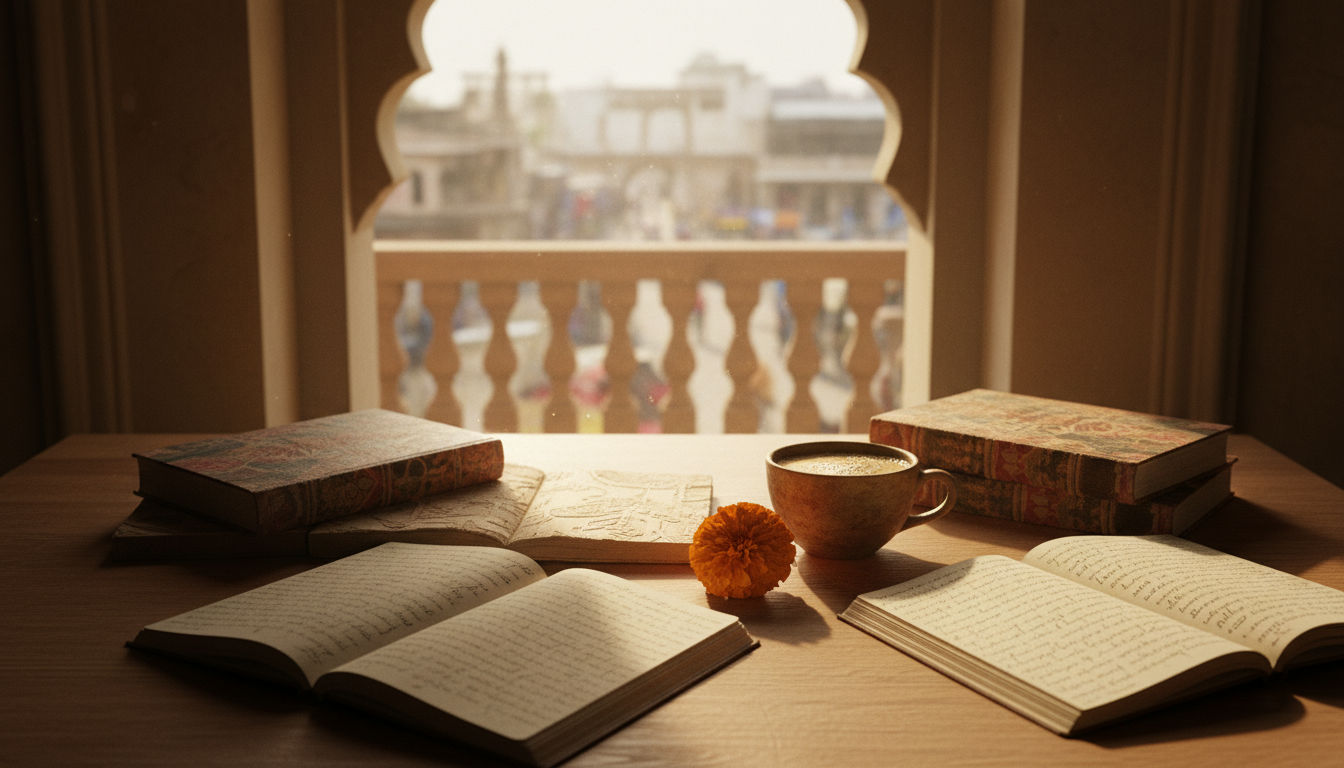
WordPress Daily Writing Prompt #2072: What aspects of your cultural heritage are you most proud of or interested in?
Heritage is a living conversation
What aspects of your cultural heritage are you most proud of or interested in? My answer is less about famous monuments than about language. I am fascinated by the words people use to welcome a guest, comfort a child, remember a loved one and tell a story. Buildings preserve history, but conversations keep it alive. What matters is not only what we inherit; it is what we choose to carry forward, and whether we share it generously. The sound of a familiar greeting can carry more personal meaning than the sight of a grand building. Both deserve care, but only one can answer us when we speak.
Beyond festivals and monuments
Heritage is often represented by architecture, clothing, food and celebrations. Yet culture also lives in habits too ordinary to photograph: a respectful greeting, a proverb or the way neighbours help in difficult times. Not every inherited custom deserves unquestioning loyalty. Some should be protected; others should change as society learns to become fairer. Mature cultural pride leaves room for both gratitude and honest questions. It does not confuse love of tradition with refusal to learn. A culture remains meaningful when people can examine its history without feeling that every question is a betrayal.
The languages that carry memory
In a multilingual society, a conversation may move between Hindi, Marathi, Urdu and English. The choice may reflect emotion, setting or relationship. A phrase can sound tender in one language and formal in another. A poem may lose its rhythm in translation but find new readers because someone tried. Each language offers a different doorway into experience. The tragedy would be to stop listening at the doorway simply because the voice sounds unfamiliar. I am especially interested in the expressions that cannot be translated neatly: words that carry the atmosphere of a home, a market or a childhood memory.
Translation is an act of respect
Good translation involves more than replacing words. It asks what a speaker means, which details matter and what a reader needs to understand. A local report translated into English can make a regional concern visible far beyond its origin. A Marathi story retold in Hindi may reach readers who would otherwise miss it. Translation cannot capture every nuance, and responsible writers should acknowledge uncertainty. Nevertheless, it opens a conversation that might never have begun. That is cultural heritage doing useful work. It is also a reminder that listening carefully is often more important than speaking impressively.
A classroom should build bridges
Children arrive at school with knowledge acquired through family conversations, games and observation. If a classroom dismisses their home language, it risks overlooking what they already know. Access to English and other widely used languages matters, but it need not come at the cost of shame about one’s first language. UNESCO’s work on languages in education supports learning in languages children understand and respect for linguistic diversity. Education should add doors rather than close the first one. A student can become confident in a new language while remaining proud of the one that first taught them how to ask questions.
Stories missing from history books
Every neighbourhood has stories rarely recorded in official histories: a family’s journey, an old market, a skilled artisan or a neighbour whose kindness changed someone’s life. Memory can be mistaken, so these accounts should be checked rather than romanticised. Still, they deserve to be heard. Recording an elder’s recollections with permission and comparing different accounts can preserve knowledge that might otherwise disappear. I am especially interested in people whose contributions were considered too ordinary to document. The history of a place is incomplete if it includes only leaders and landmarks, but not the people who made daily life possible.
Tradition must be allowed to change
A song performed by younger musicians may differ from the version their grandparents knew. A recipe adapts to available ingredients; a festival evolves with the needs of a new generation. Change does not automatically mean loss. UNESCO’s Intangible Cultural Heritage Convention recognises living practices and expressions that communities transmit and recreate. Culture should not be locked behind glass. It becomes meaningful when people practise it, question it and pass it on with care. Respecting the past does not require insisting that the future look exactly the same.
How we tell cultural stories matters
Journalism can bring overlooked traditions into public view, but it can also reduce complex communities to attractive images. Before publishing, we should ask who gets to speak, who is missing and whether people are represented fairly. Our guides to the world’s most spoken languages and UNESCO World Heritage Sites offer complementary ways to explore this subject. One concerns communication; the other, places and history. Both require respect for the communities involved. A good cultural story makes its subjects more understandable, not merely more exotic.
What I hope we pass on
Preserving heritage need not begin with an expensive project. We can learn a family expression, ask an elder about a local tradition, read literature in another language and credit the people who keep cultural practices alive. We can also correct stereotypes and teach children that pride in their background does not require contempt for others. If I had to choose one inheritance worth protecting, it would be the habit of listening across differences. Languages and stories connect generations only when someone speaks and someone else listens. That habit can help us protect what is precious without turning difference into division.
Your turn: what deserves to be remembered?
Which part of your cultural heritage matters most to you: a language, family story, craft, song, meal or value? Is there something you wish you had asked an older relative? Share your answer in the comments. Your memory might introduce another reader to a tradition they have never encountered—and inspire them to look again at their own.
Discover more from NewsNation Online
Subscribe to get the latest posts sent to your email.
आपके लिए सुझाव













Leave a Reply