
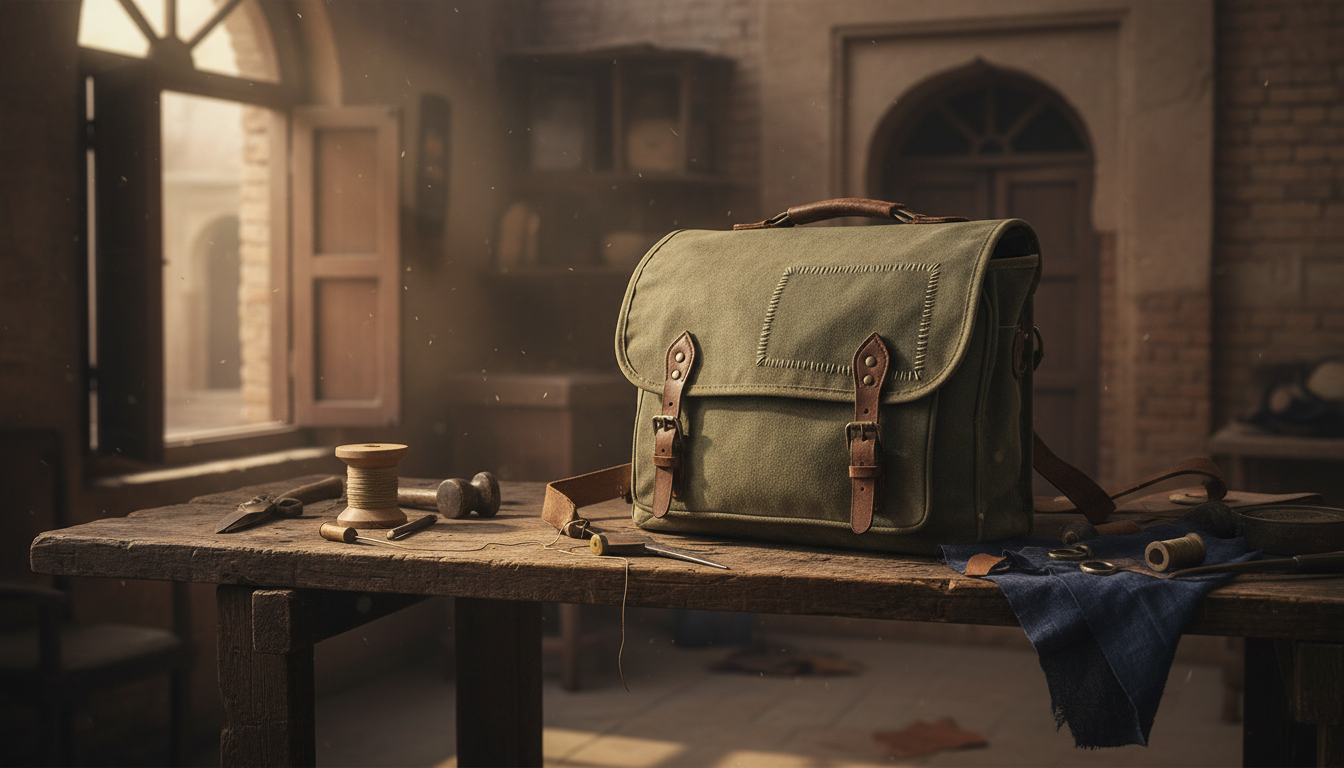
WordPress Daily Writing Prompt #1891: “What’s something most people don’t understand?”
Repairing things is about more than saving money. A second chance for an everyday object can teach patience, reveal hidden craftsmanship and help us think more carefully about what we consume.
The question behind a broken object
What is something most people don’t understand? My answer is the value of repairing things. A torn bag, a loose chair or a shirt missing a button may look like a small inconvenience. To me, each also presents a choice: discard what has become imperfect, or ask whether it can still serve us. I do not believe everything old is precious or that every repair is sensible. But I worry that the habit of replacing things too quickly can make us forget how much thought, labour and material went into them in the first place.
A scratch is not a verdict
A new object promises a clean beginning. Its surface is smooth, its colours bright and its flaws still hidden. An older object tells a different story. Its scratches reveal use; its fading shows that it has travelled with someone through ordinary days. Those marks do not automatically make it better, but they do not make it worthless either. Repair begins with a generous question: what is still good here? It is a useful question to ask before reaching for a shopping app or deciding that a familiar possession has reached the end of its life.
The work we rarely see
A schoolbag is more than fabric and a zip. Someone designed it, cut the material, stitched its seams, transported it and sold it. A chair contains timber or metal, craftsmanship and hours of work. When we replace such objects casually, we can overlook the people and resources behind them. This is why repairing things feels like an act of attention. It recognises that a product’s price tag never tells its entire story. The question is not whether we must keep everything forever, but whether we have understood what we are throwing away.
A quieter environmental choice
There is a practical environmental argument for repair, although the benefit varies by product and circumstance. Making and transporting replacements uses materials and energy; extending useful life can avoid some of that demand. The US Environmental Protection Agency’s guidance on waste explicitly includes repair alongside refusing, reducing, reusing and recycling. I like the modest scale of this advice. Nobody has to claim that mending one shirt will solve a global crisis. We can simply recognise that a smaller waste stream begins with many decisions made before something reaches the bin.
Respect the people who can fix things
Every town has people whose skill becomes visible only when something stops working: tailors, bicycle mechanics, cobblers, electricians and technicians. They diagnose problems that others cannot even name. Their work deserves fair payment, safe conditions and respect. Repair is not always a charming do-it-yourself activity; often it depends on professional expertise. In our earlier reflection, The People Who Show Up, we considered the importance of dependable work that rarely attracts applause. Repair workers belong in that conversation. A community that values their knowledge also values the people who keep everyday life moving.
Memory has a practical side
A repaired object may carry memories, but sentiment is not the only reason to keep it. A well-fitting jacket, a sturdy desk or a favourite cooking utensil may simply work better for its owner than an unfamiliar replacement. Familiarity has value. So does the confidence that comes from knowing how to maintain what we already possess. I am drawn to the idea that care can be visible: a neat patch, a replaced handle, a polished surface. These are not signs of failure. They can be evidence that someone thought the object was worth another chance.
The hidden cost of always buying new
Replacement can feel inexpensive when the purchase price is low. Yet there may be additional costs: time spent choosing, learning to use a different product, disposing of the old one and eventually replacing the new one too. None of this means the cheapest repair is automatically the wisest choice. A repair that fails repeatedly can become expensive and frustrating. What matters is making a considered comparison. Ask about durability, available parts, safety and total cost rather than judging only by the excitement of a fresh purchase.
Repair should be possible, not heroic
Consumers cannot repair everything through determination alone. Products may be sealed, spare parts unavailable or service information difficult to obtain. The UN Environment Programme’s work on circularity places repair and reuse within a wider effort to retain value and reduce waste. That reminds me that responsibility does not rest entirely on individual households. Manufacturers, public policy and local services influence whether repair is practical. A culture of repair needs products designed to last, skilled workers who can earn a living and customers who have real choices.
Knowing when to let go
There is also wisdom in replacement. Unsafe wiring, damaged safety equipment or a product that cannot be repaired reliably should not be kept in service out of guilt. Complex electrical, gas and structural repairs belong with qualified professionals. And a person should never feel morally inferior because time, disability, money or local availability makes repair unrealistic. The point is not to turn thrift into a competition. It is to replace automatic disposal with thoughtful judgement. Sometimes the responsible answer is to fix; sometimes it is to retire an object safely.
What I would teach a child
I would like children to see basic maintenance as part of education: sewing on a button, caring for a book, tightening a loose screw with supervision and knowing when to call an expert. These are small lessons in patience and responsibility. They also encourage questions: Why did this fail? What material is it made from? Can it be used differently? Our reflection on teaching children to ask better questions applies here. Repair is a practical classroom for curiosity, provided safety comes first and children are not expected to handle hazardous tools or equipment.
What deserves another chance?
Perhaps the deeper lesson is that usefulness and perfection are not the same thing. A repaired object may never look new, yet it can continue to do its job with dignity. I would rather live in a community that can both invent new things and care for old ones than in a culture that treats every flaw as a reason to discard. The next time something breaks, I hope to ask one question before reaching for a replacement: is there a sensible, safe way to make this useful again? What is one thing you have repaired, or wish you had repaired, instead of throwing it away? Share your experience in the comments.
Discover more from NewsNation Online
Subscribe to get the latest posts sent to your email.
आपके लिए सुझाव
















Leave a Reply