
WordPress Daily Writing Prompt #2848: What’s a thing you wish schools actually taught?
The lesson missing from the timetable
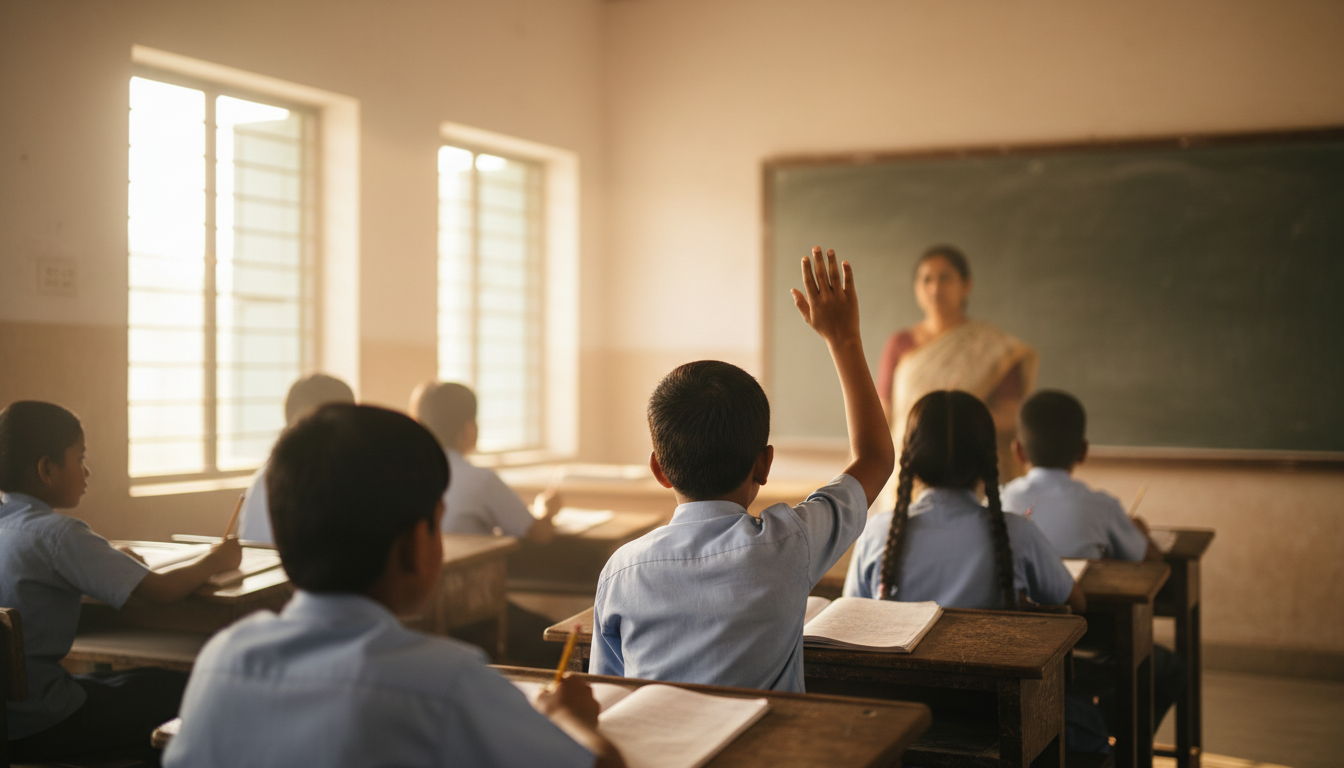
If I could add one lesson to every school timetable, I would not begin with another examination subject. I would teach children how to ask better questions. This may sound modest when students also need practical knowledge about money, technology, health and the world of work. Yet questioning is the habit that helps them learn all those things. A child who knows how to ask “How do we know?” is less likely to mistake confidence for evidence. A young adult who can ask “What am I missing?” has a better chance of making thoughtful decisions. To me, curiosity is not a distraction from education. It is one of education’s central purposes.
The classroom question we sometimes misunderstand
In many classrooms, the familiar exchange is simple: the teacher asks, a student answers, and the lesson moves on. There is nothing wrong with checking knowledge. The problem begins when students conclude that their job is only to produce the expected answer. A genuine question may be slower, less tidy and harder to mark. It can also reveal the exact point at which understanding stops. “Why does this rule work?” or “Would it still be true in another situation?” can take a lesson further than repeating a definition. We should not confuse a quiet classroom with a classroom where everyone understands.
Curiosity needs safety, not applause
Children do not always ask questions because they fear sounding foolish, wasting time or challenging authority. Some need longer to form their thoughts, especially when the language of instruction differs from the language spoken at home. An encouraging classroom does not have to celebrate every interruption. It needs fair ground rules: listen, take turns, distinguish a question from an insult, and allow the words “I don’t know yet.” In our article on moving from examination English to real-life English, we explore a related problem: knowledge matters more when learners can use it beyond the test paper.
A better question opens a door
Not all questions do the same work. “What is the answer?” may help us begin, but “What evidence supports that answer?” makes us think. “Who is responsible?” can be necessary, while “Who has not been heard?” may reveal an overlooked perspective. The point is not to turn every conversation into an interrogation. It is to practise asking questions that are clear, respectful and useful. I would love to see students learn how to change a vague question into a precise one, and how to notice when the answer requires more information than they currently have.
The internet makes this skill urgent
A dramatic video, a viral claim or a polished AI-generated explanation can look convincing before anyone checks it. That is why the question “Where did this come from?” belongs beside reading and writing. UNESCO’s media and information literacy guidance emphasises the ability to find, evaluate and produce information responsibly. A student who learns to check dates, sources and context is not merely becoming a careful internet user; that student is preparing to participate in public life. Our practical guide to checking misleading AI-generated news images shows how those questions matter outside school.
Knowledge and questioning belong together
I would never argue that curiosity makes facts unnecessary. We cannot question a historical claim intelligently without knowing something about the period, or investigate a scientific result without understanding the method. Knowledge gives questioning substance; questioning gives knowledge direction. The OECD Learning Compass 2030 describes education in terms of knowledge, skills, attitudes and values, including students’ capacity to navigate unfamiliar situations. That is a helpful reminder that learning should prepare people for circumstances a textbook cannot fully predict. Memorisation has a place, but it should be a beginning rather than the whole destination.
Learning to disagree without becoming enemies
One of the most useful questions is also one of the hardest: “Can you explain why you see it differently?” It asks for understanding before rebuttal. In a divided public conversation, that habit is valuable. Students can practise comparing two explanations, identifying shared facts and acknowledging uncertainty without pretending that every claim is equally supported. Respectful disagreement does not mean avoiding difficult subjects or giving misinformation a free pass. It means challenging ideas without humiliating people. The goal is not to produce children who never change their minds; it is to help them change their minds for good reasons.
A small change teachers can try
This lesson need not wait for a new textbook. A teacher might end a chapter by asking each student to write one unanswered question. A science class could compare two possible explanations before conducting an experiment. A history lesson could ask which voices are absent from the account. A language lesson could invite students to interview someone respectfully and report what they learned. These are examples, not a universal recipe: classrooms differ in size, time and resources. The important shift is to treat a thoughtful question as evidence of engagement, even when the answer is not immediately available.
Questions continue after graduation
Outside school, the habit becomes even more practical. Before accepting a job, we might ask what the contract actually says. Before sharing a sensational story, we might ask whether another reliable source confirms it. Before judging a neighbour, we might ask what we do not know about their circumstances. Before using an AI tool for an assignment, we should ask what it can verify and what it might invent. Our guide to using AI tools for studying and research responsibly offers a useful companion to this reflection. The best questions protect both our judgement and our humility.
The answer I hope children carry home
If I had to choose between a student who always answers first and one who sometimes pauses to ask a thoughtful question, I would not automatically favour the faster voice. Confidence is useful, but curiosity and care deserve equal space. Schools cannot teach everything children will need in an unpredictable future. They can, however, help students recognise what they do not know and find responsible ways to learn it. That is the lesson I wish every school taught deliberately: asking better questions is not a sign that learning has failed. It is often the moment learning truly begins.
Your turn: what would you put on the timetable?
WordPress asked: “What’s a thing you wish schools actually taught?” My answer is the art of asking better questions. Yours may be financial literacy, first aid, emotional awareness, civic responsibility or something entirely different. If you could add one lesson to every school, what would it be—and how would you teach it? Share your thoughts in the comments. The answers might reveal as much about the future we want as they do about the classrooms we remember.
Discover more from NewsNation Online
Subscribe to get the latest posts sent to your email.
आपके लिए सुझाव













Leave a Reply