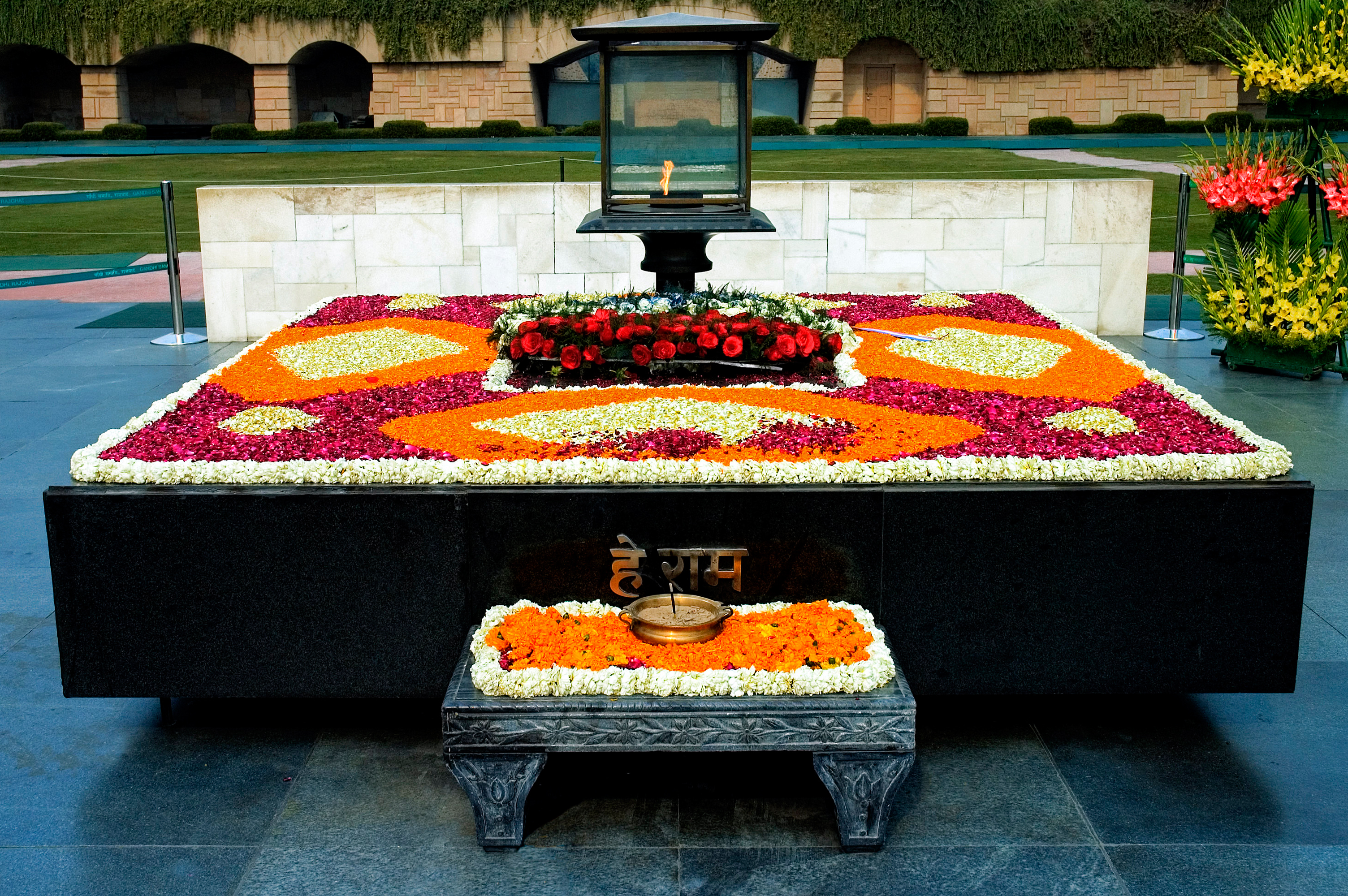
Image: Raj Ghat memorial, Wikimedia Commons. CC BY-SA 2.0, photo by Humayunn Niaz Ahmed Peerzaada.
The funeral scene in Richard Attenborough’s Gandhi draws its power from a real historical event: Mahatma Gandhi’s funeral in Delhi in 1948. The later film recreation used Rajpath and an enormous real crowd to evoke the scale of that moment.
The real funeral
Gandhi was assassinated on 30 January 1948. His funeral and cremation took place in Delhi the following day, 31 January. Historical photographs show enormous crowds gathering for the procession.
Wikimedia Commons preserves several public-domain photographs of the 1948 funeral, allowing viewers to compare the real event with later cinematic recreations.
Raj Ghat and historical memory
Raj Ghat marks the site associated with Gandhi’s cremation and today serves as a major memorial. The black marble platform and eternal flame have become familiar symbols of remembrance.
The memorial is also a reminder that the film’s funeral sequence is not simply a spectacle. It refers to a real event that became part of India’s collective historical memory.
Recreating scale for cinema
Attenborough’s production filmed its funeral sequence on 31 January 1981, 33 years after the original funeral. Guinness World Records records more than 300,000 extras, while BFI material has estimated the crowd at around 400,000.
The production used eleven camera crews and eventually edited the sequence to approximately 125 seconds.
Why the connection matters
The relationship between the historical photographs, the Raj Ghat memorial and the film sequence illustrates how public memory can move between archives, physical places and cinema.
The original photographs provide historical evidence; Raj Ghat provides a physical place of remembrance; and Gandhi provides a dramatic interpretation for a global film audience.
See the Wikimedia Commons record of Gandhi’s funeral photograph and the Wikimedia Commons record of the Raj Ghat memorial photograph.


For production details, read NewsNationOnline’s feature on the one-morning funeral shoot.
आपके लिए सुझाव
