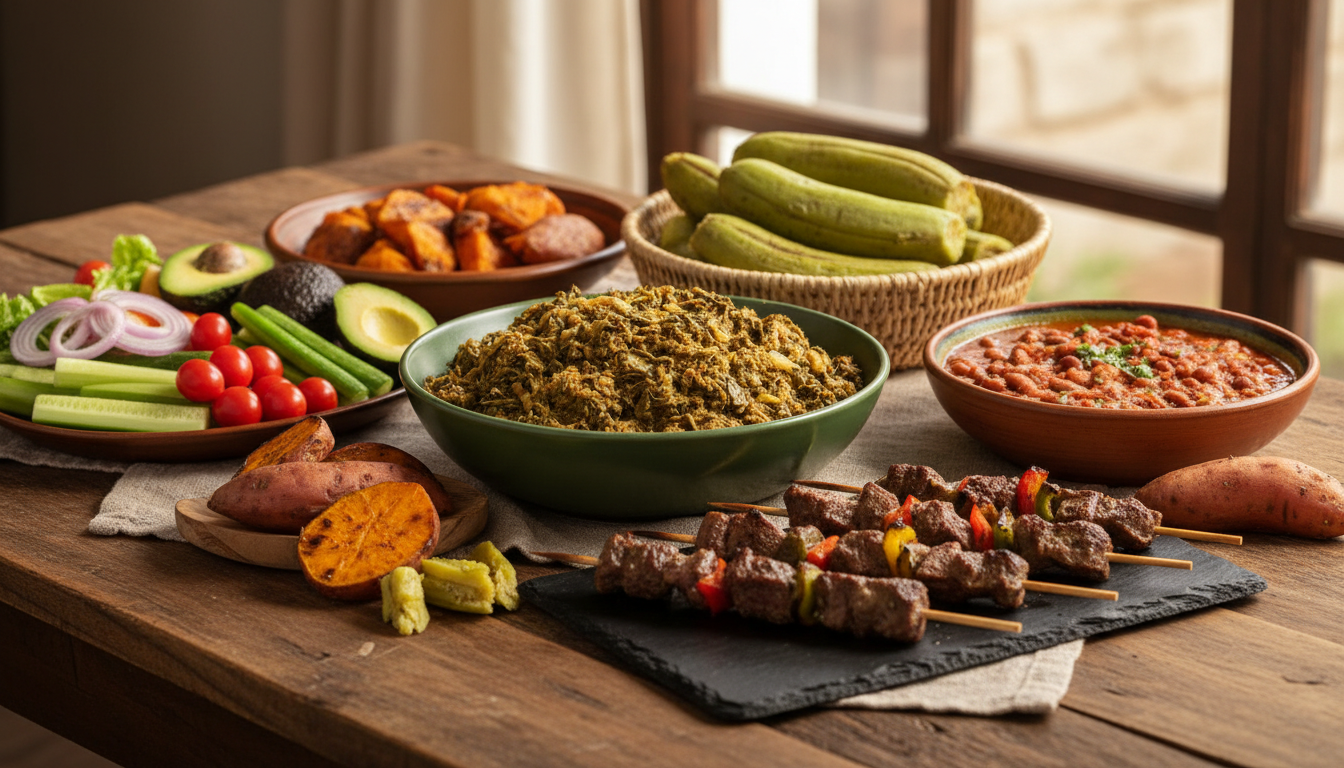
Rwandan food is rooted in crops, landscapes and everyday family cooking. From isombe made with cassava leaves to green plantains, beans and grilled brochettes, the country’s cuisine is more diverse than a single signature dish. This guide explains 15 foods and food traditions, including their cultural context and practical considerations for travellers.

1. Isombe: cassava leaves in a rich sauce
Isombe is one of Rwanda’s best-known traditional preparations. Finely chopped cassava leaves are cooked thoroughly, often with groundnuts or other ingredients, until tender. Recipes vary between households and regions. Cassava leaves must be correctly prepared and fully cooked; raw or inadequately processed cassava plant material can contain harmful cyanogenic compounds.
2. Ibitoke: green cooking bananas
Green cooking bananas, often called ibitoke, are a familiar staple in Rwandan kitchens. They may be boiled, steamed or simmered with vegetables and sauces. Their mild flavour makes them a practical accompaniment to beans and other dishes.
3. Ibihaza: pumpkin and beans
Pumpkin-based dishes show how everyday meals draw on locally available crops. Pumpkin may be cooked with beans or served alongside other vegetables, producing hearty, inexpensive food rather than a restaurant-only speciality.
4. Beans: a foundation of everyday meals
Beans are a central source of protein in many Rwandan households. Preparation methods differ, but slowly cooked beans with onions, tomatoes or seasonings frequently accompany plantains, cassava, rice or potatoes. Their importance is social and nutritional as well as culinary.
5. Brochettes: grilled skewers
Brochettes are grilled skewers, commonly made with meat, and are popular at casual eateries and social gatherings. They illustrate how urban dining and roadside food culture coexist with home-cooked staples. Visitors should choose establishments that handle and cook meat safely.
6. Ugali or ubugali: a filling starch
Ubugali is a firm porridge prepared from flour such as maize or cassava and eaten with sauces, vegetables or meat. Related versions appear across East Africa, although names, texture and preferred flour differ from place to place.
7. Sweet potatoes and Irish potatoes
Both sweet potatoes and potatoes are common ingredients in Rwanda’s highland food systems. Boiled, roasted or cooked into stews, they provide a filling base for meals. Highland cultivation and local markets influence availability.
8. Groundnut sauce
Groundnuts can be crushed or processed into sauces that enrich vegetable and starch-based dishes. This is especially relevant to isombe variations. Anyone with a peanut allergy should ask explicitly about ingredients, including sauces that may not look nut-based.
9. Freshwater fish
Rwanda’s lakes support fishing communities, and fish appears in local food traditions and restaurants. Preparation may include grilling, frying or stewing. Sustainable sourcing and local fishing regulations matter when choosing seafood.
10. Akabenz: pork prepared for sharing
Akabenz is a pork dish associated with Rwandan eateries, often prepared in small pieces with seasonings and vegetables. Not every Rwandan household eats pork; dietary choices vary by religion, community and personal preference.
11. Sambaza from Lake Kivu
Small fish known as sambaza are closely associated with Lake Kivu. They may be fried and served as a snack or accompaniment. Their role links local food with lake ecology, livelihoods and cross-border regional traditions.
12. Vegetables and seasonal produce
Leafy greens, cabbage, tomatoes, onions, carrots and other vegetables appear in markets and household cooking. Seasonality, location and household income affect what is available, so no single plate can represent all Rwandan diets.
13. Milk and cattle traditions
Cattle and milk carry cultural significance in parts of Rwanda’s history, including pastoral traditions and ceremonies. Fermented milk products and fresh milk remain relevant, although contemporary diets are varied and should not be reduced to a single historical identity.
14. Rwandan coffee
Rwanda is known internationally for arabica coffee produced in its highlands. Coffee farming, washing stations and export markets are important economic stories. In Kigali, cafés can introduce visitors to locally roasted beans, but quality and sourcing vary by business.
15. Food etiquette and market visits
Meals may be shared with family or friends, and hospitality customs vary by household. Visitors should ask before photographing people, respect religious and dietary restrictions, wash hands and follow local advice on drinking water and food hygiene.
How Rwanda’s geography shapes its food
Rwanda’s densely settled highlands, smallholder farming and lakeside communities influence what people grow and eat. Cooking bananas, beans, tubers and vegetables are important in daily meals, while fish is more closely linked to lake regions. Kigali restaurants add contemporary regional and international influences. Food culture also changes over time, so traditional and modern practices should be understood together.
Food safety and dietary needs
Ask about peanuts, dairy, meat and cooking ingredients if you have allergies or dietary restrictions. Choose well-cooked food, safe drinking water and reputable vendors. Cassava leaves require thorough processing and cooking. Travellers should consult current official health guidance for Rwanda before departure.
Explore Rwanda beyond the plate
Read our Kigali city guide, 15 places to visit in Rwanda and complete Rwanda travel guide. For broader agricultural context, explore FAO’s Rwanda country information and Rwanda’s National Agricultural Export Development Board.
Discover more from NewsNation Online
Subscribe to get the latest posts sent to your email.
आपके लिए सुझाव






Leave a Reply