
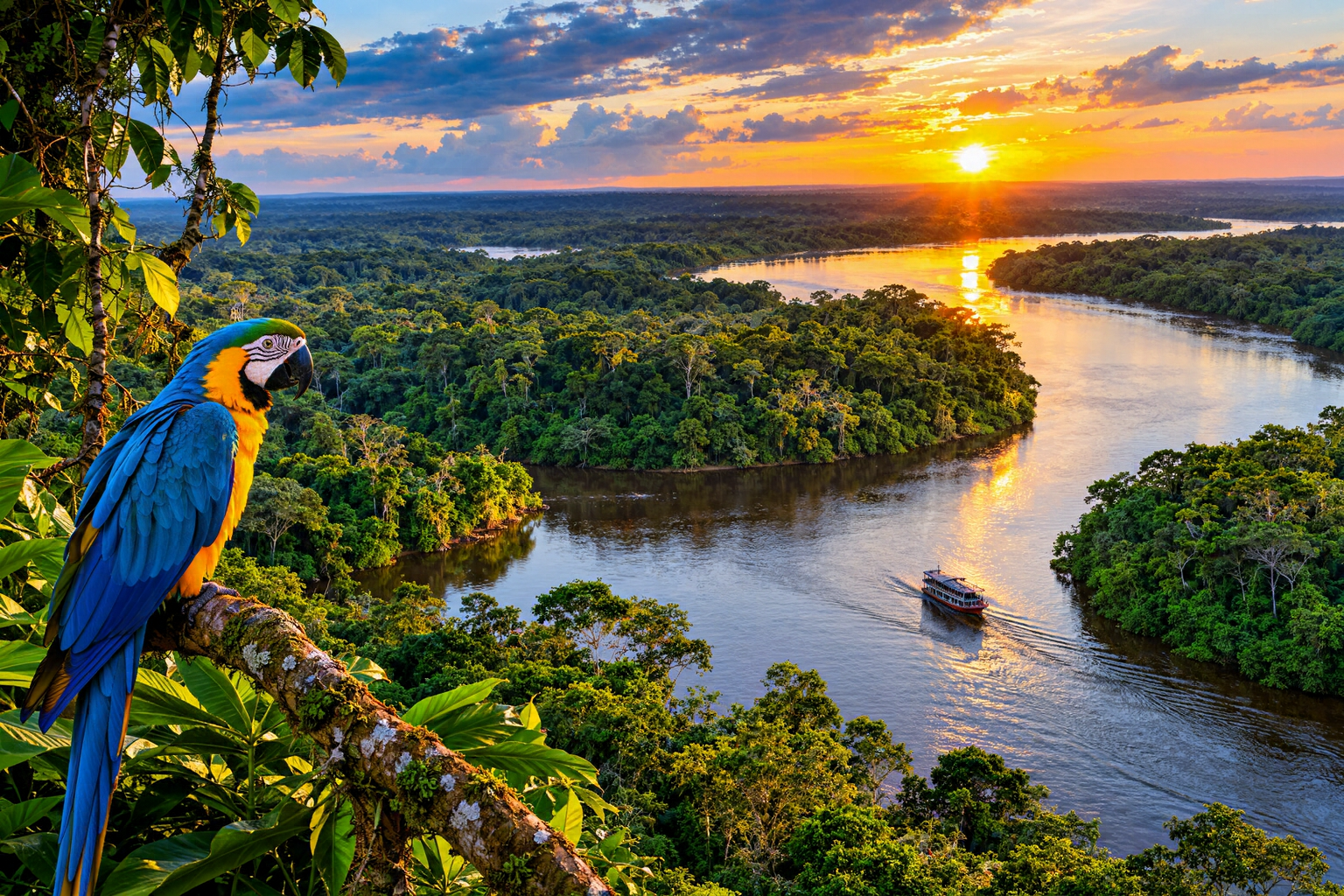
NewsNationOnline | South America. The Amazon is one of the world’s most important tropical forest systems, stretching across several South American countries. Protecting its biodiversity and carbon stores must be considered alongside the needs of communities that live and work there.
The ecological importance
Forests influence water cycles, provide habitat and store carbon. Deforestation, fire, infrastructure and illegal extraction can affect ecosystems and the livelihoods that depend on them.
The challenge of earning a living
Forest-based products such as fish, nuts and other goods can support local incomes. Yet remote communities often face high transport costs, inadequate cold storage and limited access to buyers. The World Bank has highlighted these barriers in the Amazon bioeconomy.
What sustainable development requires
Solutions depend on land rights, credible monitoring, locally appropriate transport, sustainable harvesting and participation by Indigenous peoples and other residents. No single policy works equally well across the entire basin.
Source and further reading: Background research and institutional analysis. This article distinguishes reported developments from analysis and should be read alongside subsequent official updates where relevant.
Related South America coverage: Amazon bioeconomy and El Niño weather risks.
Why the Amazon’s water cycle matters
Trees release moisture into the atmosphere through evapotranspiration. This process helps shape rainfall across the basin and influences agriculture and water supplies beyond the forest. Deforestation can alter local temperatures, soil conditions and rainfall patterns, although the scale and timing of effects differ across locations.
What effective conservation looks like
Forest protection requires more than setting aside land on a map. Effective measures include enforcing land rights, monitoring illegal clearing, supporting Indigenous stewardship, preventing uncontrolled fires and creating livelihoods that do not depend on forest destruction. Public agencies must also consider roads, mining and agricultural expansion.
How to measure progress
Annual deforestation figures, fire alerts, biodiversity indicators and household incomes offer different perspectives. A decline in clearing in one year is encouraging but does not establish that the ecosystem is secure. Long-term monitoring and transparent data are essential.
Why the forest is important beyond its borders
The Amazon influences regional rainfall and contains habitats found nowhere else. Its trees and soils store carbon, while rivers support fisheries and transport. Changes to forest cover can affect biodiversity and the livelihoods of people living within the basin. The effects vary across locations, so local scientific monitoring is essential.
Who lives and works in the Amazon
Indigenous peoples, traditional communities, small farmers and urban residents have different relationships with the forest. Policies designed without their participation can create conflict or undermine livelihoods. Secure rights, access to public services and meaningful consultation are important parts of sustainable development.
The pressures behind deforestation
Land conversion, illegal extraction, poorly planned infrastructure and fires can contribute to forest loss. Economic incentives and weak enforcement may make destructive activities profitable. Effective responses need credible monitoring, lawful land management and alternatives that allow residents to earn a living without degrading ecosystems.
What the bioeconomy can offer
Forest-based products, fisheries and services may generate income while maintaining ecological functions. But producers often face transport delays, spoilage and limited access to credit or buyers. Investments in cold storage, training and reliable market connections can make sustainable businesses more viable when accompanied by environmental safeguards.
Why conservation data need care
Deforestation, forest degradation and fire activity are related but distinct measures. A fall in one indicator does not mean all pressures have disappeared. Satellite observations should be interpreted alongside ground verification and transparent methods. Short-term gains also need to be sustained over many years.
What success should look like
A strong approach would combine healthier ecosystems, reduced illegal clearing, stronger community rights and improved household opportunities. Measuring only export value or protected area size provides an incomplete picture. Conservation is most durable when local people see tangible benefits and can help shape decisions.
Discover more from NewsNation Online
Subscribe to get the latest posts sent to your email.
आपके लिए सुझाव














Leave a Reply