
The world’s natural wonders are not defined by a single official ranking. They are landscapes and ecosystems whose beauty, scale, geology and biodiversity reveal the forces that shape Earth. From the Grand Canyon’s exposed rock layers to the Great Barrier Reef’s living coral communities, each place tells a different scientific story—and faces distinct conservation challenges.
Grand Canyon, United States: A record written in rock
Arizona’s Grand Canyon was carved by the Colorado River and related erosion processes. Its walls expose rock formations that preserve evidence of roughly two billion years of geological history, although the canyon itself is much younger than the oldest rocks visible within it. UNESCO inscribed Grand Canyon National Park on the World Heritage List in 1979. The canyon is also culturally important to Indigenous communities with longstanding relationships to the landscape.
The region’s varied elevations support different ecological communities, from river corridors to higher forests. Visitors should not mistake a short distance on a map for an easy hike: extreme heat, steep routes and limited water can make travel below the rim hazardous. Official park advice should guide any trip.
Great Barrier Reef, Australia: A living ecosystem
Off northeastern Australia, the Great Barrier Reef is the world’s largest coral reef ecosystem. UNESCO’s World Heritage description identifies thousands of individual reefs and hundreds of islands within a marine landscape recognized in 1981. Corals are living animals that form reef structures over time; they depend on complex relationships with algae and surrounding marine life.
Reefs support fish, turtles, dugongs and many other species. They are also vulnerable to marine heatwaves, coral bleaching, declining water quality and other pressures. Conservation involves more than protecting scenic underwater views: it requires attention to climate, coastal development and connected habitats.
Iguazú and Iguaçu Falls: One river, two countries
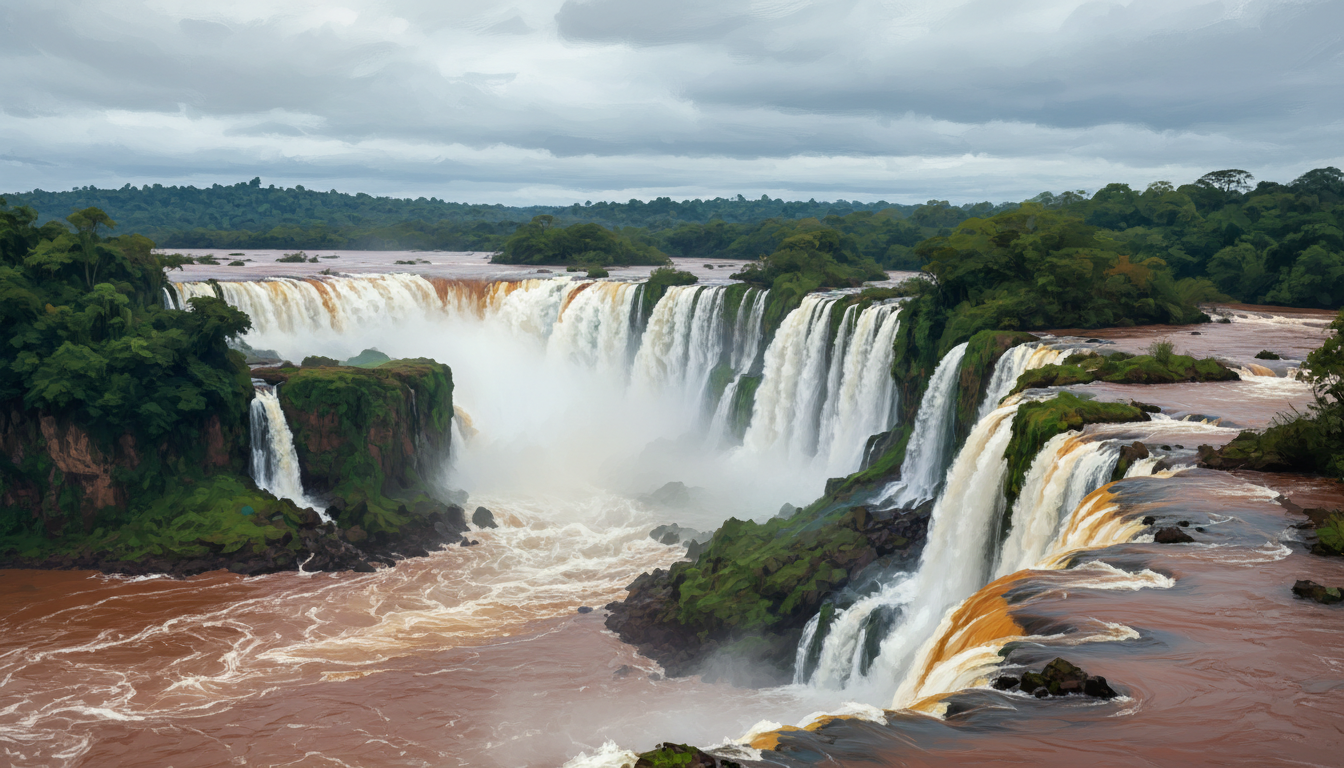
The Iguazú waterfall system lies on the Argentina–Brazil border. A series of cascades extends across nearly three kilometres of the river, with drops reaching about 80 metres. The surrounding Atlantic Forest supports rich biodiversity, including threatened wildlife. UNESCO separately inscribed Iguazú National Park in Argentina in 1984 and Iguaçu National Park in Brazil in 1986.
Visitors can experience different perspectives from each side of the border. Seasonal water levels affect the appearance of the falls and access to viewpoints, so conditions should be checked before travelling.
Victoria Falls, Zambia and Zimbabwe
Victoria Falls, known locally as Mosi-oa-Tunya, is a vast curtain of falling water on the Zambezi River between Zambia and Zimbabwe. Its extraordinary spray, sound and gorge landscape make it a major natural landmark. Water volume changes with the season, producing very different visitor experiences at high and low flow.
Mount Everest and the Himalayas
Mount Everest stands on the Nepal–China border and is Earth’s highest mountain above sea level. The Himalayan range was formed through the continuing collision of tectonic plates. Its landscapes are not simply mountaineering destinations: mountain communities, fragile ecosystems and glaciers are part of the region’s environmental and cultural significance. High-altitude tourism raises questions about safety, waste and local livelihoods.
The aurora: Light in polar skies
The aurora borealis in the Northern Hemisphere and aurora australis in the Southern Hemisphere are atmospheric light displays. Charged particles associated with solar activity interact with Earth’s magnetic environment and atmosphere, producing shifting colours and patterns. Visibility depends on geomagnetic activity, darkness, weather and location; no operator can guarantee a sighting.
The Amazon rainforest: A vast living system
The Amazon basin spans multiple South American countries and contains immense biological and cultural diversity. Rainforest ecosystems help regulate water cycles and store carbon, while Indigenous peoples and local communities have deep relationships with the region. Deforestation, fires and changes in climate can affect habitats and livelihoods far beyond the immediate areas cleared.
Are these the official Seven Natural Wonders?
No single worldwide authority determines one definitive set of seven natural wonders. Different organizations and public campaigns publish different lists. UNESCO World Heritage inscription is a separate conservation designation with formal criteria; it should not be confused with a popularity ranking.
How to explore responsibly
Follow protected-area rules, keep a safe distance from wildlife, stay on authorized trails and avoid removing natural materials. In sensitive marine areas, follow local reef-safe practices and approved operators. Consider the environmental costs of travel and support conservation-led community businesses.
Official sources and related coverage
Consult UNESCO’s official descriptions of the Grand Canyon, Great Barrier Reef, Iguazú National Park and Iguaçu National Park. Explore related NewsNationOnline guides to UNESCO World Heritage Sites and the New Seven Wonders.
Frequently asked questions
Is the Great Barrier Reef a single reef?
No. It is an extensive ecosystem containing many individual reefs and islands.
Are Iguazú and Iguaçu two different waterfalls?
The names refer to the same cross-border waterfall system, viewed and protected from Argentina and Brazil.
Does UNESCO rank the seven best natural wonders?
No. UNESCO recognizes qualifying World Heritage properties; it does not issue a definitive global top-seven list.
Discover more from NewsNation Online
Subscribe to get the latest posts sent to your email.
आपके लिए सुझाव











Leave a Reply