

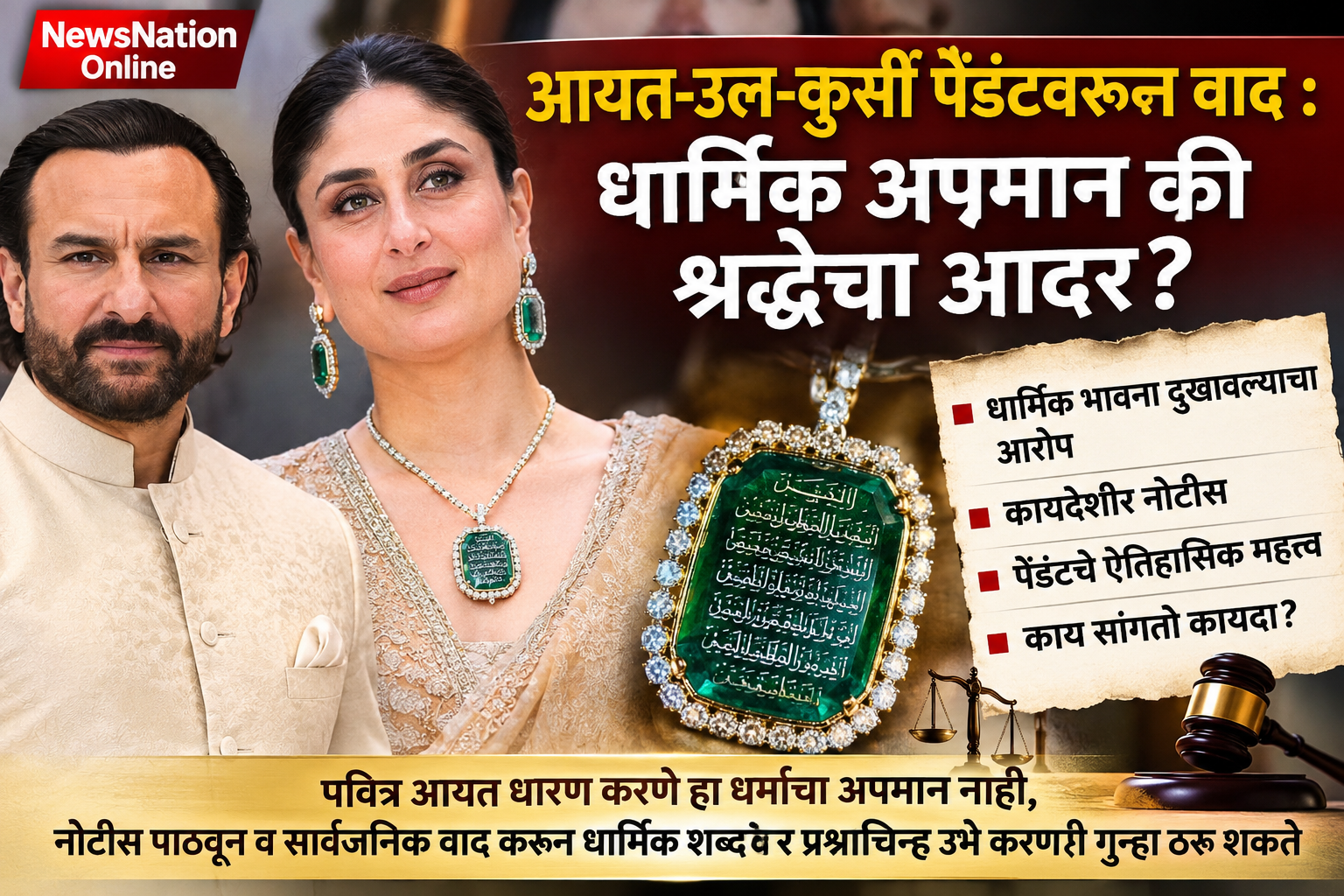
Jalna | NewsNation Online: The controversy surrounding an Ayat-ul-Kursi pendant worn by actor Kareena Kapoor Khan raises questions about religious reverence, personal expression and the legal threshold for allegations of offending religious sentiments.
According to media reports, Congress leader Abbas Hafeez sent a legal notice to Kapoor and stylist Rhea Kapoor objecting to the presentation of images featuring the pendant, seeking removal of the pictures and an apology. These are allegations, not judicial findings.
A symbol of reverence?
Ayat-ul-Kursi is verse 255 of Surah Al-Baqarah in the Quran. Wearing a pendant bearing sacred words respectfully can be an expression of faith or respect. A photograph alone cannot establish whether its wearer follows the verse’s teachings. Islamic scholars hold differing views about wearing Quranic inscriptions as jewellery.
Adv. Mahesh Dhannawat’s statement
“Wearing a pendant bearing a sacred verse with reverence is not, by itself, an insult to any religion. Respecting the words inscribed on it and following their teachings is a positive expression of faith. The mere act of wearing such a pendant should not be equated with deliberately hurting religious sentiments. Anyone may issue a legal notice, but before turning it into a public controversy, the intention, context and evidence should be examined.”
The legal distinction
Article 19(1)(a) of India’s Constitution protects freedom of expression and Article 25 protects freedom of religion, subject to applicable limitations. Section 299 of the Bharatiya Nyaya Sanhita concerns deliberate and malicious acts intended to outrage religious feelings. Sending a notice does not establish that an offence occurred.
Public discussion should distinguish the act of wearing an heirloom or religious pendant from the manner in which it is displayed, while respecting differing religious interpretations. Dialogue and restraint are preferable to assuming malicious intent without evidence.
Background: Divya Marathi report on the pendant controversy. Featured artwork is illustrative.
Scientific temper and a centuries-old heirloom
Article 51A(h) of the Indian Constitution identifies developing scientific temper, humanism, and the spirit of inquiry and reform as a fundamental duty of citizens. Religious objections should likewise be evaluated with attention to evidence, context and intent.
Adv. Mahesh Dhannawat asked: “If this pendant is indeed centuries old and has been worn respectfully over generations, how does wearing the same pendant suddenly become an insult to religion today? What new context or deliberately disrespectful act is being alleged? Our Constitution encourages scientific temper; an accusation of religious wrongdoing should not be made without evidence.”
The claimed age of the pendant and its historical use require independent verification. Prior use may be relevant context, but it does not automatically determine whether any present conduct is lawful.
सीधे अपनी Facebook फ़ीड में पाएँ — News Nation Online पेज को Follow करें।
Discover more from NewsNation Online
Subscribe to get the latest posts sent to your email.
आपके लिए सुझाव


















Leave a Reply