
November 2 connects decisions made in wartime diplomacy with milestones in aviation, civil rights and space exploration. On this date in 1917, Britain issued the Balfour Declaration concerning Palestine. In 1947, Howard Hughes briefly flew his enormous experimental aircraft, the H-4 Hercules. In 1983, the United States enacted a federal holiday honouring Martin Luther King Jr. And in 2000, three astronauts arrived at the International Space Station to begin its first long-duration expedition.
1917: The Balfour Declaration and the future of Palestine
On November 2, 1917, British Foreign Secretary Arthur James Balfour sent a letter to Lord Rothschild communicating the British government’s support for the establishment in Palestine of a national home for the Jewish people. The document, preserved in the British Library’s archives and reproduced by the United Nations, was issued during the First World War, when the territory was still under Ottoman rule.
The letter also stated that nothing should prejudice the civil and religious rights of the existing non-Jewish communities in Palestine, or the rights and political status of Jews elsewhere. Those qualifications are central to understanding the document. The declaration supported a Jewish national home but did not set out a detailed constitutional settlement or guarantee equal political representation for the population already living there.
Supporters of Zionism regarded the statement as an important diplomatic recognition of Jewish national aspirations, shaped partly by a long history of antisemitism and persecution. Palestinian Arabs, however, saw a major power making commitments about their homeland without their consent or an explicit assurance of their national self-determination. British wartime correspondence with Arab leaders and other imperial arrangements further complicated the picture.
The declaration was later incorporated into the framework of the British Mandate for Palestine. It influenced developments that culminated in the establishment of Israel in 1948, Palestinian displacement and a conflict that remains unresolved. Historians distinguish the 1917 letter from those later outcomes: the document did not by itself create a state, and it cannot explain the entire subsequent history. Its anniversary is an opportunity to examine both Jewish aspirations and Palestinian rights without reducing either community’s history to a slogan.
1947: Howard Hughes flies the enormous Spruce Goose
Thirty years later, on November 2, 1947, aviation entrepreneur Howard Hughes piloted the Hughes H-4 Hercules flying boat above the water at Long Beach, California. The aircraft, popularly nicknamed the Spruce Goose, made its first and only flight. The Smithsonian Institution’s collection record confirms the date and describes its intended wartime purpose.
The project grew from an urgent Second World War problem: Allied shipping faced attacks from German submarines, and planners imagined a very large aircraft that could transport troops and supplies across the Atlantic. Restrictions on strategic metals encouraged the use of laminated wood. Despite its familiar nickname, the aircraft was built chiefly from birch rather than spruce.
Its development took longer than the war. By the time the prototype was ready, the military need that had justified it had changed. Hughes nonetheless wanted to demonstrate that the massive machine could fly. During a water-taxi test, it lifted off, travelled roughly a mile and landed safely. That short hop was a striking engineering demonstration, but not evidence that the aircraft could operate reliably as a practical transoceanic transport.
The H-4 never entered production. Its story illustrates the difference between a spectacular prototype and a commercially or militarily useful technology. Engineering ambition, cost, shifting requirements and public scrutiny all mattered. Today the aircraft survives as a museum exhibit, reminding visitors that an invention’s historical importance is not always measured by how widely it is adopted.
1983: A federal holiday honours Martin Luther King Jr.
On November 2, 1983, President Ronald Reagan signed legislation establishing a United States federal holiday in honour of civil-rights leader Martin Luther King Jr. The Reagan Presidential Library preserves the signing remarks and identifies the law as Public Law 98-144.
King had led campaigns against racial segregation and discrimination through nonviolent protest, public organising and moral argument. He became closely associated with the Montgomery bus boycott, the movement for voting rights and the 1963 March on Washington. His assassination in 1968 intensified calls for the country to commemorate his work, but federal recognition did not come quickly.
The campaign involved sustained pressure from King’s family, civil-rights organisers, members of Congress and supporters across the country. Representative John Conyers introduced legislation soon after King’s death; Coretta Scott King continued to advocate for the holiday. Opposition included concerns about the cost of a paid federal holiday and disputes over King’s legacy. The eventual signing therefore marked the outcome of a prolonged political struggle, not an immediate consensus.
The holiday was first observed federally in January 1986 and is now observed on the third Monday of January. The US National Archives documents this timeline. November 2 is the date of the law’s signing, not King’s birthday and not the date on which the holiday is celebrated. That distinction matters in a historical calendar.
2000: The first resident crew reaches the space station
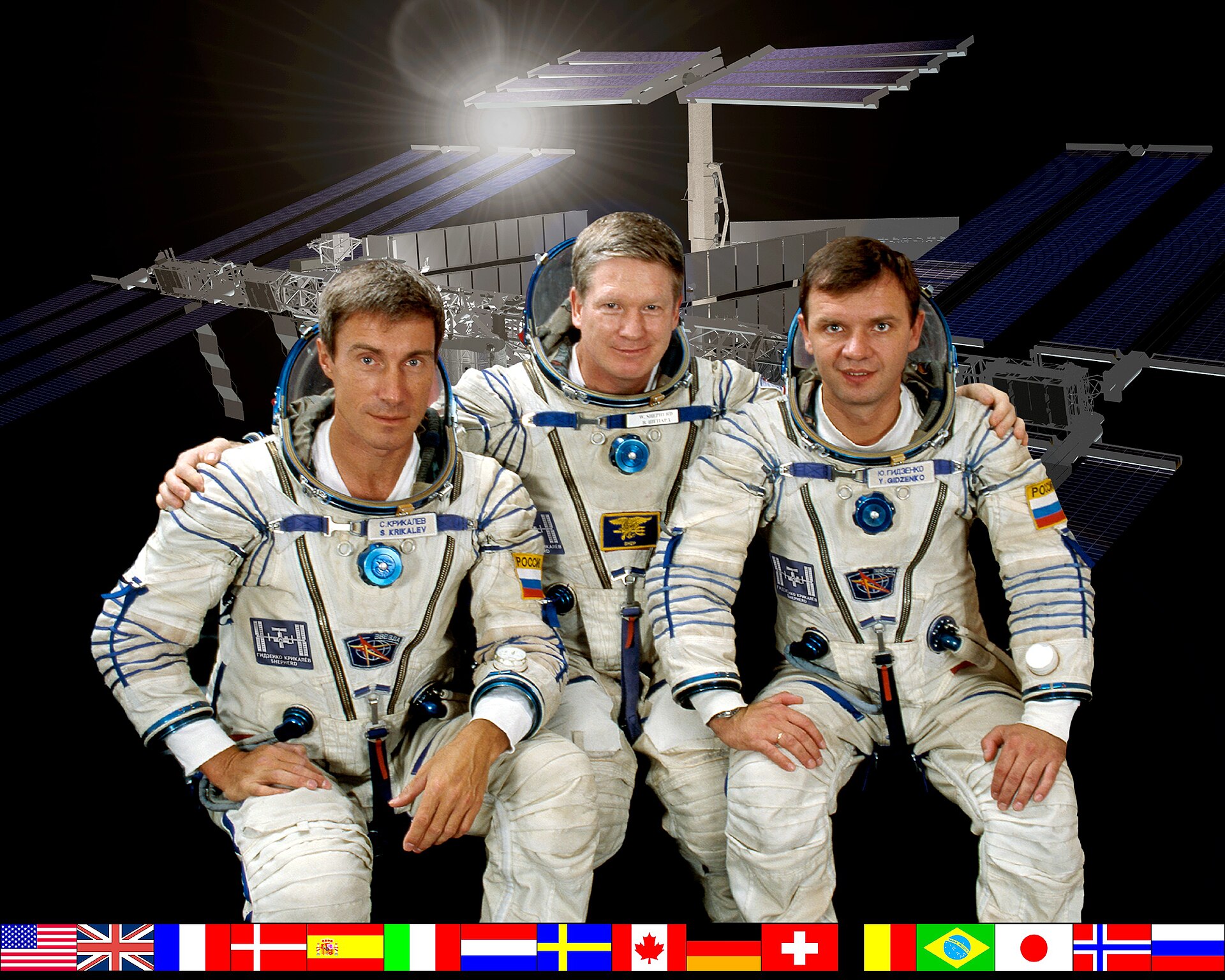
On November 2, 2000, NASA astronaut William Shepherd and Russian cosmonauts Yuri Gidzenko and Sergei Krikalev arrived at the International Space Station. Their Soyuz spacecraft had launched on October 31. According to NASA’s mission history, the crew docked, entered the orbital complex and began the first long-duration expedition, known as Expedition 1.
The station was not a finished laboratory waiting for occupants. The three men had to activate and check essential systems, establish working routines and help prepare the growing structure for additional modules and visiting spacecraft. Their mission demonstrated how humans could live and work aboard a continuously occupied international facility rather than make only short visits.
The project brought together American and Russian space experience after the Cold War, alongside contributions from other international partners. Cooperation did not remove political tensions on Earth, but it established practical systems for shared operations, research and safety. Expedition 1 returned to Earth in March 2001 after handing the station to its next crew.
November 2, 2000, marks the beginning of continuous human occupation of the station. It should not be confused with the station’s first module launch in 1998 or the crew’s launch on October 31. For the earlier launch anniversary, see our October 31 history report.
What these four anniversaries teach us
The Balfour Declaration shows how diplomatic language can have consequences far beyond its original setting. The Spruce Goose reveals both the promise and limits of technological experimentation. The King holiday demonstrates that public commemoration often follows decades of civic action. Expedition 1 shows what sustained international scientific cooperation can achieve.
A reliable “on this day” account should also distinguish a signing from a later implementation, a single flight from an operational aircraft, and a spacecraft launch from the start of habitation. For another look at the ways institutions and societies change over time, read our November 1 in History edition.
Primary references: United Nations declaration text; British Library catalogue; Smithsonian aviation archive; Reagan Library; and NASA.
Discover more from NewsNation Online
Subscribe to get the latest posts sent to your email.
आपके लिए सुझाव
















Leave a Reply