
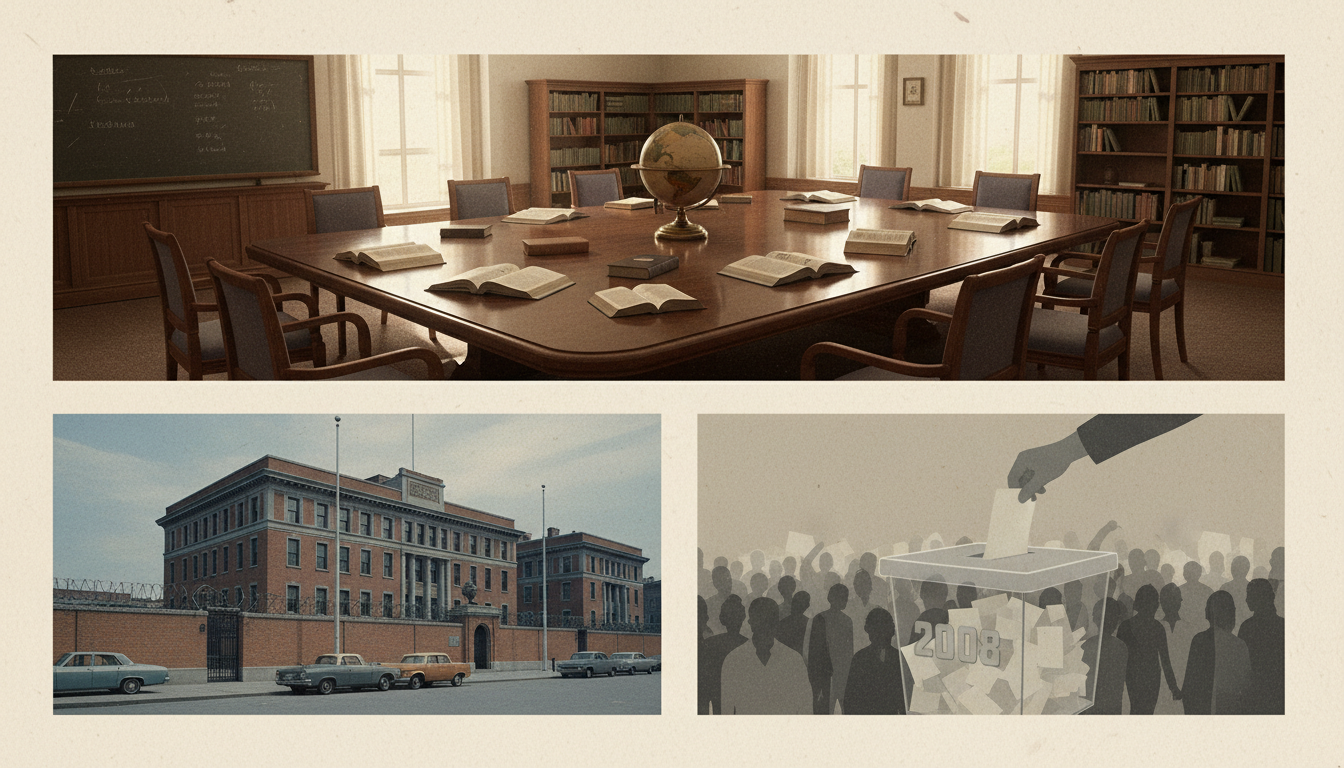
November 4 in history connects the founding of an international education and culture agency, a diplomatic crisis that reshaped relations between Iran and the United States, and an American election that broke a racial barrier. The dates are well documented, but each anniversary becomes more meaningful when viewed in its political and human context.
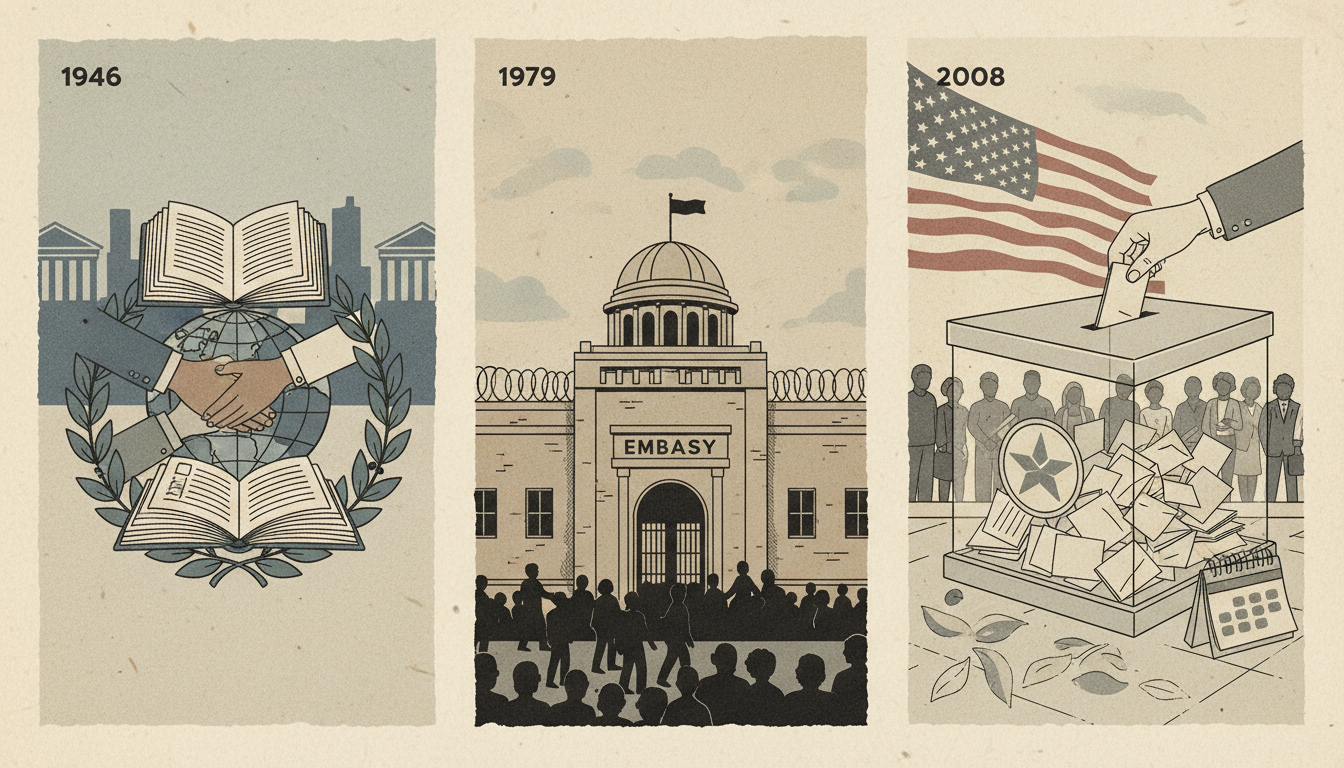
1946: UNESCO’s constitution takes effect
On November 4, 1946, the constitution of the United Nations Educational, Scientific and Cultural Organization entered into force after the required twentieth ratification. Its founding document had been signed in London on November 16, 1945, as countries emerged from the destruction of the Second World War. Those two dates are sometimes confused: the constitution was signed in 1945, but it became effective in 1946.
The founders believed that durable peace required more than treaties, armies or trade agreements. Education, scientific exchange, cultural understanding and the free circulation of knowledge were essential foundations. This was a response to the experience of propaganda, persecution and war, not merely an ambition to preserve monuments.
India was among the countries whose ratification helped bring the constitution into force. The organization subsequently became closely associated with literacy, international scientific cooperation, cultural heritage and the protection of historic sites. Its World Heritage programme, however, developed later; it should not be treated as an activity already operating in 1946.
UNESCO’s record is also complicated. Governments disagree over how history should be represented, which sites deserve recognition, how funding should be shared and whether international institutions can remain insulated from political conflict. Its anniversary therefore invites a question rather than a simple celebration: how can societies cooperate on knowledge while disagreeing on power and identity?
The official UNESCO historical account explains the signing and commencement dates. Readers interested in more daily anniversaries can explore our Today in History archive.
1979: The Tehran embassy seizure begins
On November 4, 1979, Iranian students occupied the United States embassy in Tehran and detained American diplomatic personnel. The seizure became a 444-day hostage crisis, one of the most consequential episodes in modern US–Iran relations. The episode unfolded only months after Iran’s revolution had ended the monarchy of Shah Mohammad Reza Pahlavi.
For many Iranian revolutionaries, the shah symbolized repression and dependence on Washington. Memories of the 1953 overthrow of Prime Minister Mohammad Mosaddegh, in which the United States and Britain played roles, deepened suspicion of American intentions. When the former shah entered the United States for medical treatment in October 1979, protesters feared that Washington might again seek to influence Iran’s political future.
That background helps explain the students’ stated motives, but it does not justify holding diplomats hostage. Embassy personnel were individuals entitled to protection, and the seizure violated a basic principle of diplomatic relations. A historical account should recognize both the grievances behind the revolution and the rights of those detained.
The crisis badly damaged President Jimmy Carter’s administration and complicated diplomacy throughout 1980. An attempted American rescue operation failed in April of that year. Negotiations eventually produced the Algiers Accords in January 1981, and the remaining 52 American hostages were released on January 20, 1981. Numbers sometimes differ in short summaries because some people seized initially were released earlier.
The episode still influences how both countries interpret one another’s intentions. The US National Archives timeline documents the chronology and the negotiated ending. The State Department’s historical overview adds diplomatic context.
2008: Barack Obama wins the US presidential election
On November 4, 2008, voters elected Barack Obama the 44th president of the United States. The Illinois senator defeated Republican nominee John McCain and became the first African American elected to the presidency. Obama took office on January 20, 2009; election day and inauguration day are distinct milestones.
The election came during a severe financial crisis, amid public concern about the Iraq War, health care costs and the direction of the economy. Obama’s campaign emphasized change, built a large grassroots organization and used online fundraising and communication in ways that influenced later political campaigns. McCain brought extensive military and legislative experience, and the contest reflected substantial disagreements over economic and foreign policy.
Obama’s victory had profound symbolic importance in a country shaped by slavery, segregation and the long struggle for voting rights. Yet the result did not mean that racial inequality had ended. Nor did it erase disagreements about the policies of the administration that followed. A careful historical assessment can acknowledge the breakthrough without presenting any election as the final resolution of a nation’s problems.
According to the Barack Obama Presidential Library’s timeline, the election occurred on November 4, 2008. His presidency also illustrates how a campaign promise becomes a much more complex matter once a leader must govern through economic pressures, congressional opposition and international crises.
What links these three anniversaries?
The events appear unrelated: an international institution began work, an embassy was seized, and an electorate chose a new president. But each reflects a struggle over legitimacy and trust. UNESCO’s founders asked how nations could prevent future wars by building understanding. The Tehran crisis revealed what happens when mistrust overwhelms diplomacy. The 2008 election demonstrated how democratic participation can produce a historic change in political representation.
Anniversary journalism is most useful when it distinguishes precise dates from popular shorthand and consequences from causes. November 4 reminds us that institutions need public confidence, diplomacy depends on protections even during conflict, and democratic milestones deserve both recognition and scrutiny.
Further reading: Browse our November 3 history edition and November 2 history edition for other verified anniversaries.
Discover more from NewsNation Online
Subscribe to get the latest posts sent to your email.
आपके लिए सुझाव













Leave a Reply