

WordPress Daily Writing Prompt: “Write about a few of your favorite family traditions.”
Some family traditions happen once a year. Others happen every evening, without invitations or decorations. The smallest rituals may be the ones we remember longest.
The traditions we almost overlook
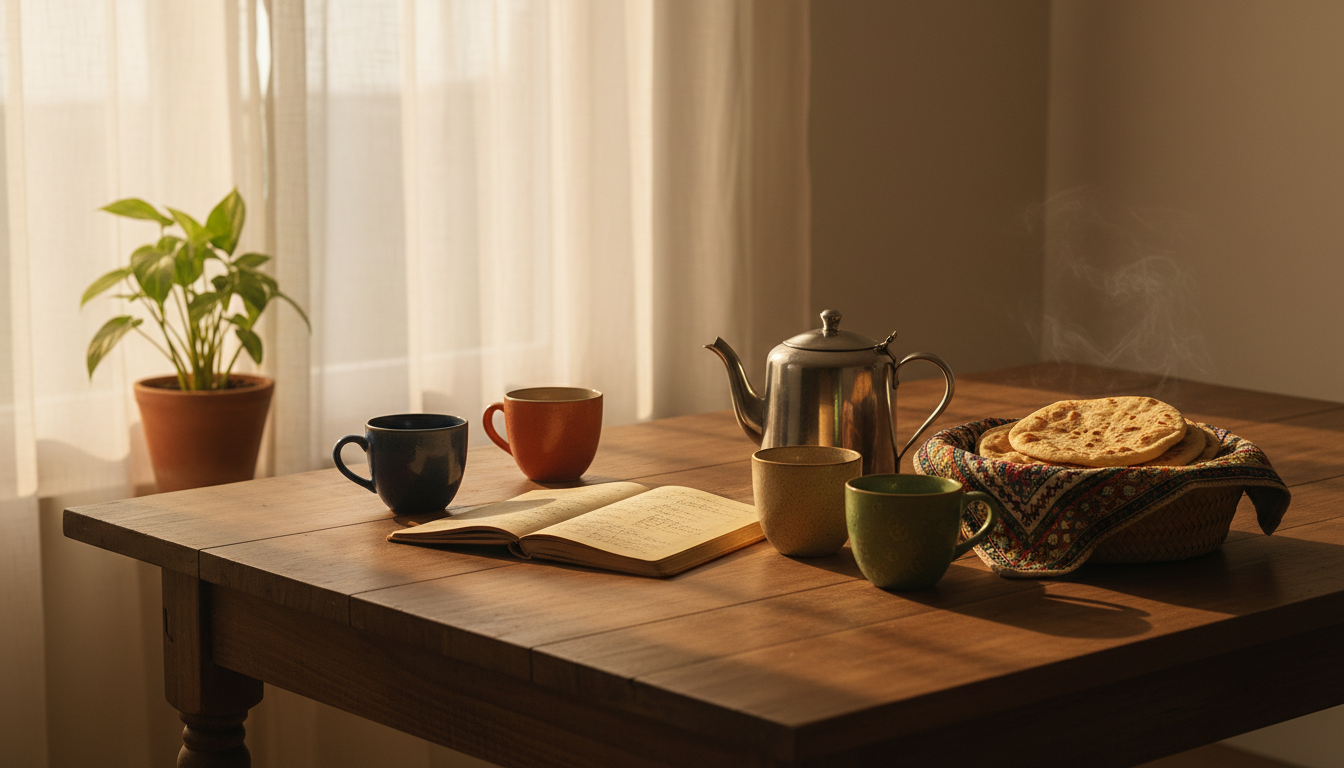
When someone asks about favorite family traditions, the mind often travels straight to weddings, festivals and birthdays. Those occasions deserve their place. Yet I keep returning to a smaller scene: a table being cleared, tea being poured, and someone asking whether everybody has eaten. Nothing extraordinary happens. Nobody takes a photograph. Still, the room briefly feels like a place where each person belongs. Perhaps the traditions that hold a family together are not always the grandest. They are the ordinary things people choose to repeat.
A ritual does not need a calendar
A tradition can begin with a modest agreement. One evening each week, people put their phones away for dinner. An older relative tells a story while someone else prepares tea. A child helps arrange the plates. The details may change from home to home, but repetition gives the moment meaning. In busy households, a predictable gathering offers something precious: the assurance that there will be another chance to talk. We may forget the menu, but remember who made room for us at the table.
The recipes that carry more than flavor
Food is an especially powerful keeper of memory. A dish may remind one person of a grandmother’s kitchen and another of a journey home after months away. Its value is not measured by how elaborate it looks. Sometimes the recipe itself is barely written down: a pinch of this, a little more of that, a judgment learned through years of practice. Asking an elder how they cook something is also an invitation to hear the stories surrounding it. Passing on a recipe can preserve language, humor and family history along with taste.
Making space for different generations
Traditions become richer when they are shared rather than performed for an audience. A young person can ask why a custom matters; an elder can explain without demanding unquestioning obedience. Children may add a new game or a different song. The purpose is not to freeze a household in the past. It is to create a bridge between experiences that might otherwise remain separate. Our earlier reflection on how cultural heritage lives in language explores a related truth: what we pass on is often carried in everyday words and gestures.
Belonging should never require perfection
There is also a less comfortable side to family traditions. An event that comforts one person may exhaust another. The expectation to host, cook or travel can fall unfairly on particular family members. Some households carry painful memories, and not everyone has a close or safe family circle. A meaningful tradition must leave room for different circumstances. It should be possible to decline an invitation, share the work, or create a new ritual with friends and chosen family. Warmth cannot be measured by compulsory attendance.
The quiet generosity of showing up
I find something moving about the person who remembers to call, the relative who saves a seat, or the friend who brings an extra portion without making a ceremony of it. These acts may be too small for a family album, yet they help people feel seen. They also remind me of our reflection on kindness and healthy boundaries between neighbors. Care is most sustainable when it combines attention with respect. A family tradition works best when people participate because it gives them joy, not because guilt leaves them no choice.
Why the imperfect gathering counts
Real family gatherings rarely resemble polished advertisements. Someone arrives late. A child spills water. The food cools while people talk. A disagreement may need patient handling. Those imperfections do not erase the occasion’s value. In fact, they make it recognizably human. I would rather remember an ordinary evening filled with laughter and unfinished conversations than a perfectly arranged celebration where everyone was afraid to disturb the picture. Shared time is not a performance to be graded.
Small rituals in a changing world
Work schedules, migration and distance can make old routines difficult. A weekly dinner may become a monthly video call. A handwritten letter may turn into a voice message. The form changes, but the intention can survive: we are making time to remember one another. The challenge is to keep that intention visible amid the constant pull of devices and deadlines. Our piece The Phone Can Wait offers a useful companion reflection on protecting attention. A ritual need not be long to matter; it needs people who are genuinely present.
A tradition worth starting today
If I were to begin one new family tradition, I would keep it deliberately simple. Once a week, each person could share one thing they learned, one difficulty they faced and one moment that made them smile. Nobody would be required to deliver an impressive answer. Listening would matter more than advice. On some weeks, the conversation might last five minutes; on others, an hour. The point would be to build a small, dependable space where everyday experiences receive the attention they deserve.
What remains after the occasion
Festivals end, decorations are packed away and photographs eventually disappear into crowded folders. But certain gestures remain in memory: the way someone offered a second cup, the familiar sound of a greeting, the chair that was always kept ready. I do not think a family needs a flawless history to create such moments. It needs willingness, patience and the freedom to adapt. My favorite family traditions are the ones that quietly say, without requiring a speech, that there is room for you here. What small tradition from your family—or your chosen circle—would you most like to preserve, and what new one would you like to begin?
Further reading: UNESCO’s work on intangible cultural heritage describes how living practices and knowledge are passed between generations.
Discover more from NewsNation Online
Subscribe to get the latest posts sent to your email.
आपके लिए सुझाव














Leave a Reply