

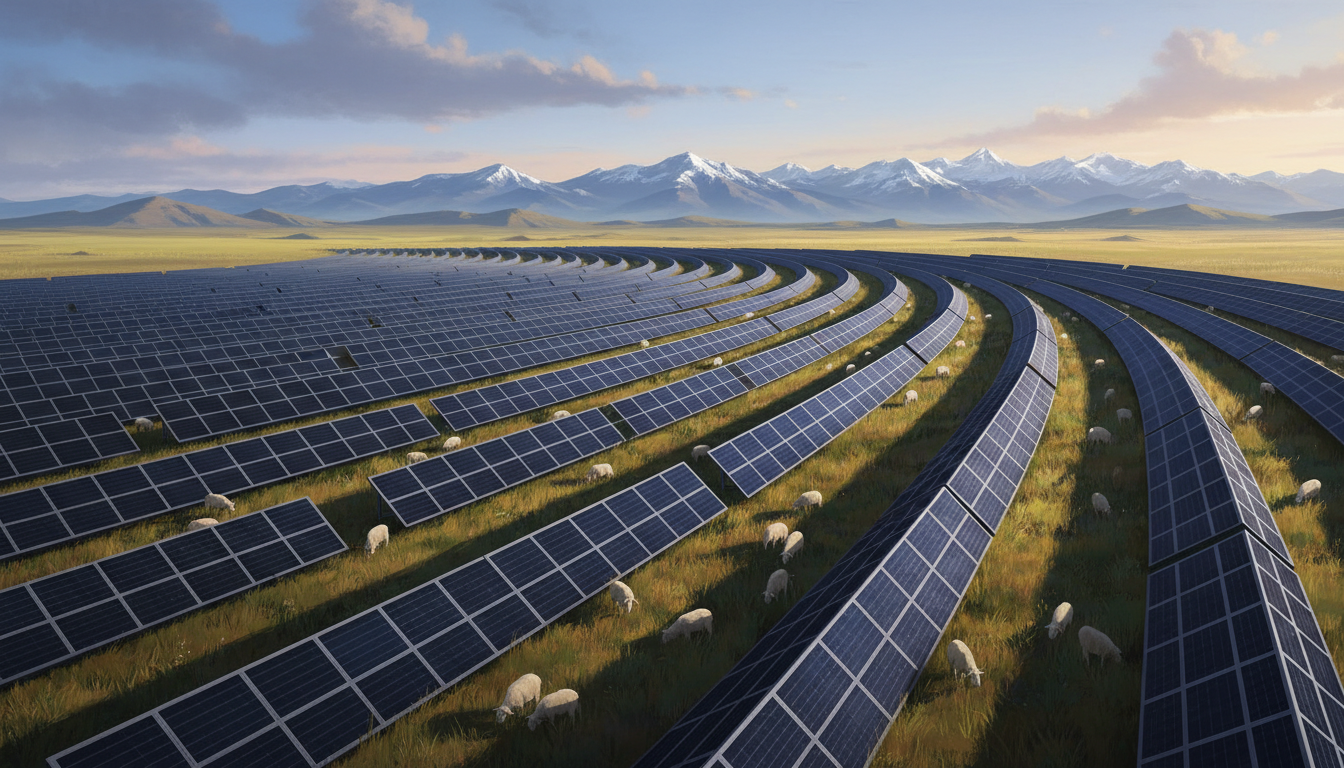
China’s fast-growing solar installations on the Qinghai-Tibet Plateau are changing how some herders raise livestock, bringing new income opportunities while raising difficult questions about access to traditional grazing land.
A Reuters report published November 4, 2026, describes sheep grazing inside fenced solar parks in Qinghai province. For some families, the arrangement means less time spent moving animals across long distances. But researchers and pastoral communities also face the prospect of fragmented pastures and lasting changes to local livelihoods.
Why sheep are grazing beneath solar panels
Solar farms need vegetation managed so plants do not interfere with equipment. Allowing sheep to graze between the arrays can reduce maintenance work while providing livestock with forage. At Talatan, the combination of electricity generation and animal husbandry has become a prominent example of land serving two purposes.
China’s government described the approach in a 2024 report about Talatan in Gonghe County, Qinghai. It said panels and grassland restoration had helped some herders raise livestock and earn income. Those accounts reflect the government’s assessment of the project, not an independent measure of benefits to every affected household.
What herders gain — and what may be lost
Reuters interviewed herders who said access to fenced solar sites made daily livestock management easier and increased earnings. Grazing areas within the installations can offer a more predictable routine than traditional movement across open pasture.
Yet the benefits are not universal. Solar developments can divide landscapes that herding communities once crossed freely. Access rules may differ between sheep, goats and yaks, and the ability to earn income from a solar park does not necessarily preserve the cultural practices associated with mobile pastoralism.
These concerns matter because grazing is more than an economic activity on the plateau. Seasonal movement, livestock choices and relationships with the land are also part of community life. An arrangement that works for one flock or village may not work for another.
How the solar expansion fits China’s energy plans
Qinghai’s high elevation and extensive sunlight make it attractive for renewable power development. The solar industry is part of China’s effort to diversify electricity generation and supply energy to population and industrial centres elsewhere in the country.
Supporters argue that combining power generation with controlled grazing makes better use of land. Critics caution that a project should also be assessed for its effects on land rights, access, wildlife, pasture connectivity and the participation of residents in decisions.
What to watch next
The central question is not whether sheep can graze under panels — they clearly can in some projects — but how fairly the gains and costs of expansion are shared. Independent monitoring of household income, grazing access and ecological conditions would help establish whether the model remains beneficial as installations spread.
For readers following energy and economic development, see NewsNationOnline’s international coverage, business news and Global Resource Center.
Sources: Reuters reporting, November 4, 2026; China State Council’s 2024 account of Talatan solar grazing.
Discover more from NewsNation Online
Subscribe to get the latest posts sent to your email.
आपके लिए सुझाव














Leave a Reply