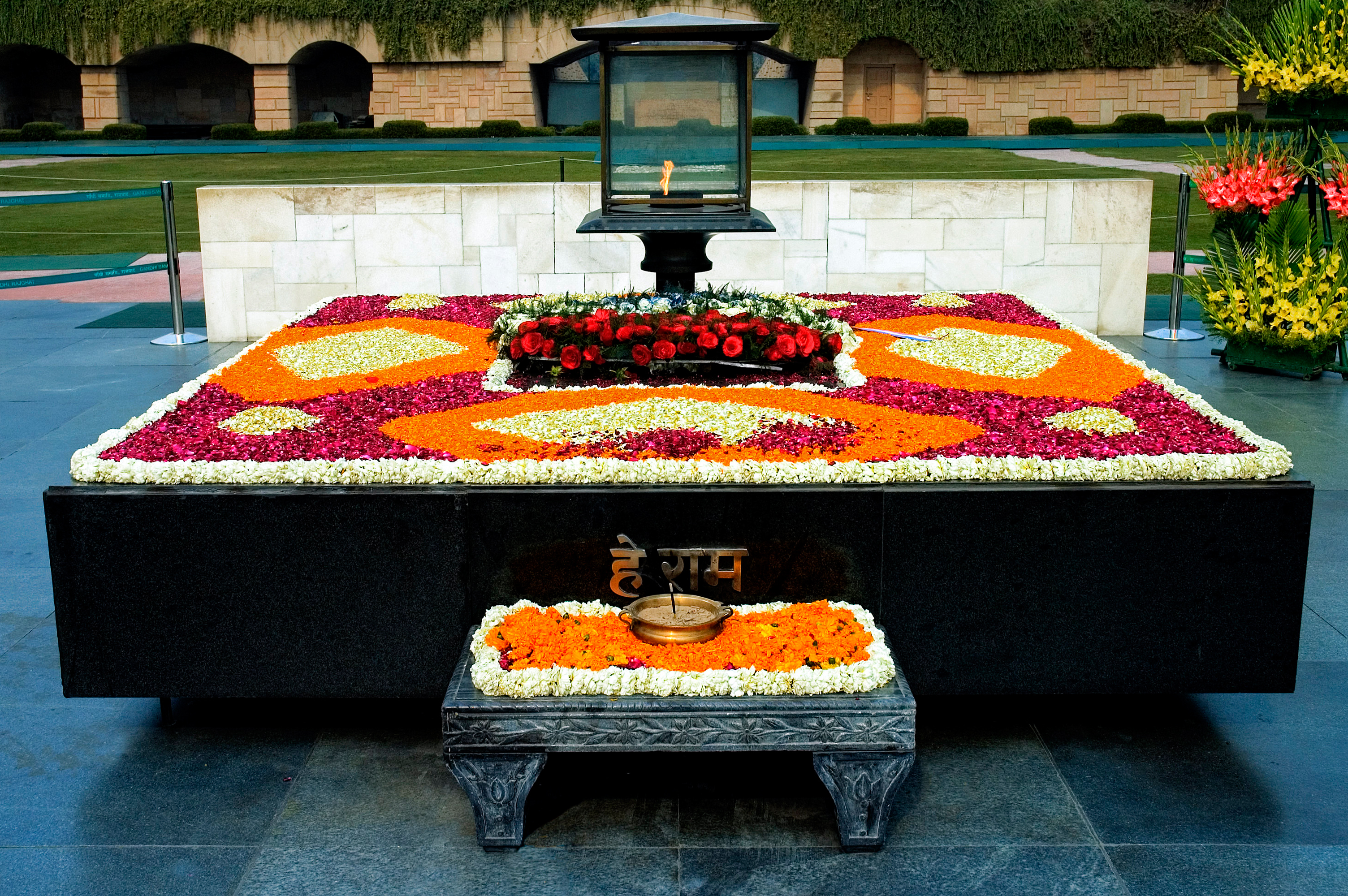
Image: Raj Ghat memorial, Wikimedia Commons. Licensed CC BY-SA 2.0; photo by Humayunn Niaz Ahmed Peerzaada.
Richard Attenborough’s Gandhi is remembered as one of the most ambitious historical films made about modern India. But the story of the film itself is almost as remarkable as the story it tells. The project took roughly two decades to move from an idea to a finished production, and one of the people who kept that idea alive was Motilal Kothari.
Motilal Kothari’s role in the project
According to the British Film Institute, Attenborough’s commitment to Gandhi dates to 1962, when he met Motilal Kothari, a devotee of Gandhi who wanted the Mahatma’s life and work brought to a wider audience through cinema. Kothari’s persistence helped turn a distant ambition into a project Attenborough continued to pursue despite repeated doubts from colleagues and industry figures.
The BFI notes that Attenborough faced discouragement because Gandhi’s life was considered exceptionally difficult to compress into a feature film. His eventual production also required major financing, an international creative team and cooperation in India.
Why the film was so difficult to make
Gandhi’s life spans South Africa, India’s freedom movement, political negotiations, communal tensions and the final months before his assassination. A conventional biographical film could easily become either too long or too selective. Attenborough and screenwriter John Briley therefore had to make choices about which episodes could carry the larger historical story.
When financing finally came together, the production moved quickly. The BFI records that Canadian producer Jake Eberts of Goldcrest Films International was central to assembling the financing, while India’s National Film Development Corporation also invested in the film.
From long struggle to major production
The result was not a small chamber drama. It became a large-scale international production filmed extensively in India, with detailed period settings, costumes and huge crowd sequences. The production eventually included the extraordinary funeral scene that became one of its defining achievements.
Read more about the film’s production history through the BFI’s account of Richard Attenborough and the BFI programme notes on Gandhi.
NewsNationOnline readers can also explore our earlier coverage on Mahatma Gandhi’s efforts for Hindu-Muslim unity.
A film shaped by persistence
The making of Gandhi shows how historical cinema can depend on persistence as much as money or technology. Kothari helped keep the idea alive, Attenborough spent years pursuing it, and the eventual production brought together British, Indian and international filmmaking resources.
The film went on to win eight Academy Awards, including Best Picture, Director and Actor, according to Sony Pictures. Its long journey from concept to screen remains an important part of the film’s history.
Sources: BFI; British Film Institute; Sony Pictures Museum.
आपके लिए सुझाव
