

Audiences know actors through the roles they play, but impressions of a star also form through interviews, premieres, social-media posts and public appearances. A celebrity’s public image is rarely shaped by one event. It develops through professional choices, communication and the way different media present a person to the public.
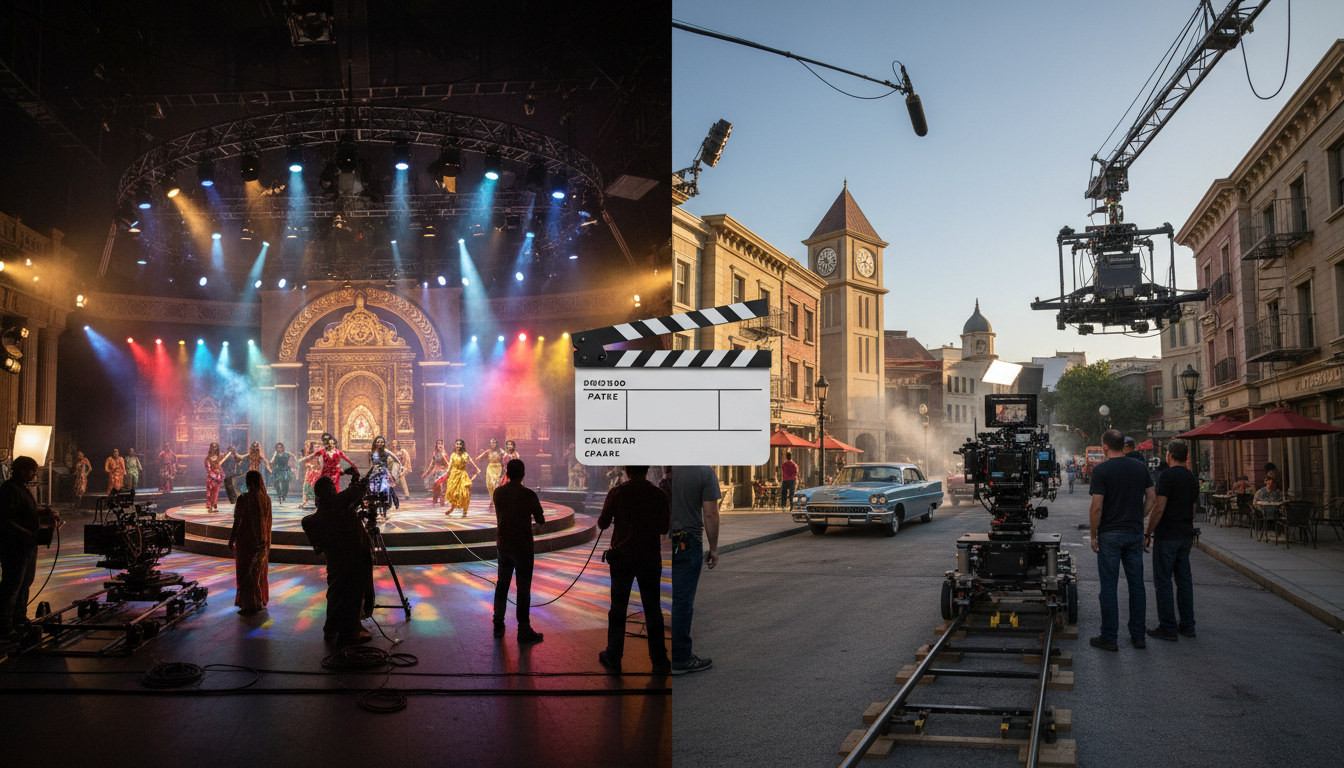
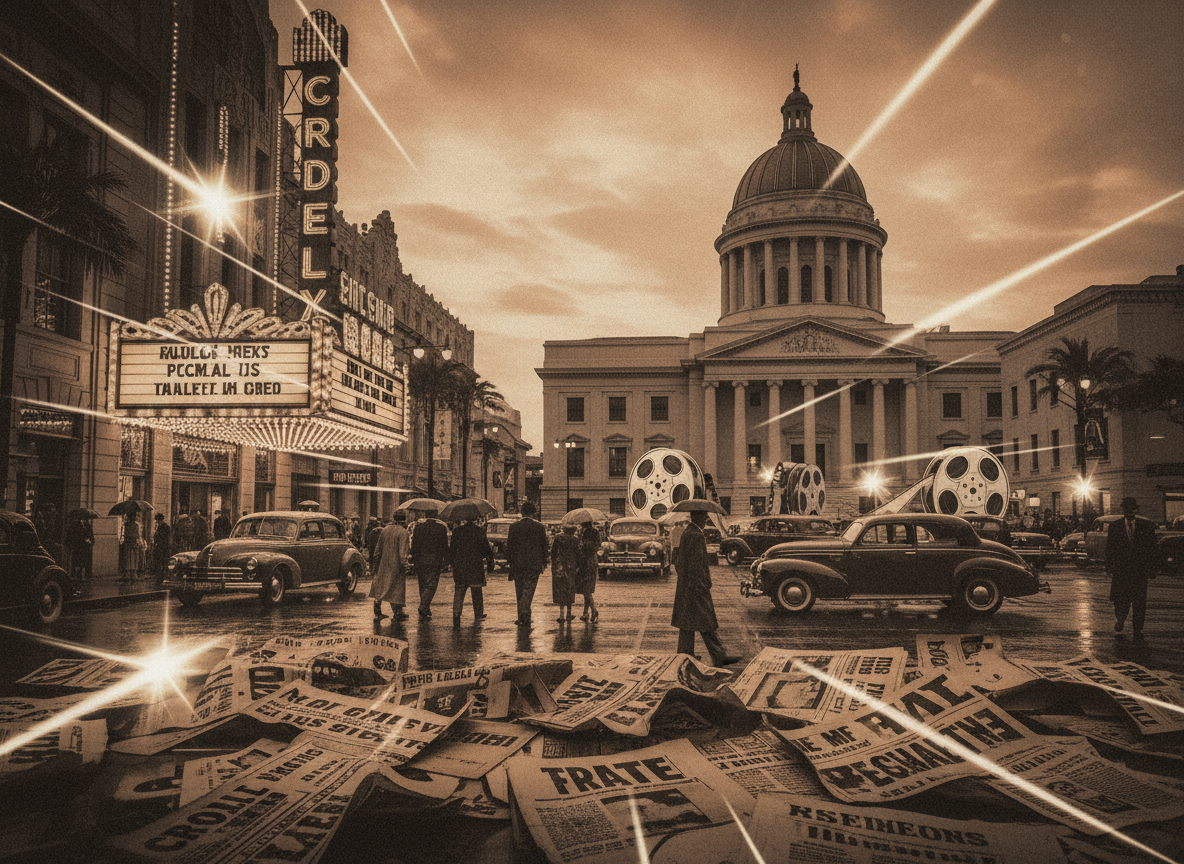
Featured image: Original vintage-cinema tribute illustration created for NewsNationOnline; it is not a documentary photograph.
The work is the foundation
A memorable performance often provides the starting point for a public reputation. A comedian may become associated with quick timing, while a dramatic actor may be recognised for emotionally demanding roles. Audiences sometimes carry those impressions beyond the film, even though a character is not a complete representation of the person playing it.
Career choices can gradually expand or reinforce that identity. An actor who moves between genres may be seen as versatile; someone who repeatedly chooses similar roles may build a recognisable screen persona. Neither path is automatically better. What matters is how the work develops and how audiences respond over time.
Publicists and communication teams
Publicists help coordinate interviews, press materials, event appearances and responses to media inquiries. For a major release, a campaign may include a premiere, a series of interviews, a behind-the-scenes feature and social posts. The aim is to make information available and connect the project with likely audiences.
Professional communication is not the same as controlling every public opinion. Reporters ask their own questions, audiences interpret statements differently and unexpected events can shift the conversation. A planned campaign may create visibility, but a public image ultimately forms through many sources.
Social media offers direct access—and new risks
Personal accounts allow performers to share work, hobbies, causes or messages in their own words. Direct communication can make a star feel more accessible and can correct inaccurate reporting. It can also blur the line between a personal moment and a promotional one, because posts may be planned with a project or partnership in mind.
A single post can be screenshotted, misunderstood or circulated without its original context. Stars may also face pressure to comment immediately on every controversy. A responsible reader avoids treating every online choice as a complete statement about a person’s character.
Fashion, interviews and public appearances
Style can become part of a recognisable image. A performer may favour classic tailoring, experimental design or casual clothes, and audiences may associate that choice with a broader persona. Interviews also shape perception through the subjects discussed, the questions asked and the tone of the conversation.
However, public appearances show only a limited slice of someone’s life. An edited interview, a photograph or a short clip cannot establish how a person behaves in every setting. Coverage should avoid confusing a polished public role with a complete portrait of an individual.
When a public image changes
Reputations evolve as people take on new roles, make public statements or respond to changing cultural expectations. Some changes are the result of deliberate career decisions; others emerge from media coverage or audience debate. A fair assessment looks at the original evidence and gives developments their proper timeline.
Public image can help a performer find opportunities, but it is not a substitute for the work itself. Over time, audiences often return to the performances and creative contributions that first made a person worth watching.
Read more about the business of celebrity publicity and the limits of public attention.
The limits of image management
A public image can be planned, but it cannot be fully controlled. Different audiences bring different expectations, and the same interview can be interpreted in contrasting ways. A campaign may emphasise humour or seriousness, yet a performer’s body of work and public statements over time will shape the reputation that emerges. Consistency helps, but authenticity cannot be manufactured by a schedule alone.
Public relations also works best when it supports clear communication rather than trying to disguise facts. If a mistake occurs, an evasive response can create more distrust than a careful explanation. Journalists and readers should judge statements against verifiable information, while allowing room for people to clarify or correct earlier comments.
Ultimately, a public image is a partial portrait created by performance, communication and public interpretation. It can explain how a celebrity is perceived, but it should not be mistaken for complete knowledge of a person’s private character or everyday life.
Further reading
For professional guidance on public relations ethics and communication, see the Public Relations Society of America.
Discover more from NewsNation Online
Subscribe to get the latest posts sent to your email.
आपके लिए सुझाव









Leave a Reply