
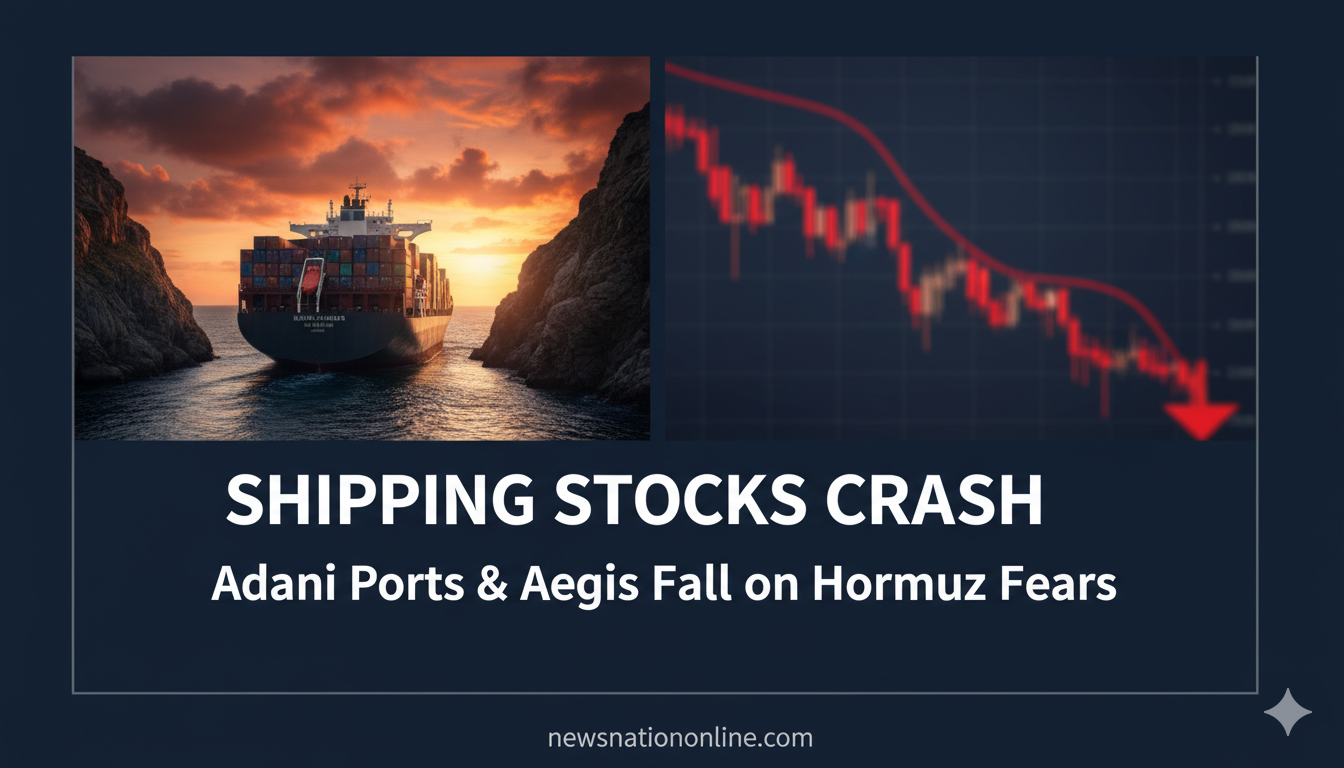
We are witnessing heightened volatility across Indian equity markets as shipping and logistics stocks sink sharply, triggered by renewed fears of disruption in the Strait of Hormuz—one of the world’s most critical oil transit chokepoints. Shares of Adani Ports and Special Economic Zone (APSEZ) and Aegis Vopak Terminals fell by as much as 6% intraday, reflecting investor anxiety over geopolitical instability and its cascading impact on global trade flows.
The Strait of Hormuz handles nearly one-fifth of global petroleum liquids consumption, making it indispensable to global energy markets. Any threat—real or perceived—creates immediate ripple effects across shipping lanes, oil prices, freight insurance costs, and port operations. As tensions escalate in the Middle East, markets are pricing in potential supply disruptions, delayed shipments, and higher operational expenses for maritime players.
Adani Ports Share Price Decline: Key Factors Behind the Fall
Adani Ports and Special Economic Zone (APSEZ), India’s largest commercial port operator, witnessed a steep decline as investors reassessed risk exposure. The company’s diversified cargo handling operations—ranging from crude oil and LNG to containerized cargo—make it highly sensitive to fluctuations in global trade and energy shipments.
The market reaction stems from three core concerns:
- Potential Oil Supply Interruptions – Disruption in the Strait of Hormuz could delay crude imports, impacting port throughput volumes.
- Rising Insurance and Freight Costs – Heightened geopolitical risk increases marine insurance premiums, raising shipping expenses.
- Global Trade Sentiment Weakness – Shipping stocks often react sharply to uncertainty in international logistics routes.
As crude oil prices firmed up in response to Middle East tensions, market participants anticipated margin pressure across supply chain players. While Adani Ports maintains operational resilience through its geographically diversified port network, short-term volatility remains elevated.
Aegis Vopak Terminals Under Pressure Amid Energy Trade Risks
Aegis Vopak Terminals, a leading tank storage and LNG terminal operator, also experienced a sharp sell-off. The company plays a pivotal role in liquid and gas storage infrastructure, linking energy imports with downstream distribution networks.
Concerns revolve around:
- Reduced Cargo Movements if tanker routes face bottlenecks.
- Volatility in Energy Prices, which can alter storage economics.
- Investor Risk Aversion toward infrastructure stocks exposed to global supply chains.
Given the company’s dependence on stable energy trade flows, the Strait of Hormuz disruption fears directly impact market sentiment surrounding its revenue outlook.
Strait of Hormuz: Why This Chokepoint Matters to Global Markets
The Strait of Hormuz connects the Persian Gulf with the Gulf of Oman and the Arabian Sea. It is a narrow maritime corridor through which over 20 million barrels of oil per day transit. Major exporters including Saudi Arabia, Iraq, UAE, Kuwait, and Iran rely heavily on this route.
Any military escalation or shipping blockade could:
- Drive global oil prices higher
- Trigger inflationary pressures worldwide
- Increase shipping transit times
- Impact refinery margins
- Disrupt LNG supply chains
For India, a major oil importer, sustained disruption would affect import costs, currency stability, and broader macroeconomic indicators. Consequently, logistics stocks often become the first casualty of such uncertainty.
Oil Price Surge Adds to Market Nervousness
Brent crude futures advanced sharply amid fears of supply chain disturbances. Rising oil prices influence the shipping ecosystem in multiple ways:
- Higher bunker fuel costs
- Increased operating expenditure for vessels
- Volatile freight rates
- Pressure on container shipping margins
Investors are adjusting portfolio allocations, reducing exposure to sectors perceived as vulnerable to geopolitical shocks. Shipping and logistics counters, despite strong fundamentals, are facing short-term capital outflows.
Impact on Indian Shipping and Port Sector
The broader Indian shipping and logistics sector saw selling pressure across multiple counters. Companies involved in port operations, marine logistics, and energy storage infrastructure recorded declines as risk sentiment dominated trading sessions.
However, it is critical to recognize structural strengths within the sector:
- India’s push toward logistics infrastructure modernization
- Expansion under the PM Gati Shakti initiative
- Growing containerization trends
- Increased LNG demand and terminal capacity expansion
While geopolitical disruptions create immediate headwinds, long-term demand drivers remain intact.
Investor Sentiment and Market Outlook
Markets tend to overreact to geopolitical flashpoints in the short term. Volatility in shipping stocks is often driven more by perception than actual operational disruption. Investors are closely monitoring:
- Diplomatic developments in the Middle East
- Naval security measures in the Strait
- Oil inventory data
- Freight rate movements
Should tensions ease, we may witness a sharp recovery in beaten-down logistics stocks. Historically, maritime sector corrections triggered by geopolitical risk have presented tactical entry opportunities for long-term investors.
Risk Assessment for Adani Ports and Aegis Vopak
Both companies maintain robust balance sheets and diversified asset portfolios. Their exposure to international cargo flows provides growth opportunities but also introduces cyclical and geopolitical sensitivity.
Adani Ports benefits from:
- Multi-port presence across India
- Strong cargo volume growth
- Strategic acquisitions expanding global footprint
Aegis Vopak Terminals is supported by:
- Long-term storage contracts
- LNG infrastructure expansion
- Rising domestic energy demand
While short-term price movements reflect risk repricing, the structural growth narrative for Indian maritime infrastructure remains compelling.
Global Trade Routes and Insurance Premium Concerns
Heightened geopolitical risk elevates war risk insurance premiums for vessels transiting volatile zones. This raises operational costs for shipping companies, which can indirectly affect port throughput if shipping companies reroute vessels or delay cargo movement.
Additionally, tanker operators may adopt alternative routes, increasing voyage durations and freight charges. Such developments could temporarily distort global trade patterns.
Macroeconomic Implications for India
India imports over 80% of its crude oil requirements. Sustained disruption in the Strait of Hormuz would:
- Widen the current account deficit
- Pressure the Indian rupee
- Increase domestic fuel prices
- Affect inflation metrics
As macro risks intensify, capital markets typically experience sectoral rotation away from high-risk, globally exposed stocks.
Technical Market Trends in Shipping Stocks
From a technical perspective, both Adani Ports and Aegis Vopak witnessed breakdowns below short-term support levels amid high trading volumes. Elevated volume during price decline signals strong selling interest.
Key observations include:
- Spike in intraday volatility
- Increased derivatives activity
- Defensive sector rotation
Traders are closely tracking support levels for potential reversal signals.
Volatility Persists, Fundamentals Intact
We recognize that the fall in Adani Ports and Aegis Vopak shares up to 6% reflects heightened anxiety over Strait of Hormuz disruption fears rather than confirmed operational setbacks. Shipping and logistics stocks remain inherently sensitive to geopolitical shocks due to their deep integration with global trade and energy supply chains.
However, India’s long-term infrastructure expansion, rising trade volumes, and structural energy demand provide a strong foundation for recovery once geopolitical clarity emerges. While near-term uncertainty may continue to weigh on valuations, the sector’s long-term trajectory remains anchored in growth, modernization, and global integration.
Investors should monitor geopolitical developments closely while assessing risk-adjusted opportunities in fundamentally strong maritime and logistics players.
Discover more from NewsNation Online
Subscribe to get the latest posts sent to your email.


















































Leave a Reply