


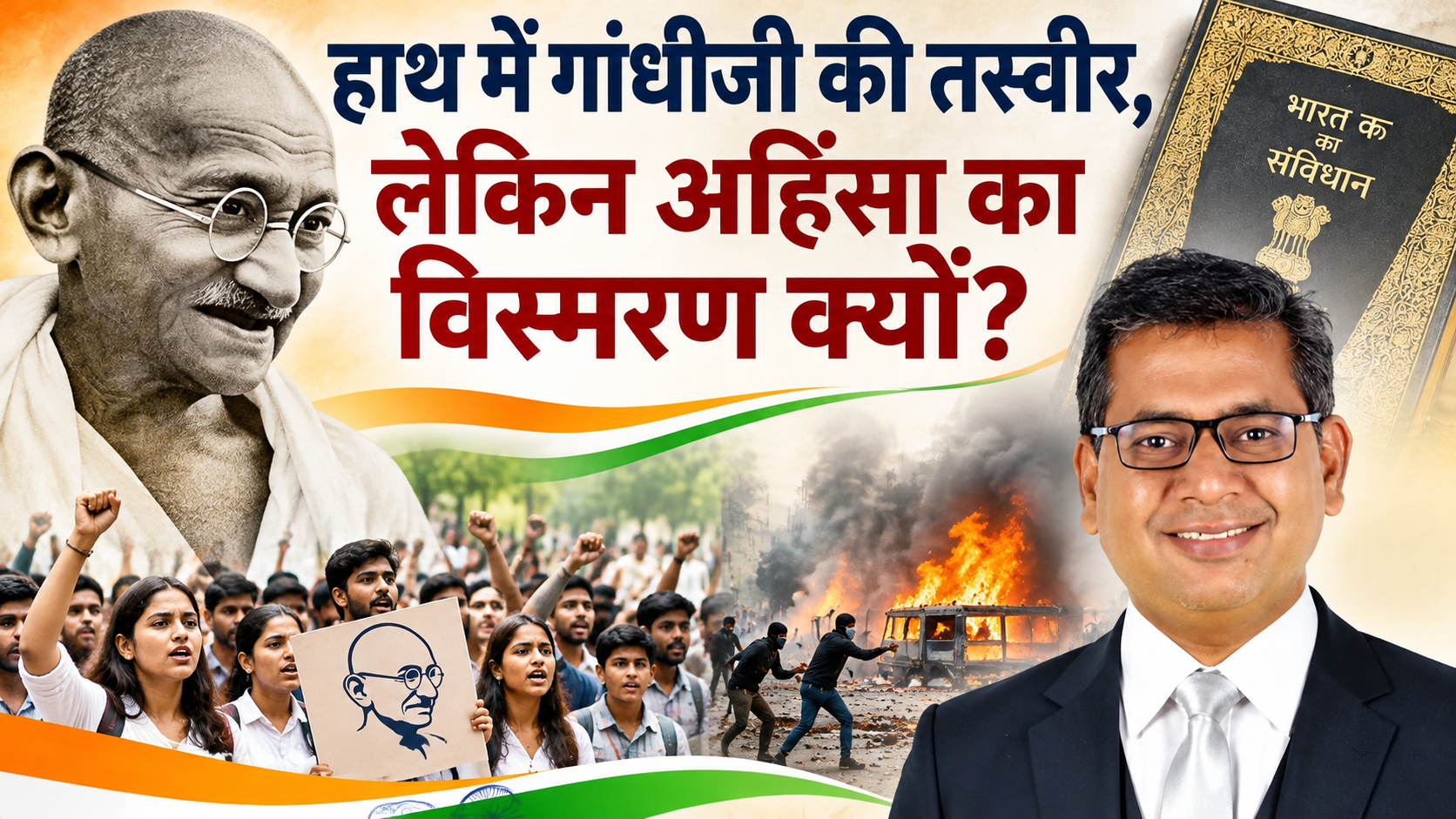
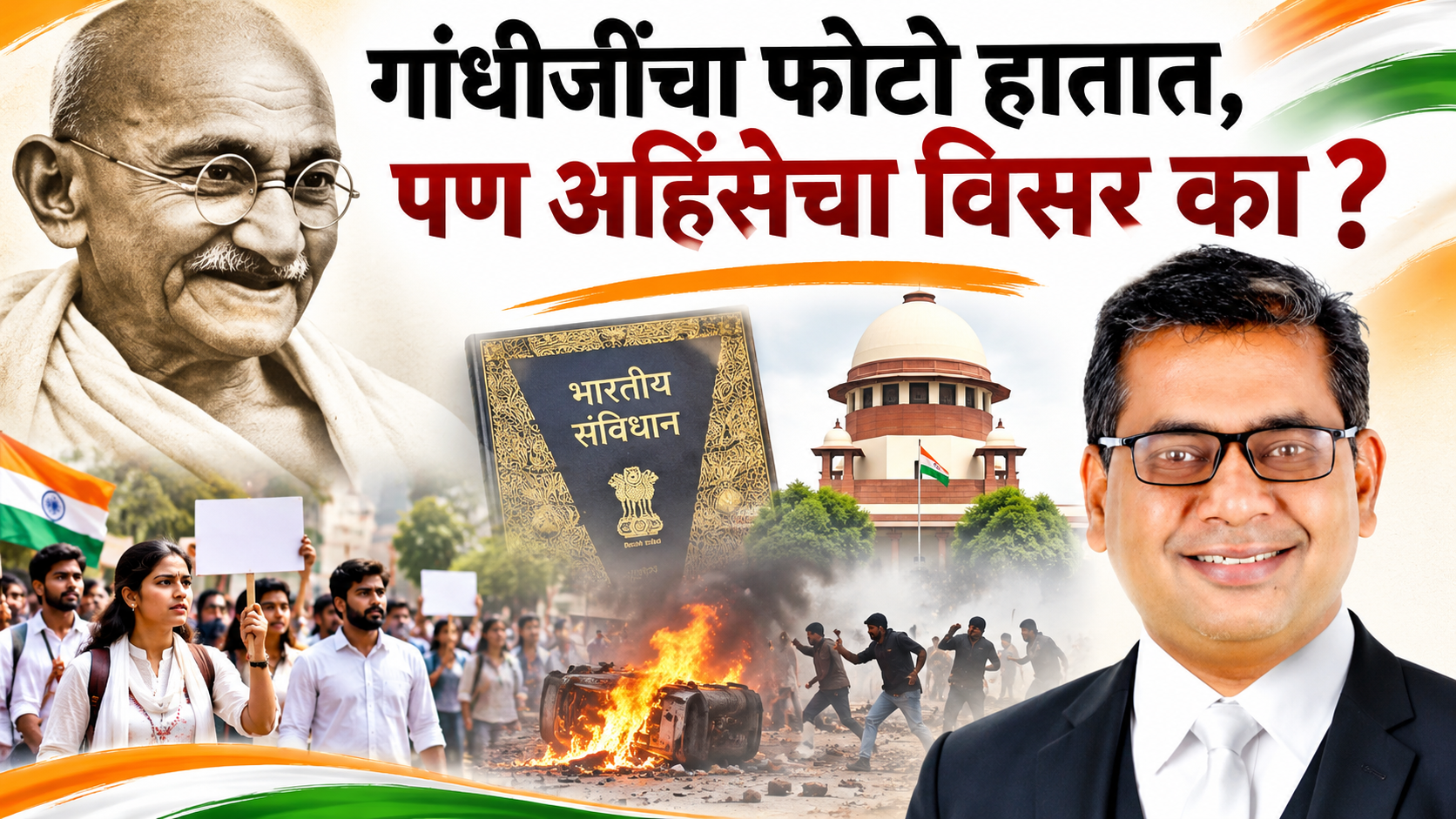
Jalna | Special Correspondent: The right to protest injustice is fundamental to democracy. Yet when a demonstration over legitimate grievances turns into arson, looting and destruction of public property, its original purpose can disappear. In an October 22, 2026 Verdictum column, Senior Advocate Sanjay Poddar revisited Mahatma Gandhi’s insistence on discipline and non-violence.

Poddar described student protests around Paris that began over deteriorating schools and teacher shortages but later became associated with unrest. The arrest and injury figures cited in his column have not been independently verified for this report. The central lesson is how violence can eclipse the original demand for better education.
On February 4, 1922, a crowd set fire to a police station at Chauri Chaura, killing 22 police officers. Gandhi subsequently withdrew the Non-Cooperation Movement. For him, non-violence was not an optional slogan but a condition of mass civil resistance.
Article 19(1)(a) of the Indian Constitution protects freedom of expression, while Article 19(1)(b) protects peaceful, unarmed assembly, subject to constitutionally permissible reasonable restrictions. Supreme Court decisions address damage to public and private property and indefinite obstruction of public roads. Liability for damage is not automatic for every organiser; it depends on the facts and applicable legal standards.
Adv. Mahesh Dhannawat’s position: Carrying Gandhi’s portrait during a protest is easy; following his principles of non-violence is the real test. Citizens have every right to disagree with the government, but that right does not include disrupting innocent people’s lives or destroying assets built with public money.
He also emphasised the State’s responsibility to respond promptly to genuine grievances and avoid unnecessary force against peaceful protesters. In Jalna and across Maharashtra, demonstrations concerning water scarcity, farmers’ problems, roads and civic services should be organised with identifiable leadership, discipline and constructive dialogue. Gandhi’s enduring legacy is truth, non-violence and moral responsibility.
Source: Sanjay Poddar, Verdictum, 22 October 2026. https://www.verdictum.in/columns/when-a-grievance-becomes-a-riot-1624479
आपके लिए सुझाव











Leave a Reply