New York/San Francisco, October 2, 2026: Broadcom has agreed to provide Anthropic with access to as much as $42 billion in financing tied to the AI developer’s enormous computing buildout, according to Anthropic’s IPO prospectus reviewed by Reuters. The arrangement deepens a relationship in which Broadcom is simultaneously a chip-design partner, equipment supplier and potential lender.
The headline figure is important, but so is what it does not mean. Anthropic has not simply received $42 billion in cash. The amount is the ceiling of a financing facility connected to infrastructure spending. Reuters reported that the facility could finance roughly one-third of Anthropic’s $125.2 billion commitment to lease tensor processing unit, or TPU, computing capacity over five years.
How the $42 billion Broadcom facility works
Under the disclosed arrangement, Broadcom could designate a financing partner and the debt instruments could potentially be converted into Anthropic shares. Anthropic said it does not expect notes under the facility to be sold before completion of its planned initial public offering.
This makes the financing different from a conventional equity investment. The facility is designed to support Anthropic’s infrastructure obligations, particularly the vast amount of computing capacity required to train and operate increasingly capable artificial-intelligence models. Whether the entire $42 billion is ultimately used will depend on the financing terms and Anthropic’s future needs.
Anthropic’s five-year compute commitment is even larger
The scale of the underlying commitment illustrates the economics of frontier AI. Anthropic has committed $125.2 billion over five years for TPU computing capacity, according to the filing described by Reuters. TPUs are specialized processors developed by Google for machine-learning workloads. Broadcom has worked with Google on several generations of the chips.
Anthropic announced an expanded relationship with Google and Broadcom earlier in 2026 that is expected to provide multiple gigawatts of next-generation TPU compute beginning in 2027. Electricity measured in gigawatts is normally associated with cities and large industrial systems; its use in describing AI infrastructure demonstrates how computing has become an energy and capital-intensive industry.
Why Broadcom has become central to Anthropic’s expansion
Broadcom’s relationship with Anthropic goes beyond simply selling semiconductors. Reuters reported that it spans compute supply, equipment leasing and financing. Anthropic is also expected to become Broadcom’s largest customer in its custom chip-design business in 2027.
For Broadcom, helping finance infrastructure can support demand for the chips and systems connected to that infrastructure. The strategy resembles a broader trend in the AI sector in which suppliers, cloud providers and model developers increasingly have financial relationships with one another as well as commercial ones.
Anthropic itself flags potential conflicts
The IPO filing does not present the relationship as risk-free. Anthropic disclosed that Broadcom’s position as both a hardware supplier and financing partner creates potential conflicts of interest. Decisions by Broadcom on hardware availability or pricing could affect Anthropic’s ability to obtain the computing capacity it needs.
The filing also warns that certain payment or performance defaults could make a substantial portion of lease obligations immediately payable while simultaneously restricting Anthropic’s ability to draw on the financing facility. These disclosures are risk factors, not statements that such events have occurred.
Why frontier AI needs so much money
Advanced AI models require huge clusters of specialized processors. The cost does not stop with chips. Data centers need high-speed networking, storage, cooling equipment, land, buildings, backup systems and large supplies of electricity. Training is expensive, but serving millions of daily users can also consume substantial computing resources.
That infrastructure race is pushing technology companies toward financing techniques once associated more closely with energy, transportation and real estate. NewsNationOnline recently reported on Amazon’s reported plan involving about $8 billion of Nvidia AI chips, another example of companies exploring structures that separate ownership of expensive computing assets from their day-to-day use.
The rise of reciprocal AI spending
Wall Street is paying close attention to what is sometimes described as reciprocal AI spending. A chip company can finance a customer that uses the financing to acquire or lease computing systems built around that supplier’s technology. Such arrangements can accelerate infrastructure deployment, but they also make it important for investors to understand where demand originates and who ultimately bears the financial risk.
There is nothing inherently unusual about a supplier helping customers finance expensive equipment. Similar arrangements exist in aviation, industrial machinery and telecommunications. What makes the AI version notable is its scale and the speed at which capital commitments are increasing.
Broadcom’s AI ambitions are enormous
Broadcom has emerged as one of the biggest beneficiaries of demand for custom AI accelerators and networking technology. Reuters reported that the company projects AI semiconductor revenue of about $115 billion in fiscal 2027 and $230 billion in fiscal 2028. Those projections underline why a customer as large as Anthropic matters strategically.
The company competes in an ecosystem dominated by Nvidia in general-purpose AI accelerators but increasingly interested in custom silicon. Large cloud and AI companies can design or commission specialized processors optimized for their workloads, potentially reducing dependence on a single hardware architecture.
What Anthropic’s IPO makes visible
Private technology companies can disclose relatively little about their commercial agreements compared with public companies. Preparing for an IPO changes that. A prospectus requires detailed discussion of material contracts, financial obligations and risks, giving investors a clearer view of how an AI laboratory finances its expansion.
Anthropic’s filing therefore offers a rare look at the financial architecture behind frontier AI. The public sees Claude as software, but the service rests on physical infrastructure involving chips, servers, data centers, electricity and long-term leases. The $125.2 billion compute commitment makes that physical foundation impossible to ignore.
What investors should watch next
Several questions remain important. The first is how much of the $42 billion facility Anthropic ultimately draws. The second is whether Broadcom itself provides the financing or designates outside partners. The third is how the convertible features could affect Broadcom’s potential ownership exposure after Anthropic becomes publicly traded.
Investors will also watch whether Anthropic’s revenue grows quickly enough to support its massive long-term computing commitments. AI demand has expanded rapidly, but infrastructure obligations can last for years. If revenue growth slows while fixed commitments remain, financing structures become even more important.
A defining feature of the next AI phase
The Broadcom-Anthropic agreement captures the next phase of the artificial-intelligence boom. The industry is no longer defined only by who can build the most capable model or fastest chip. Increasingly, it is also about who can finance the enormous physical systems required to operate those technologies at global scale.
Broadcom’s potential $42 billion facility does not mean Anthropic has borrowed that amount today. It does show, however, that financing capacity itself is becoming a competitive resource in AI. As model developers race for compute and chip suppliers compete for enormous customers, the boundaries between vendor, lender, infrastructure partner and investor are becoming increasingly blurred.
Sources and image credit
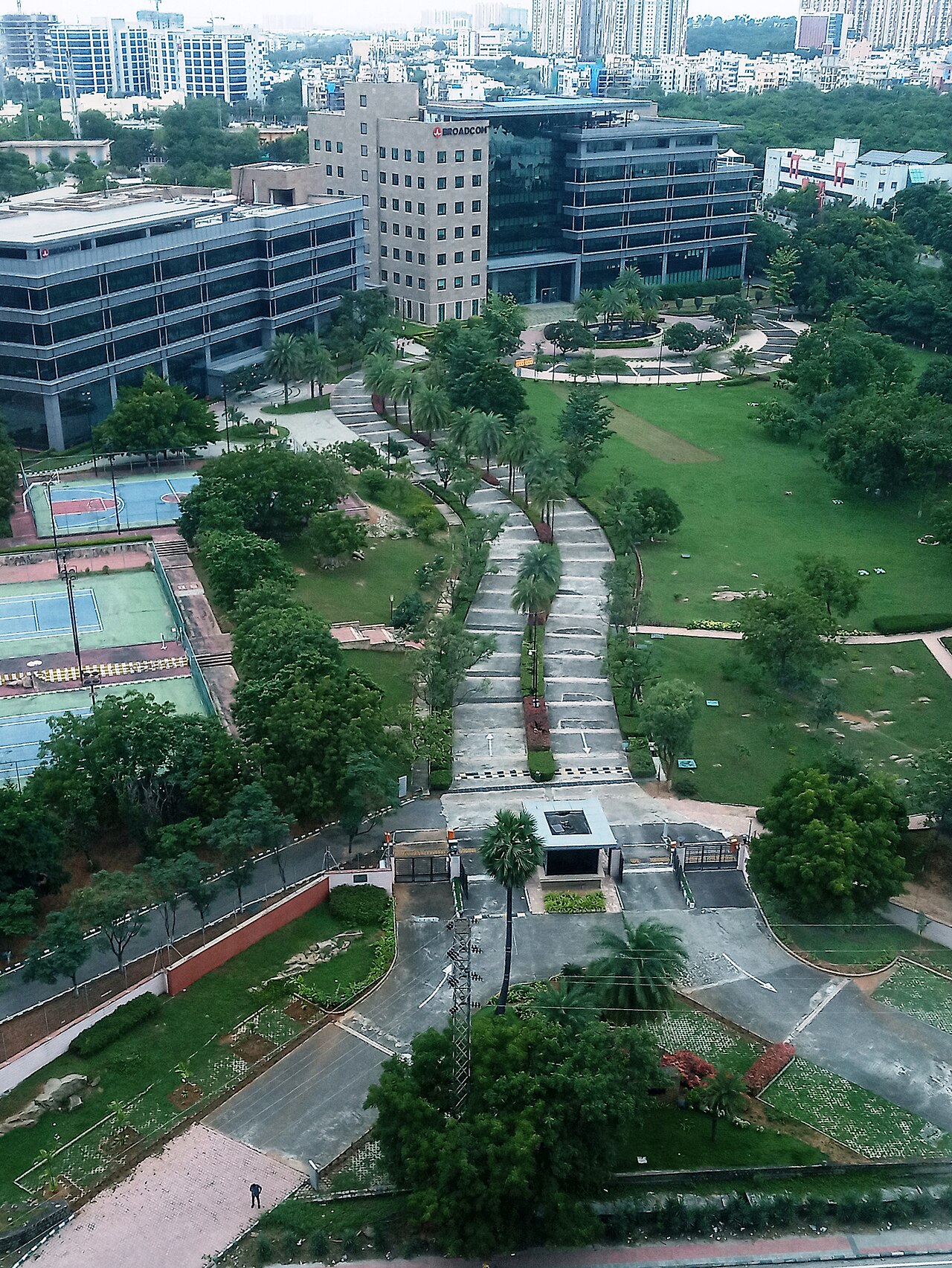
This report is based on Reuters’ October 1 reporting from Anthropic’s IPO prospectus and related public disclosures. Featured image: Broadcom office in Hyderabad, photographed by Fostera12 via Wikimedia Commons, licensed CC BY-SA 4.0.
आपके लिए सुझाव
