

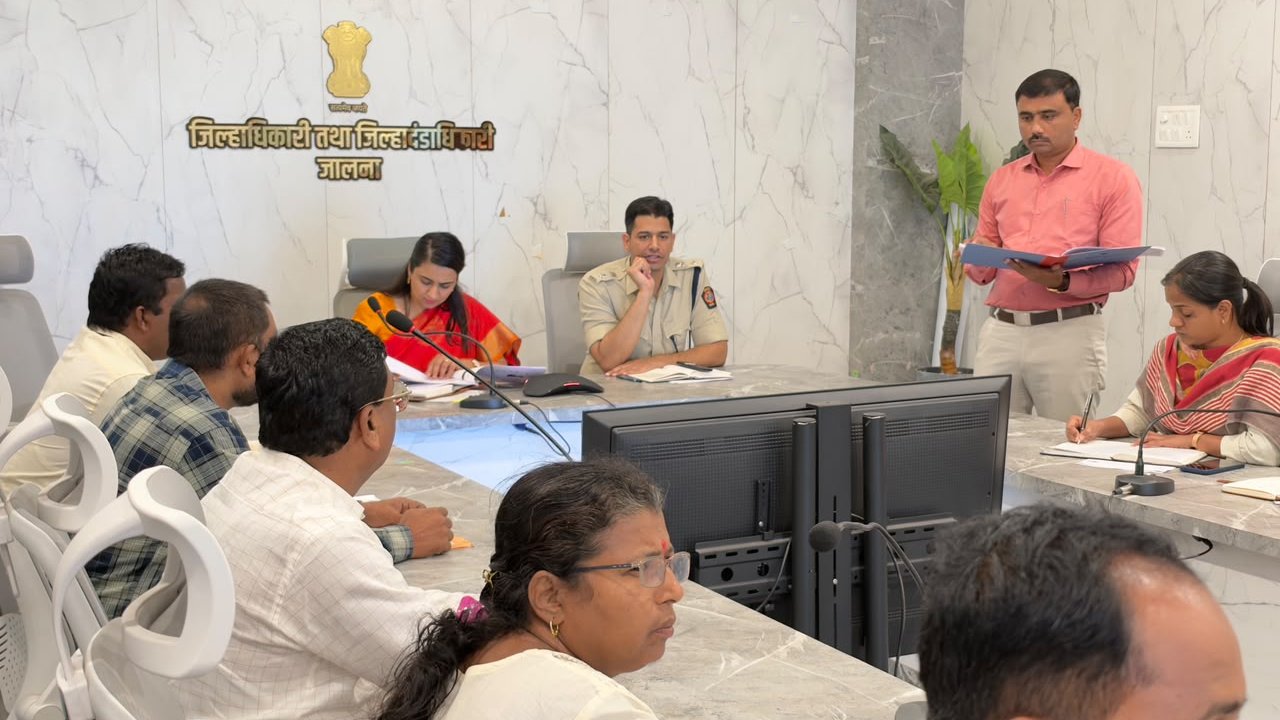
Jalna, Nov 18 — The district-level NCORD (Narco-Coordination Centre) committee met at the Collector’s office in Jalna to put the state’s “Drug-Free Maharashtra” campaign into effect across the district. The meeting was held under the District Collector, who chairs the district NCORD committee, and the Superintendent of Police. All departments were told to work together to make Jalna drug-free.

At a glance
- Where: Collector’s office, Jalna
- When: November 18, 2026
- Chaired by: the District Collector (chair of the district NCORD committee) and the Superintendent of Police
- Review period: November 1, 2026 to April 30, 2027
- Review framework: 6 pillars, 40 criteria, 650 marks
- Focus: legal action, supply control, awareness, treatment and rehabilitation
What the Jalna NCORD meeting decided
The committee reviewed the performance matrix set under the government’s “Whole of Government” approach. The state will assess the campaign between November 1, 2026 and April 30, 2027, scoring districts on 6 pillars and 40 criteria for a total of 650 marks. Officials were told that Jalna should perform at its best on every criterion.
1. Enforcement and legal action
Police were asked to dismantle drug cartels in the district, register serious cases under the NDPS Act with a detailed financial investigation, and seize illegally acquired property. Preventive action against habitual offenders under PIT-NDPS and MCOCA was stressed. Pending seized material is to be disposed of, and investigators should use modern databases.
2. Stopping the supply
The revenue, forest and agriculture departments must make sure no illegal cultivation of narcotic plants takes place anywhere in the district. To control misuse of precursor chemicals, regular inspections are to be carried out with the Food and Drug Administration (FDA), MIDC and the Pollution Control Board. Officials must also confirm that CCTV cameras are working in every medical shop in the district.
3. Awareness and reducing demand
The school and higher education departments were asked to run a special drive to declare all schools and colleges from Class 8 upward “Drug-Free Campuses”. The rural development and health departments will get gram panchayats to pass “drug-free village” resolutions. The social welfare and sports departments were told to hold sports events and awareness programmes in sensitive areas.
4. De-addiction, treatment and rehabilitation
Departments were told to act without delay to start a District De-Addiction Centre (DDAC), taluka-level addiction treatment facilities (ATF), a de-addiction facility in the jail, and an integrated de-addiction and rehabilitation centre at the government medical college. New initiatives to eradicate drugs in the district were also discussed.
Senior officials from the police, revenue, health, social welfare, food and drug administration, education, rural development, sports, excise, forest and agriculture departments attended.
Also read (in Hindi): जालना में नशामुक्त महाराष्ट्र अभियान: NCORD बैठक में नशे का नेटवर्क तोड़ने के निर्देश and “SAFE Jalna” anti-drug campaign
Background: what is NCORD
According to the Union Home Ministry, the NCORD mechanism was constituted on November 22, 2016 to coordinate drug-enforcement work among stakeholders at district, state and central levels. It has four tiers: apex, executive, state and district. The district committee is headed by the District Magistrate, and the ministry lists its meeting frequency as monthly. Details are on the Ministry of Home Affairs website.
Frequently asked questions
What does NCORD stand for?
NCORD stands for Narco-Coordination Centre, a forum that brings police, administration and other departments together against drugs.
Who chairs the district NCORD committee?
The District Magistrate (Collector) heads the committee. In Jalna, the meeting was held under the Collector and the Superintendent of Police.
How long is the review period and how many marks does it carry?
The review runs from November 1, 2026 to April 30, 2027, covering 6 pillars and 40 criteria for 650 marks in total.
What was said about “Drug-Free Campus”?
Education departments were asked to run a special campaign to declare all schools and colleges from Class 8 upward “Drug-Free Campuses”.
Where can people report drug activity or seek help?
The Narcotics Control Bureau’s national helpline MANAS is toll-free on 1933. People can share information on drug trafficking confidentially and seek advice on de-addiction. See the PIB factsheet.
When will the de-addiction centres start in Jalna?
Departments were told to act without delay, but no start date has been announced.
NewsNation Online Desk
सीधे अपनी Facebook फ़ीड में पाएँ — News Nation Online पेज को Follow करें।
Discover more from NewsNation Online
Subscribe to get the latest posts sent to your email.
आपके लिए सुझाव










Leave a Reply