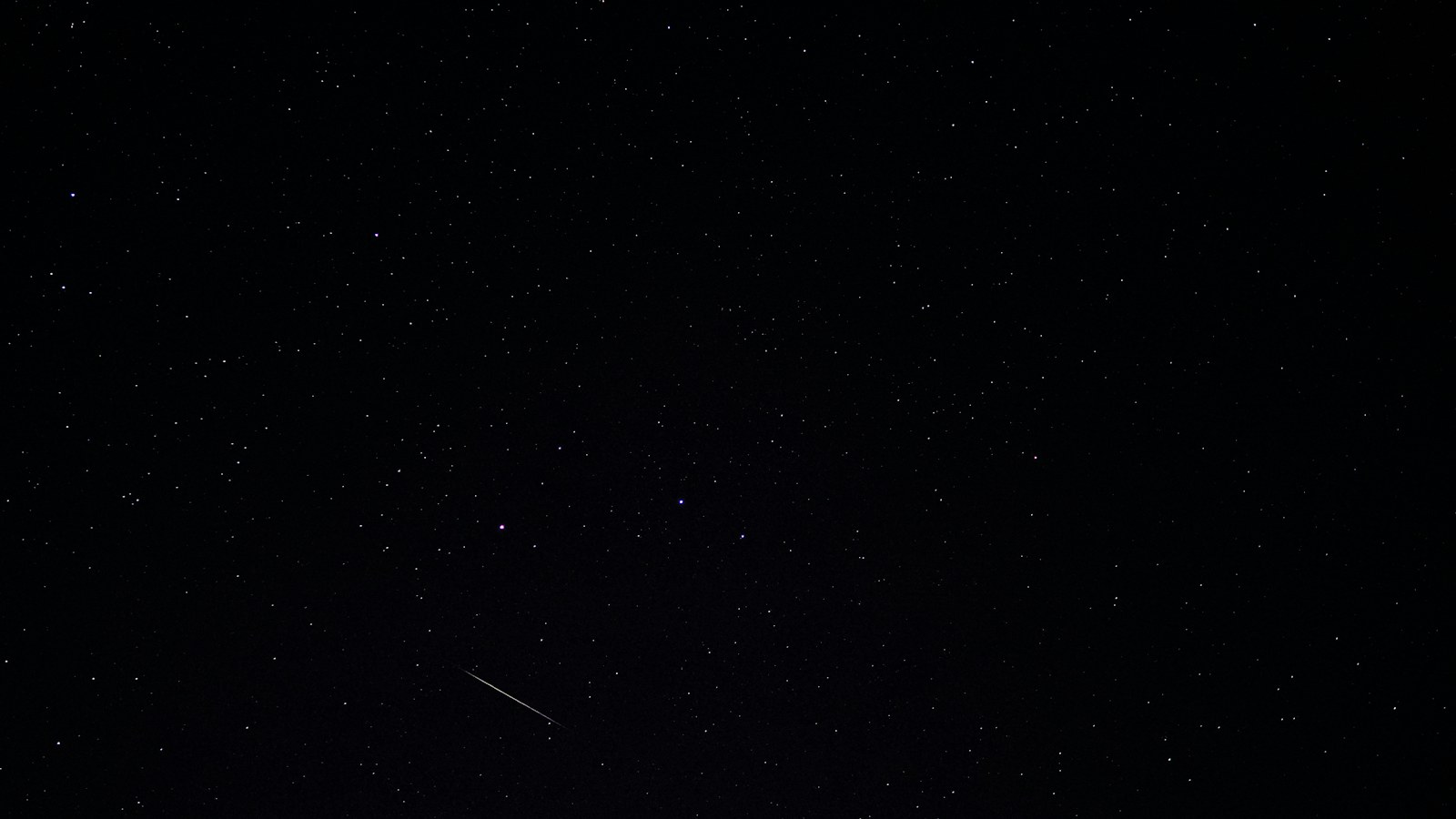
The Draconid meteor shower reaches its annual peak around the night of October 8–9, giving skywatchers in North America an opportunity to look for meteors without necessarily staying outside until dawn. The event is best approached as a modest natural display rather than a guaranteed sky filled with streaks.
The American Meteor Society’s weekly outlook identifies the evening of October 8, once darkness falls, as the best opportunity to seek Draconid activity. Actual visibility will depend on local clouds, light pollution and the observer’s view of the sky.

When the Draconids are active
The International Meteor Organization’s 2026 calendar lists activity from October 6 to October 10, with the maximum around October 9. The peak falls within that broader window; it does not mean the shower begins and ends at a single instant.
The calendar’s expected rate is modest, around five meteors per hour under the standardized conditions used for such estimates. That figure should not be read as a promise that everyone will see five. Obstructions, weather and a bright observing location can reduce the number visible.
The late-evening date can also look different in international coverage because of time zones. North American readers should use a location-specific sky guide and local darkness, rather than copy a clock time written for a different continent.
Why this shower favors the evening
The Draconids’ apparent point of origin, called the radiant, lies in the constellation Draco. The American Meteor Society’s guidance favors early-night viewing for this shower. That makes the event more convenient for an evening outing than showers commonly watched after midnight.
Knowing the radiant can help identify the shower, but a meteor does not have to appear directly beside the constellation to be visible. A wide, unobstructed view is useful. Looking through a narrow gap between buildings can reduce the chance of noticing a short-lived streak.
Analysis: the practical advantage is accessibility. Families, students and casual observers can spend part of an evening outside without committing to an overnight session. That opportunity still depends on the weather and the availability of a safe place with a reasonably dark sky.
What produces a meteor shower
NASA’s explanation of meteor showers describes the increased activity seen when Earth encounters material left along a debris trail. Small particles entering the atmosphere produce the luminous events people commonly call shooting stars.
The name does not mean an actual star is falling. A meteor is the atmospheric light event associated with the incoming material. The NASA facts page distinguishes meteoroids, meteors and meteorites; the last term refers to material that reaches the ground.
The Draconids are associated with Comet 21P/Giacobini-Zinner, as described in the meteor organizations’ material. Their annual appearance reflects Earth’s passage through the relevant part of space. The amount and distribution of debris help explain why a shower’s activity can vary between years.
Conditions for North American observers
The United States, Canada and Mexico all include locations from which the northern sky can be observed, but conditions will differ substantially between cities and rural areas. A clear forecast does not remove the effect of streetlights, buildings or other sources of glare.
NASA’s meteor-shower guide explains that the quality of a display depends on several factors, including the particular shower, the observing time, sky conditions and the Moon. Choosing a darker location helps with visibility, but it cannot make clouds disappear.
The October peak occurs close to the month’s new Moon, which improves the opportunity for a darker background compared with a brightly moonlit night. Observers should still check local moon and weather information, particularly if planning to travel outside their neighborhood.
Analysis: the simplest outing may be the most practical. A nearby location with safe access, limited glare and an open view can be more useful than a distant site that introduces travel difficulties. Stargazing should not require entering private land or stopping in an unsafe roadside location.
How to make an observing session useful
Meteor watching rewards patience because the activity is intermittent. Moving repeatedly between bright indoor lighting and darkness can make a short session less effective. Allowing time to settle outside gives the eyes a better chance to detect faint events.
A comfortable position also matters. Looking upward while standing can become tiring, especially if few meteors appear immediately. An appropriate seat and clothing for local conditions make it easier to remain attentive without turning the session into an uncomfortable endurance exercise.
A broad view with the unaided eye is generally better suited to catching brief meteor streaks than concentrating on a small telescopic field. Binoculars can be useful for other objects, but meteors may cross a different part of the sky while attention is fixed narrowly.
Observers who want to keep a record can note the time, direction, brightness and sky conditions. Such notes help distinguish an actual observation from a general impression. They also make it easier to describe the experience afterward without exaggerating the number seen.
What to expect from the 2026 peak
This year’s published calendar does not justify promising a spectacular meteor storm. A modest rate means an observer may wait for individual events, particularly under imperfect conditions. A quiet session is not evidence that the forecast was a hoax; predicted rates and individual sightings are different measures.
NewsNationOnline’s science and space section and English news coverage provide related reading. For the Draconids, the useful combination is simple: local darkness, a clear and open sky, realistic expectations and enough patience to look up.
Discover more from NewsNation Online
Subscribe to get the latest posts sent to your email.
आपके लिए सुझाव


















Leave a Reply