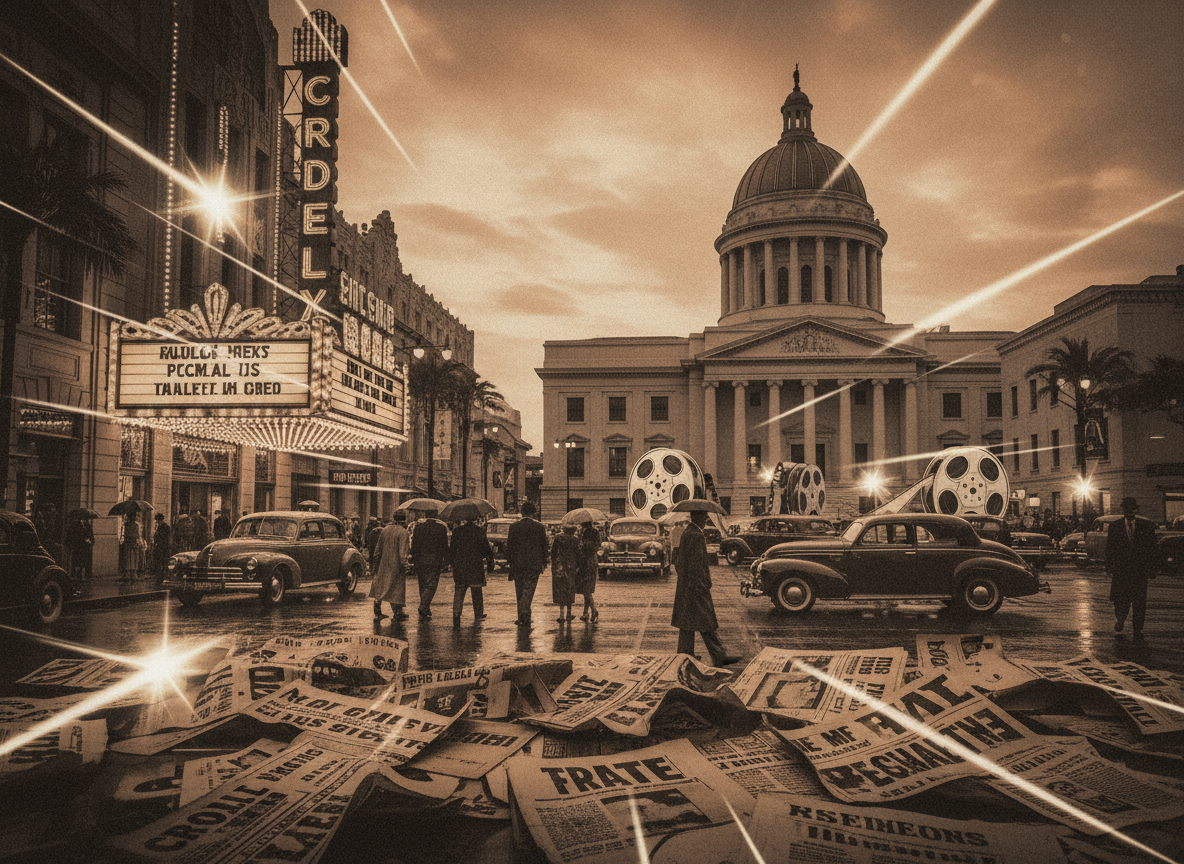
Charlie Chaplin’s departure from the United States was not the result of a single event. His political views, personal controversies and legal disputes had accumulated over many years, making him increasingly controversial in postwar America.
In 1952, while Chaplin was traveling abroad, U.S. authorities revoked his reentry permit. He ultimately settled in Switzerland, where he continued working and living for decades.
Politics and celebrity
Chaplin’s film The Great Dictator had already made his political interests impossible to ignore. Later scrutiny reflected the intense Cold War atmosphere as well as long-running criticism of his private life.
HISTORY’s detailed overview of Chaplin’s controversies and exile provides additional context. Readers can also explore the NewsNationOnline Hollywood archive.
A complicated legacy
Chaplin’s exile remains one of Hollywood’s clearest examples of how celebrity, politics and private controversy can overlap. His films continued to influence cinema even after his relationship with the American establishment had broken down.
आपके लिए सुझाव
