

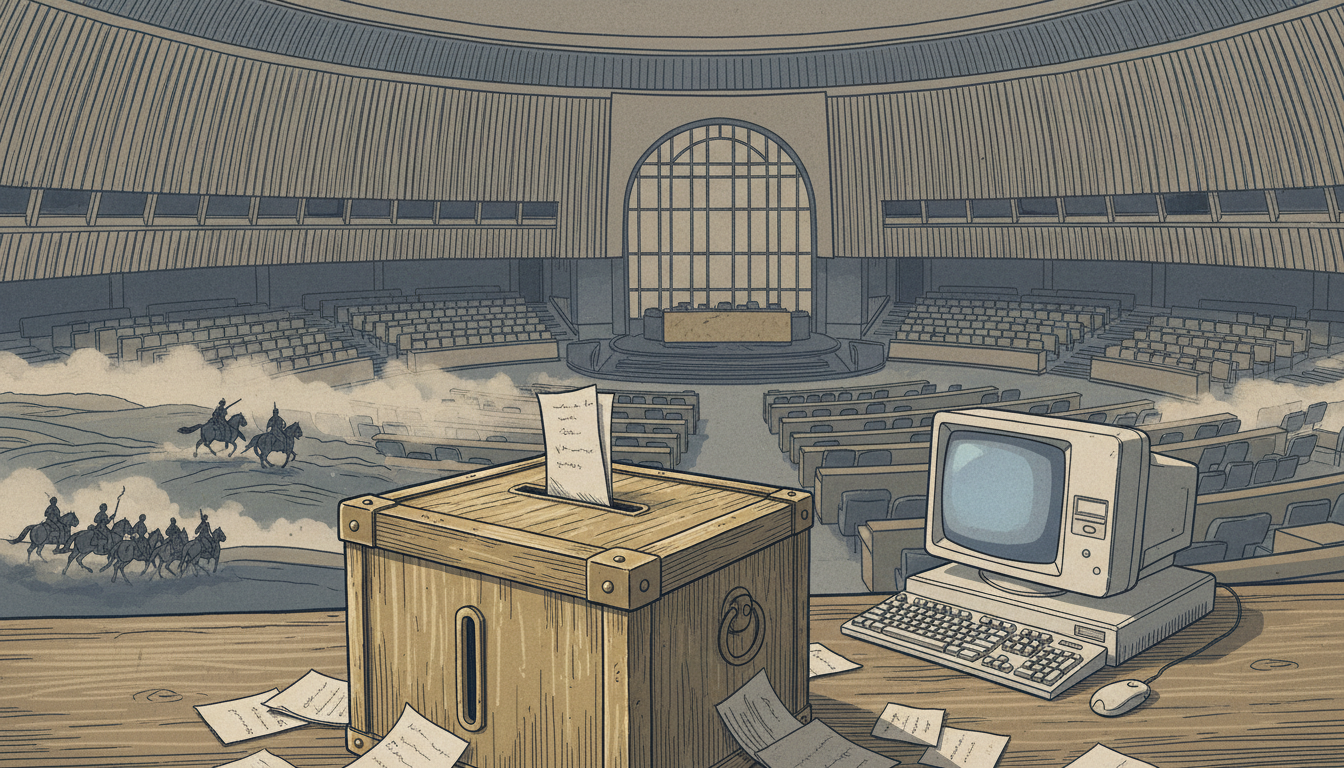
1951: The first votes in independent India’s general election
On October 25, 1951, polling began in remote parts of Himachal Pradesh as India embarked on its first general election after independence. Voters in Chini and Pangi cast ballots before much of the country because winter weather threatened to isolate Himalayan settlements. The national election continued through February 1952. This anniversary marks the start of a prolonged electoral exercise rather than a single nationwide polling day. India’s new Constitution had established universal adult suffrage, an ambitious choice for a country emerging from colonial rule and Partition. Citizens aged 21 and older could vote, subject to the legal rules of the period. Official historical material describes approximately 173 million eligible voters and an election for 489 Lok Sabha seats. The electorate was spread across a vast country with many languages, different levels of literacy and difficult transport conditions. Election officials prepared voter rolls, organized polling stations, transported ballot boxes and explained procedures to first-time voters. Election symbols were particularly important for people who could not read candidate names. Sukumar Sen, India’s first Chief Election Commissioner, led the administrative effort. It required both practical ingenuity and public confidence that the ballot would count. Democratic participation was not equally easy for everyone. Women, remote communities and disadvantaged groups faced barriers shaped by the society of the time. Nevertheless, the decision to give adults the franchise from the republic’s beginning was historically significant. Many other democracies had widened voting rights gradually, while India attempted a broad national vote at once. Jawaharlal Nehru’s Congress party won a commanding majority. But the election’s lasting importance goes beyond the winner. Opposition parties contested seats, citizens expressed preferences and the new republic demonstrated a way to renew political authority peacefully. The story of October 25 belongs as much to ordinary voters and polling workers as to national leaders.1971: The United Nations changes China’s representation
On October 25, 1971, the UN General Assembly adopted Resolution 2758. It recognized the representatives of the People’s Republic of China as the only lawful representatives of China at the United Nations, replacing the representatives of Chiang Kai-shek. The People’s Republic of China accordingly occupied China’s place among the five permanent members of the Security Council. For decades, China’s UN seat had been held by representatives of the Republic of China, whose government relocated to Taiwan following the Chinese civil war. Meanwhile, the People’s Republic governed mainland China. Disagreement over representation reflected the wider Cold War and shifting diplomatic recognition. The 1971 vote changed the organization’s institutional arrangements and altered international diplomacy. There is an important distinction between the resolution’s wording and claims later made about it. Resolution 2758 concerned who represented China at the United Nations. It did not explicitly provide a comprehensive settlement of Taiwan’s sovereignty or its future political relationship with the mainland. Governments interpret its broader implications differently, and the subject remains politically contested. Reading the original UN text is therefore essential. It helps readers distinguish a documented institutional decision from arguments about what that decision should mean today. The episode also demonstrates that representation in international organizations can change as political realities and diplomatic alignments evolve.1854: Balaklava and the Charge of the Light Brigade
On October 25, 1854, British, French and Ottoman forces were fighting Russia during the Crimean War. The Battle of Balaklava, near the allied siege of Sevastopol, became associated with one of military history’s most famous and costly cavalry actions: the Charge of the Light Brigade. Russian forces had attacked positions threatening an allied supply route. British commander Lord Raglan wanted cavalry to prevent Russian troops from taking away captured guns. But the order was ambiguous to officers who could not see the battlefield from Raglan’s vantage point. Lord Cardigan’s Light Brigade advanced toward Russian artillery at the end of a valley, under fire from several directions. According to Britain’s National Army Museum, 247 of the brigade’s 673 men were killed or wounded. Some riders reached the Russian positions, but the formation suffered severe losses. The charge later inspired Alfred, Lord Tennyson’s famous poem, helping turn a battlefield tragedy into a cultural symbol of bravery and obedience. That cultural memory requires balance. The courage of individual soldiers does not erase the mistakes and confusion that exposed them to danger. Nor was the charge the only significant episode at Balaklava; other fighting included the defensive action remembered as the “Thin Red Line.” Historians examine both the soldiers’ conduct and the command decisions behind the disaster.2001: Windows XP becomes publicly available
On October 25, 2001, Microsoft launched Windows XP for the general public. The Computer History Museum identifies the date as the operating system’s release. Its name stood for “experience,” reflecting an era when computers were becoming central to households, offices and internet communication. Windows XP helped unite Microsoft’s home and professional operating-system paths around the Windows NT architecture. Home and Professional editions targeted different users, while a recognizable interface, networking tools and support for popular software made the system familiar across the world. It became part of the everyday experience of a generation learning to use computers. Its popularity also reveals a limit of technological nostalgia. Security needs changed as the internet evolved, and software that once seemed modern eventually became obsolete. Windows XP is important to computing history, but an unsupported operating system should not be considered safe for ordinary connected use today.What these anniversaries teach us
India’s election and the UN vote raise questions about representation and legitimacy. Balaklava illustrates how failed communication can have human consequences. Windows XP shows how technology can reshape routine life. Each event makes more sense when viewed through its causes, limitations and longer-term effects rather than through celebratory slogans alone. Historical anniversaries should encourage curiosity. Dates can be verified; motives often require interpretation; and claims about the present should not be projected uncritically onto the past. The best way to remember October 25 is to read reliable records and consider what they actually establish.Verified sources
- Indira Gandhi National Centre for the Arts: Elections in Independent India.
- United Nations: Milestones in International Cooperation.
- National Army Museum: Battle of Balaklava.
- Computer History Museum: October 25.
- Microsoft: Windows XP launch announcement.
Also read:
➤ Black Friday and Cyber Monday 2026: When Sales Start at Walmart, Best Buy, Target and Amazon
➤ Ban Dangerous Rockets and Deafening Firecracker Bombs Across Maharashtra: Adv. Mahesh Dhannawat
➤ Western Disturbance North India Rain, Snowfall: What to Expect
जालना, महाराष्ट्र और देश-दुनिया की ताज़ा खबरें
सीधे अपनी Facebook फ़ीड में पाएँ — News Nation Online पेज को Follow करें।
👍 Facebook पर Follow करेंसीधे अपनी Facebook फ़ीड में पाएँ — News Nation Online पेज को Follow करें।
आपके लिए सुझाव

Never miss a storyFollow News Nation Online on WhatsApp for breaking news from India and the world.


