

1956: India reorganises states around language and administration
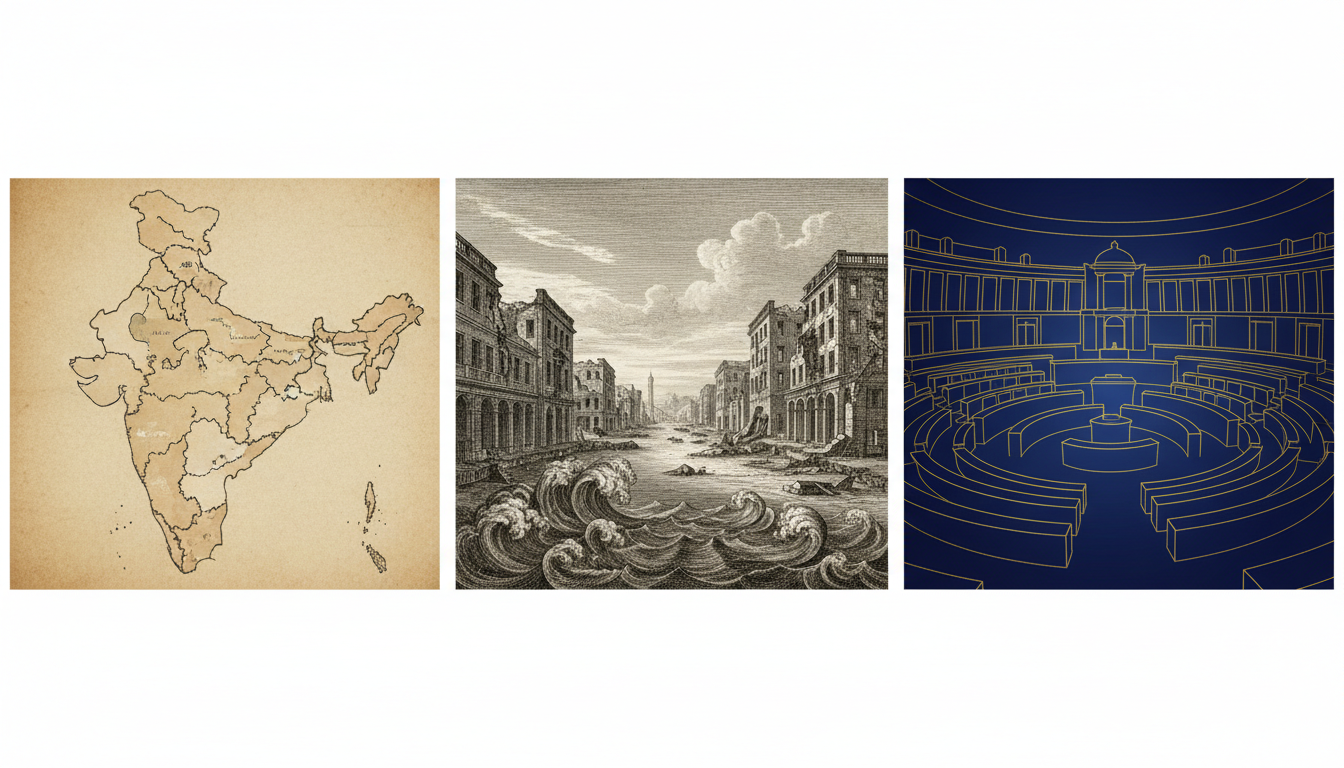
On November 1, 1956, a major redrawing of India’s internal boundaries took effect under the States Reorganisation Act and accompanying constitutional changes. The legislation had been enacted earlier; November 1 was the designated implementation date. This distinction matters: the anniversary marks the new territorial arrangements becoming operative, not the first passage of the law. India inherited a complicated map in 1947. Former British provinces, princely states and other administrative territories did not always match linguistic and cultural communities. Demands for states organised around regional languages reflected aspirations for accessible government, education in familiar languages and democratic representation. The creation of Andhra State in 1953, following a sustained Telugu-speaking movement, showed the political importance of these questions. The 1956 reform sought a broader solution. Kerala emerged by bringing together major Malayalam-speaking areas. Mysore State was enlarged with Kannada-speaking regions; it was renamed Karnataka in 1973. Madhya Pradesh took a new form, while Andhra Pradesh was formed by combining Andhra State with Telugu-speaking areas of Hyderabad State. That Andhra Pradesh configuration changed again when Telangana was created in 2014. Language was central, but geography and administrative viability also influenced decisions. Changing boundaries meant transferring staff, records, property and responsibilities. The effects extended to schools, courts, elections and government services. Linguistic recognition could strengthen participation, but it did not automatically settle border disputes, resource allocation or the rights of linguistic minorities. India’s federal map has continued to evolve, illustrating that political arrangements remain subject to negotiation. There is an important distinction for readers in Maharashtra. The Bombay State was enlarged in 1956; Maharashtra and Gujarat became separate states on May 1, 1960. November 1, 1956, is therefore not Maharashtra’s foundation day. Government records confirm the dates for Kerala’s formation and Karnataka Rajyotsava; the Ministry of Law and Justice publishes material from the 1956 Act.1966: Haryana emerges as Punjab is reorganised
Another Indian anniversary falls on November 1. The Punjab Reorganisation Act, 1966, designated that date for the creation of Haryana and the reorganisation of Punjab. Chandigarh became a Union territory, and certain hill areas were transferred to Himachal Pradesh, then also a Union territory. The legal text specifies the appointed date and provides a reliable reference for the territorial changes. Language was a major factor, but the history cannot be reduced to a simple separation of two uniform populations. Regional political demands, administrative arrangements, religious identities and economic interests shaped the debate. New borders required adjustments in institutions and public services. The anniversary reflects a consequential federal decision rather than the disappearance of competing interests. Chandigarh illustrates the continuing complexity. It has served as the capital of both Punjab and Haryana while remaining a Union territory. Territorial and water-related disputes have persisted, and an account of 1966 should not present either state’s position as a final settlement. The primary legal reference is the Punjab Reorganisation Act on India Code.1755: Earthquake, tsunami and fire devastate Lisbon
On November 1, 1755, a powerful earthquake struck Lisbon, Portugal’s capital, on All Saints’ Day. Many residents were attending religious services when buildings collapsed. Fires spread through the city, and tsunami waves struck coastal areas. The disaster reached beyond Lisbon, affecting other Portuguese locations and Atlantic shorelines. Modern instruments did not exist, so the earthquake’s size is reconstructed from historical descriptions and geological evidence. Casualty estimates also differ. The US Geological Survey describes an estimated magnitude of approximately 8.5–9.0 in research on its far-reaching tsunami. These figures should be treated as estimates rather than measurements taken in 1755. The US National Oceanic and Atmospheric Administration explains how the tsunami travelled across the Atlantic, with effects reported in North Africa, western Europe and the Caribbean. Waves can grow more dangerous near particular coasts depending on local geography. This history remains relevant to tsunami warnings, evacuation planning and the protection of coastal settlements. Lisbon’s reconstruction influenced urban planning and approaches to disaster response. The catastrophe also provoked religious and philosophical arguments about suffering and natural events. Such debates illuminate the intellectual climate of the eighteenth century, but they are not substitutes for geological explanations. Portugal’s National Archive preserves records and visual material concerning the disaster and rebuilding.1993: The Maastricht Treaty formally establishes the EU
The Maastricht Treaty entered into force on November 1, 1993. Signed in the Netherlands on February 7, 1992, and subsequently ratified, it formally created the European Union on the foundations of earlier European communities. The date is confirmed by the EU’s official treaty chronology and the European Parliament. The treaty developed European citizenship, plans for monetary union, cooperation in foreign and justice matters and a greater legislative role for the European Parliament. It did not introduce euro banknotes immediately or eliminate national governments. Subsequent decisions and implementation stages shaped how integration worked in practice. Supporters regarded closer cooperation as a way to strengthen stability and shared influence after decades of conflict and division. Critics questioned sovereignty, democratic accountability and the distribution of economic benefits. These are legitimate dimensions of the treaty’s history. The anniversary is therefore about a significant institutional beginning, not the end of political disagreement.Why November 1 matters
India’s reorganisations show how a democracy can respond to demands for identity and representation while confronting difficult compromises. Lisbon shows how natural hazards can overwhelm a city and inspire new thinking about reconstruction. Maastricht illustrates both the promise and controversy of political cooperation across borders. Accurate history distinguishes a law’s enactment from its effective date, treats uncertain disaster figures cautiously and separates political ambitions from immediate results. For more historical context, read October 31 in History, October 30 in History and the Today in History archive.Also read:
➤ Pikmin 4 Switch 2 Edition Launches With Dandori Academy and Oatchi Voice Commands
➤ NASA Hubble Image Reveals Ancient Messier 30 Star Cluster — and Clues to the Milky Way’s Past
➤ Hozy Arrives on PS5 and Xbox Series on November 9 With Sandbox and Game+ Modes
जालना, महाराष्ट्र और देश-दुनिया की ताज़ा खबरें
सीधे अपनी Facebook फ़ीड में पाएँ — News Nation Online पेज को Follow करें।
👍 Facebook पर Follow करेंसीधे अपनी Facebook फ़ीड में पाएँ — News Nation Online पेज को Follow करें।
Discover more from NewsNation Online
Subscribe to get the latest posts sent to your email.
Never miss a storyFollow News Nation Online on WhatsApp for breaking news from India and the world.
आपके लिए सुझाव


