-
Salt Satyagraha 1930: Why Gandhi Chose Salt to Challenge British Rule
Gandhi chose salt as the focus of the 1930 Satyagraha because it was a basic necessity and the colonial salt laws affected ordinary people.
-
Quit India Movement 1942: Gandhi’s ‘Do or Die’ Call Explained
The Quit India resolution was adopted on 8 August 1942, followed by the arrest of Gandhi and Congress leaders and a nationwide wave of protest.
-
Gandhi at the Second Round Table Conference in London
Gandhi travelled to London in 1931 as the sole Congress representative at the Second Round Table Conference, where India’s constitutional future was debated.
-
Gandhi-Irwin Pact 1931: What the Agreement Changed
Signed on 5 March 1931, the Gandhi-Irwin Pact temporarily ended the first phase of civil disobedience and opened the way for Gandhi’s participation in the Second Round Table Conference.
-
Civil Disobedience Movement: Gandhi’s 1930 Campaign Against British Rule
The Civil Disobedience Movement of 1930 expanded from the Salt Satyagraha into a wider campaign against colonial laws and policies.
-
Dandi March 1930: Gandhi’s Historic Journey to the Sea
Gandhi’s 1930 Dandi March began at Sabarmati Ashram and ended with the symbolic breaking of the British salt law at Dandi.
-
Chauri Chaura 1922: Why Gandhi Suspended the Non-Cooperation Movement
The violence at Chauri Chaura in February 1922 became a turning point in Gandhi’s Non-Cooperation Movement and led to its suspension.
-
Non-Cooperation Movement: Why Gandhi Launched the 1920 Campaign
Gandhi’s Non-Cooperation Movement began in 1920 and sought to challenge colonial rule through organised nonviolent withdrawal of cooperation.
-
Ahmedabad Mill Strike 1918: Gandhi’s Early Labour Satyagraha
The 1918 Ahmedabad textile mill strike became one of Gandhi’s early experiments with Satyagraha in an industrial labour dispute.
-
Kheda Satyagraha: How Gandhi Supported Farmers in Gujarat
The 1918 Kheda Satyagraha brought Gandhi, Vallabhbhai Patel and other organisers into a campaign over land revenue in Gujarat.
-
Champaran Satyagraha: Gandhi’s First Major Movement in India
The 1917 Champaran movement brought Gandhi into a major agrarian dispute in Bihar and became one of the earliest tests of his Satyagraha method in India.
-
Gandhi and Gopal Krishna Gokhale: The Mentor-Student Relationship
Gopal Krishna Gokhale played an important mentoring role in Gandhi’s early years after his return from South Africa, encouraging him to understand India before taking major political action.
-
Gandhi Returns to India: What Happened After 1915?
Gandhi returned to India in January 1915 after more than two decades abroad. His first years back were spent travelling, observing and learning before major mass movements began.
-
Gandhi’s First Satyagraha in South Africa: How the Method Took Shape
The first major Satyagraha campaign developed in South Africa after 1906 as Indians organised against discriminatory registration laws.
-
How Gandhi Developed the Idea of Satyagraha
Satyagraha emerged in South Africa through Gandhi’s experiments with organised resistance, discipline and nonviolent action against discriminatory laws.
-
The Pietermaritzburg Train Incident: What Happened to Gandhi?
The 1893 Pietermaritzburg railway incident became a defining episode in Gandhi’s South African years and is closely associated with his later activism.
-
Gandhi in South Africa: The Experience That Changed His Life
Gandhi spent more than two decades connected with South Africa, where experiences of discrimination helped shape his political and ethical approach.
-
Why Gandhi Went to London: The Story of His Law Studies
In 1888, the young Mohandas Gandhi left India for London to study law at the Inner Temple, beginning a formative three-year period abroad.
-
Mahatma Gandhi’s Childhood: From Porbandar to Rajkot
From his birth in Porbandar to his formative years in Rajkot, Gandhi’s childhood included experiences that later influenced his ideas about truth and personal discipline.
-
The Lasting Legacy of Richard Attenborough’s Gandhi in World Cinema
More than four decades after its release, Gandhi remains notable for its international production, Ben Kingsley’s performance and its extraordinary recreation of Gandhi’s funeral.
-
Why Gandhi’s Funeral Scene Became a Landmark of Pre-CGI Filmmaking
Before digital crowd technology became common, Gandhi used a vast real crowd to recreate the Mahatma’s funeral, producing one of cinema’s most famous practical spectacles.
-
From Rajpath to Raj Ghat: Why Gandhi’s Funeral Still Shapes the Film’s Memory
The real 1948 funeral and the later film recreation at Rajpath remain closely connected through images, memory and the symbolism of Raj Ghat.
-
Gandhi’s Delhi Funeral Scene: What the 1981 Production Documents Reveal
Original production documents from Gandhi’s 1981 funeral shoot reveal the extraordinary planning behind the film’s famous Delhi crowd sequence.
-
How Gandhi Balanced Historical Detail With the Demands of Cinema
Richard Attenborough’s Gandhi had to compress decades of history into a feature film while recreating major events with period detail and large-scale production.
-
Inside the Logistics of Gandhi’s 400,000-Person Funeral Scene
The huge funeral sequence in Gandhi required crowd control, police, transport, medical posts, food and multiple camera units across Delhi’s Rajpath.
-
Motilal Kothari: The Little-Known Figure Who Helped Richard Attenborough Make Gandhi
Motilal Kothari played an important early role in encouraging Richard Attenborough to pursue a film about Mahatma Gandhi.
-
Gandhi and the Oscars: How Richard Attenborough’s Film Made History
Richard Attenborough’s Gandhi became a major awards success, winning eight Academy Awards including Best Picture, Director and Actor.
-
Ben Kingsley as Gandhi: The Casting Choice Behind an Oscar-Winning Performance
Ben Kingsley was Richard Attenborough’s eventual choice to play Mahatma Gandhi in the 1982 film, a role that earned him the Academy Award for Best Actor.
-
Why Gandhi’s Funeral Sequence Was Filmed in Just One Morning
The most famous crowd sequence in Gandhi was filmed in a single morning on 31 January 1981, requiring extraordinary planning and eleven camera crews.
-
Gandhi Funeral Scene: How 300,000 Extras Created a Historic Film Moment
The funeral sequence in Richard Attenborough’s Gandhi brought more than 300,000 extras to Delhi and remains one of cinema’s largest crowd scenes.
-
How Richard Attenborough’s Gandhi Finally Reached the Screen After Two Decades
Richard Attenborough’s Gandhi took nearly two decades to reach the screen. The project began with Motilal Kothari’s determination and became one of cinema’s most ambitious historical productions.
-
Rahul Gandhi writes to Amit Shah, demands accountability for ‘barbaric’ assault on students
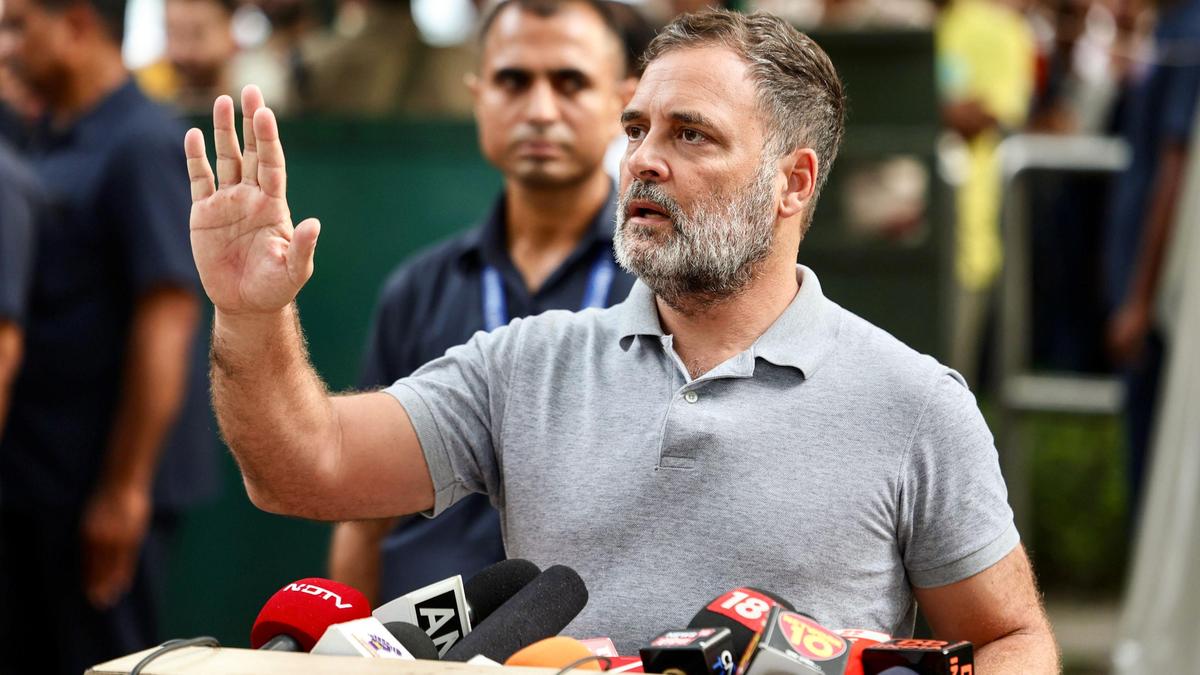
Leader of Opposition in the Lok Sabha Rahul Gandhi has written to Home Minister Amit Shah, demanding accountability for the “barbaric assault” on peacefully protesting students here and asking whether he approved the use of “lethal force”, including pellet guns, against the youth. In his letter to Mr. Shah, Mr. Gandhi said the country is…
-
Amit Shah ‘directly responsible’ for violence against students, says Rahul Gandhi
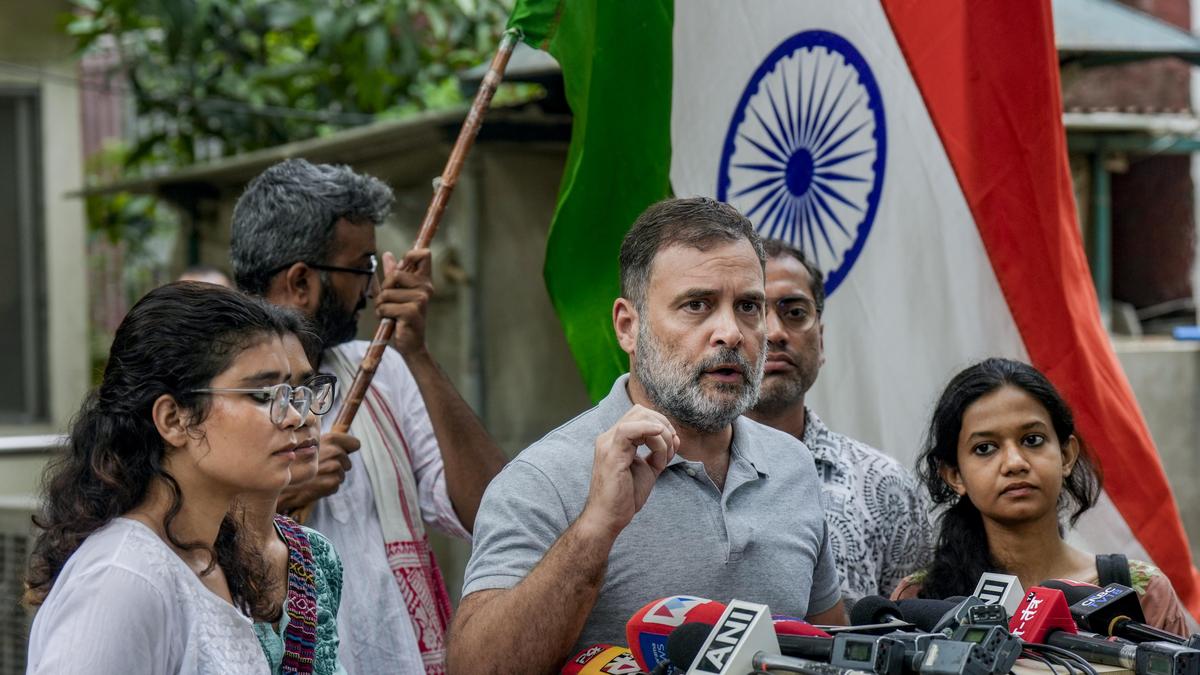
Union Home Minister Amit Shah is “directly responsible” for the violence against students protesting examination paper leaks, Leader of Opposition in the Lok Sabha Rahul Gandhi said on Saturday (July 25, 2026), accusing Mr. Shah of authorising the use of pellet guns against the protesters. All officials responsible for the crackdown will have to be…