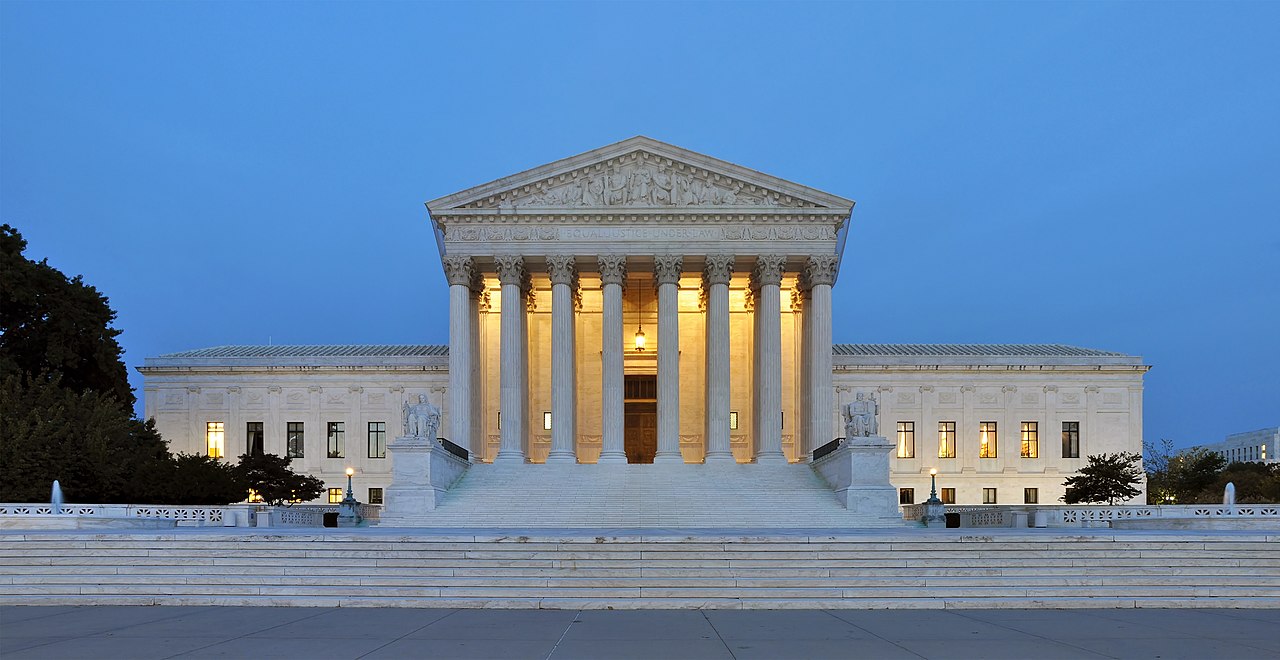
Washington, October 2, 2026: The U.S. Supreme Court is preparing to open a new term on Monday, October 5, with a docket that is set to place major questions about presidential authority, immigration enforcement and the reach of federal power back at the center of American law. The opening comes after a term in which the justices repeatedly confronted disputes involving President Donald Trump’s administration, and several new or pending cases could again define the legal boundaries of executive action.
The Court’s official calendar confirms that the October Term 2026 session begins on October 5. Reuters reports that the nine-member court, which has a 6-3 conservative majority, is entering the term with multiple disputes connected to administration policies already before it or seeking review. That combination makes the new term important not only for lawyers and policymakers in Washington but also for immigrants, universities, military personnel, state governments and other groups whose rights or obligations could be affected by the eventual rulings.
Why the 2026 Supreme Court term matters
The Supreme Court does not decide whether a policy is politically popular. Its task is to resolve legal questions brought before it under the Constitution and federal law. That distinction is especially important in a term containing disputes over the scope of presidential authority. Decisions can determine whether an administration has acted within powers granted by Congress and the Constitution, while also setting precedents that may constrain or empower future presidents regardless of party.
According to Reuters’ October 2 report, the administration has already placed or is seeking to place a range of consequential questions before the justices. These include immigration detention, rapid deportations to third countries and other disputes involving federal executive authority. Some matters have already been accepted for review, while others remain at the petition or appeal stage and therefore should not be treated as guaranteed cases for full argument.
Mandatory immigration detention moves to the center
One of the most closely watched disputes concerns the Trump administration’s policy requiring detention without a bond hearing for many immigrants who entered the United States illegally while their deportation proceedings continue. Reuters reported on October 1 that the Supreme Court agreed to hear the administration’s appeal after lower federal courts ruled against the policy.
The Department of Homeland Security issued guidance in July 2025 taking the position that immigrants covered by the policy could be held for the duration of removal proceedings without the bond process that had been available under the federal government’s earlier interpretation. Because immigration proceedings can continue for extended periods, the legal question has significant practical consequences for people held in federal custody as well as for the government’s detention system.
The dispute comes amid a large volume of litigation. Reuters reported that immigrants have filed more than 73,000 such federal cases in 2026. The litigation reflects a fundamental disagreement over how federal immigration statutes should be interpreted and which detainees are entitled to seek release on bond while their cases proceed. The Supreme Court’s eventual decision could provide a nationwide rule in an area where lower courts have reached important conclusions against the administration’s interpretation.
Another deportation dispute is also before the justices
The Court is also scheduled to consider a separate immigration dispute involving the government’s ability to deport migrants rapidly to countries other than their own. Reuters says arguments in that matter are expected in December. The case raises questions about what opportunity a person must receive to raise a claim that removal to a third country could expose them to harm.
For readers following the broader immigration story, NewsNationOnline previously reported on the Supreme Court and the CHNV humanitarian parole dispute. Our recent roundup of major U.S. news developments involving immigration, the Federal Reserve and foreign policy also provides additional context on how legal and administrative changes are shaping the current American policy environment.
Other executive-power disputes could reach the Court
Immigration is only one part of the term’s developing executive-power story. Reuters reports that the administration has filed appeals involving the ban on transgender people serving in the military, cuts to academic grants, disputes over the installation of federal prosecutors and the suspension of asylum at the U.S.-Mexico border. The Court has not necessarily agreed to hear every one of those appeals, so their procedural status matters: an appeal asking for Supreme Court review is not the same thing as a case the justices have formally accepted for argument.
That distinction is useful for readers following fast-moving Supreme Court coverage. Thousands of petitions can reach the Court, but only a limited number receive full review. The justices may also issue emergency orders while litigation continues in lower courts. Such an interim order can have immediate real-world effects without constituting a final ruling on the ultimate legal merits.
What is actually on the October argument calendar?
The Supreme Court’s official calendars and argument lists show the first sitting beginning October 5. The published October calendar includes cases such as Suncor Energy (U.S.A.) Inc. v. Commissioners of Boulder County, Johnson v. United States Congress, Anderson v. Intel Corp. Investment Policy Committee, Department of Air Force v. Prutehi Guahan, Beaird v. United States, Genalo v. Black and Salazar v. Paramount Global. This demonstrates why the term should not be reduced to a single political storyline: the Court’s work also spans corporate, administrative, employment, federal and other legal questions.
A 6-3 conservative majority, but outcomes are case-specific
The Court currently has six justices generally described as conservative and three generally described as liberal. That composition is an important institutional fact, but it does not by itself determine the result of an individual case. Legal questions can divide justices in different combinations, and disputes over statutory text, jurisdiction, procedure or the appropriate remedy may produce outcomes that do not follow a simple ideological pattern.
Reuters notes that the previous term produced both victories and setbacks for the Trump administration. The new term therefore presents another test of how the Court interprets presidential power when executive actions collide with statutes, constitutional claims or lower-court rulings. Rather than assuming an outcome from the Court’s ideological composition, the more useful approach is to follow the questions presented in each case, the written briefs, oral arguments and ultimately the majority and dissenting opinions.
What happens next?
The justices begin hearing the first arguments on October 5. Additional cases can be added to the term as petitions are granted, while some appeals may be rejected without full argument. Decisions in argued cases generally arrive after briefing and oral argument, with many major opinions released later in the term.
For immigration policy in particular, the Court’s decisions could clarify how federal detention statutes apply nationwide and what procedural protections are required when the government seeks removal to a third country. Other pending appeals could further define the executive branch’s discretion in the military, education funding, asylum and federal appointments.
The central story of the 2026 term is therefore broader than any one administration or lawsuit. It is about how the Supreme Court draws the legal boundary between presidential action, congressional statutes, individual rights and judicial review. Those boundaries can outlast the political circumstances that produced the cases, making the Court’s reasoning as consequential as the immediate result.
Sources and image credit
Reporting is based on Reuters coverage published October 1-2, 2026 and the official Supreme Court October Term 2026 calendar. Featured image: U.S. Supreme Court Building at dusk, photographed by Joe Ravi, via Wikimedia Commons, licensed under CC BY-SA 3.0.
आपके लिए सुझाव
