

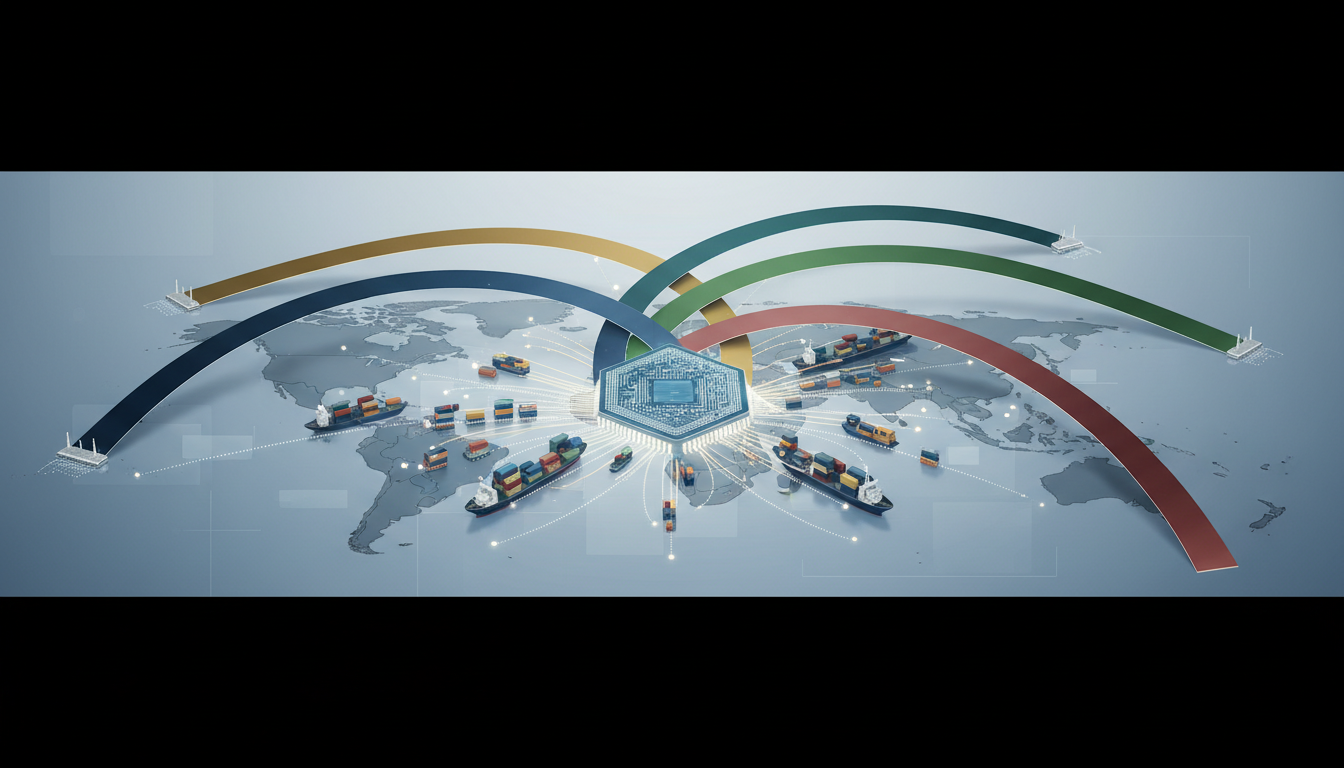
ATLANTA, November 1, 2026. The United States, India, Japan and Australia have agreed to deepen cooperation on critical minerals, semiconductor supply chains, secure shipping routes and trusted artificial intelligence after their Quad foreign ministers met in Atlanta on October 31. The joint statement also raised concerns about export restrictions and other practices that can disrupt vital industries.
The meeting brought together US Secretary of State Marco Rubio, India’s External Affairs Minister S. Jaishankar, Japanese Foreign Minister Toshimitsu Motegi and Australian Foreign Minister Penny Wong. It took place alongside the G20 foreign ministers’ gathering and produced a detailed list of practical initiatives rather than a new trade treaty.
Quad supply chains: why critical minerals matter
Critical minerals are used in batteries, electronic equipment, advanced manufacturing and other industries. If processing or supply is concentrated in a limited number of places, export controls or transport disruptions can create problems for manufacturers far beyond the country where they begin. The four governments say they want more reliable supply chains and less dependence on any single supplier.
Also read: What Is Cyclone Akvan and Which States Will It Hit?
Under the Quad Critical Minerals Initiative Framework announced in May, the partners are working to recover useful minerals from electronic waste and scrap. The October 31 statement welcomed private investment in collection, processing and refining, and noted a US commitment of $10 million to support mineral-recovery facilities and infrastructure in India and ASEAN countries. It also discussed simplifying the cross-border movement of recyclable materials while respecting existing rules.
The ministers voiced concern about economic coercion, arbitrary export restrictions and policies that create industrial overcapacity. Their joint statement did not identify China by name. Those concerns should therefore not be presented as a new formal sanction or a specific trade restriction imposed at the meeting.
More than $85 million for trusted AI cooperation
The Quad said it intends to provide more than $85 million in technical and financial assistance to expand access to trusted AI-related technologies across the Indo-Pacific, including through a Quad accelerator. The statement uses the phrase “Super Intelligence” and clarifies that Australia, India and Japan use it to refer to artificial intelligence.
On semiconductors, the four countries plan to identify potential supply-chain bottlenecks before they interrupt production. Their wider technology agenda also covers secure undersea data cables, digital identity standards and cooperation on advanced telecommunications such as 5G and 6G. These are commitments to coordinate and develop projects, not evidence that all proposed systems have already been built.
Shipping routes, cyber scams and disaster response
The ministers stressed the importance of navigation rights and the safe movement of vessels through the Strait of Hormuz, the Red Sea and the Bab el-Mandeb Strait. These routes matter to energy shipments and global trade. The statement also highlighted cooperation on port infrastructure in Fiji and a maritime observer mission that sailed from Chennai to Perth between September 25 and October 7.
Another focus was online fraud. The Quad condemned criminal scam networks and human trafficking linked to forced online fraud, promising to strengthen action against transnational operators. On emergency response, the partners cited plans for observers from Australia, Japan and the United States to attend India’s humanitarian-assistance exercise in November.
What happens after the Atlanta meeting?
The ministers announced a Quad Business Leaders’ Forum to connect companies, policymakers and industry specialists. Export-credit agencies are also expected to meet in Tokyo on November 18 to explore financing cooperation. The next Quad leaders’ summit was welcomed in principle, but the joint statement did not give a confirmed date.
For international readers, the key development is a shift from broad strategic language toward projects involving recycling, chips, digital networks, maritime safety and disaster preparedness. Their eventual effect will depend on funding, implementation and participation by businesses and regional governments.
Related coverage: G20 foreign ministers’ Atlanta meeting, India–US trade negotiations and India’s manufacturing and supply-chain diversification.
Official sources: Quad Joint Press Release, October 31, 2026 (Japan’s Foreign Ministry, PDF); Japan’s Foreign Ministry meeting summary.
Also read:
➤ US Plans Ukraine-Russia Peace Talks in Abu Dhabi on November 10–11
➤ NHS Winter Plan: GP Extra Support for 300,000 Patients
➤ Western Sahara: UN Peacekeeping Mission Begins Winding Down
सीधे अपनी Facebook फ़ीड में पाएँ — News Nation Online पेज को Follow करें।
आपके लिए सुझाव


