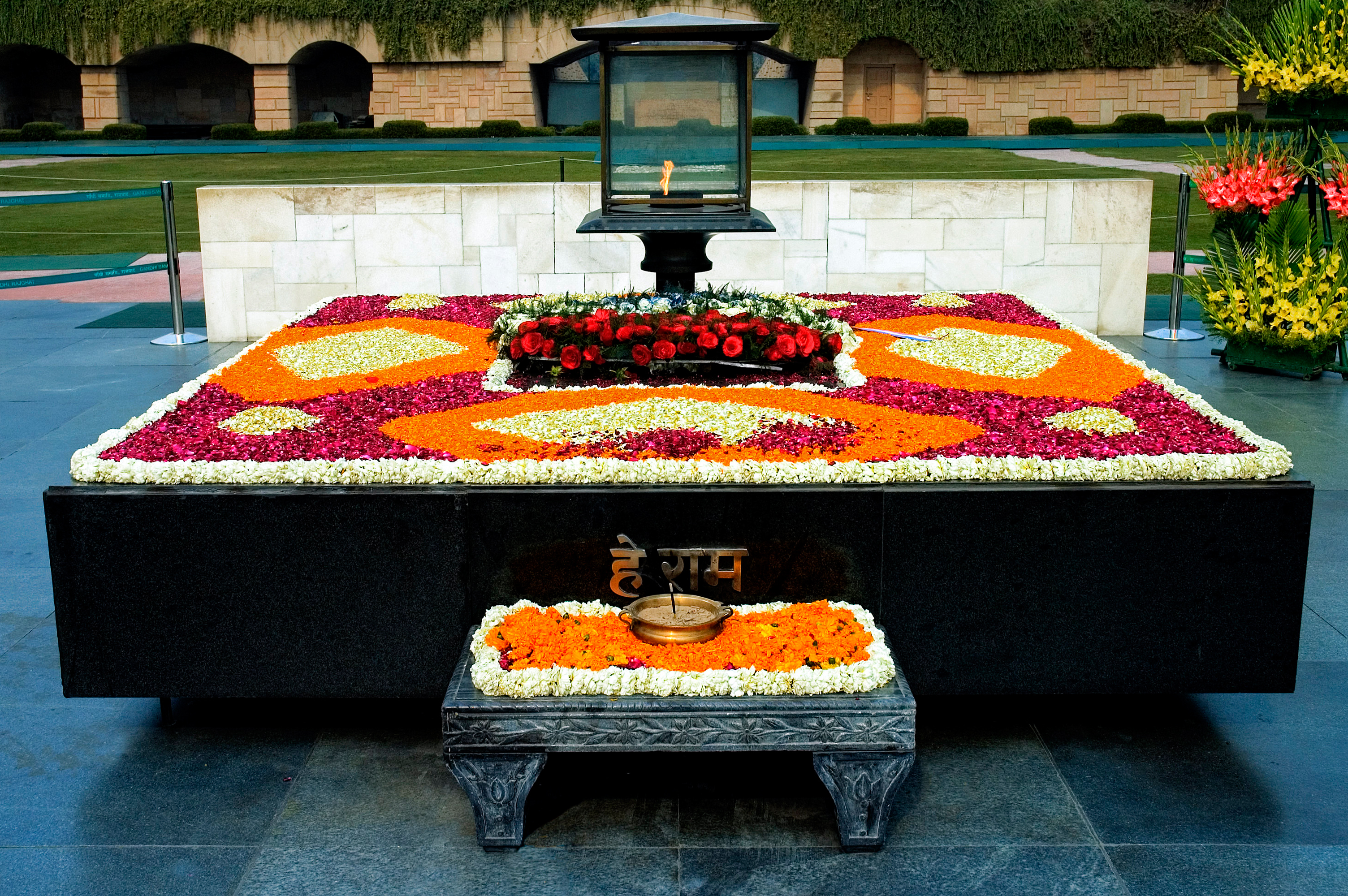
Image: Raj Ghat memorial, Wikimedia Commons. CC BY-SA 2.0, photo by Humayunn Niaz Ahmed Peerzaada.
Richard Attenborough’s Gandhi has remained a reference point for historical filmmaking since its 1982 release. Its legacy rests on several connected achievements: a long development process, a large international production, Ben Kingsley’s central performance and an unprecedented attempt to recreate Gandhi’s funeral.
A film that crossed national boundaries
The project was British-led but deeply connected to India. The British Film Institute records the importance of Indian cooperation and the involvement of India’s National Film Development Corporation in financing the production.
That combination allowed the film to present Indian history through an international cinematic production while filming many sequences in India.
A production remembered for scale
The funeral sequence remains one of the clearest examples of the film’s ambition. Guinness World Records lists more than 300,000 extras, while BFI material gives an estimate of around 400,000.
The sequence was shot on 31 January 1981, used eleven camera crews and produced thousands of metres of raw film for a final screen sequence of roughly 125 seconds.
Ben Kingsley’s defining performance
The BFI notes that Attenborough considered several established actors before choosing Ben Kingsley. Kingsley’s performance became central to the film and earned him the Academy Award for Best Actor.
Sony Pictures Museum records that the film won eight Oscars overall, including Best Picture and Best Director.
Why the film continues to attract attention
The movie remains interesting not only because of its subject but because of how it was made. It belongs to an era when large historical productions depended heavily on physical locations, practical crowds, period costumes and large crews.
Its production history also illustrates the difficulty of turning a complex political and social biography into a single dramatic narrative.
A starting point, not the whole historical record
For students and readers, Gandhi can serve as an introduction to the period, while historical biographies, archives and scholarly works provide additional context. The distinction is important because a feature film necessarily compresses and interprets historical events.
Explore the BFI retrospective, the Sony Pictures Museum collection and the Guinness World Records entry.
NewsNationOnline readers can continue with our coverage of Motilal Kothari’s role in the film’s early history and the production documents behind the funeral shoot.
आपके लिए सुझाव
