
October 28 connects four defining episodes in world history: the dedication of the Statue of Liberty in 1886, the Fascist March on Rome in 1922, Italy’s invasion of Greece in 1940, and the diplomatic breakthrough that eased the Cuban Missile Crisis in 1962. They belong to very different eras, yet together they raise enduring questions about freedom, political coercion, national resistance and the decisions that can avert catastrophe.
1886: The Statue of Liberty is dedicated in New York Harbor
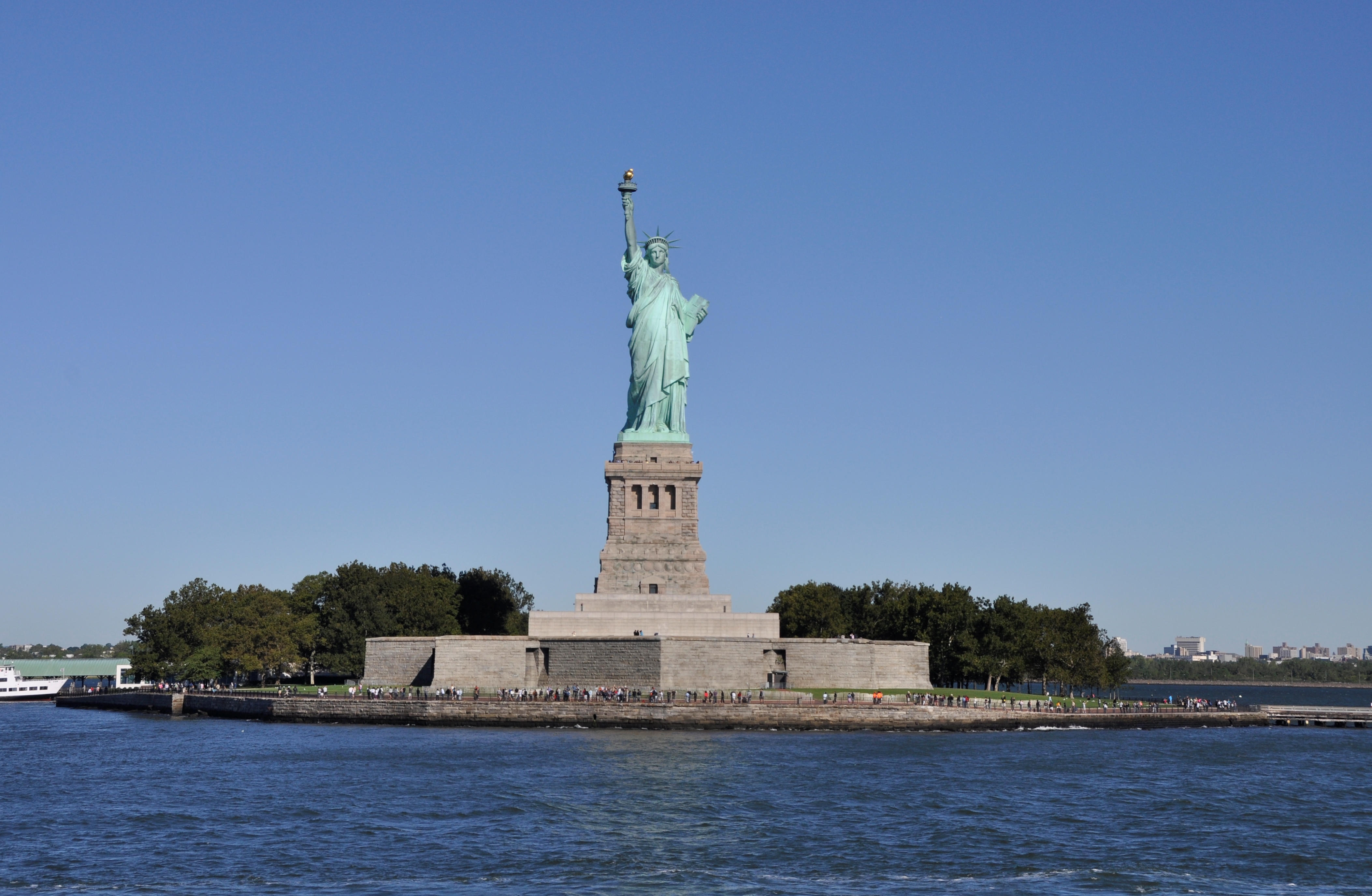
On October 28, 1886, US President Grover Cleveland formally accepted the Statue of Liberty at a dedication ceremony on what was then called Bedloe’s Island. France had given the monument to the United States as a symbol of friendship and liberty. Its official name, “Liberty Enlightening the World,” expressed an ideal that would acquire new meanings as generations of immigrants arrived in New York Harbor.
The French sculptor Frédéric Auguste Bartholdi designed the copper figure, while engineers associated with Gustave Eiffel developed its internal support system. The statue was built in France, dismantled for transport and shipped to New York in 1885. Its reassembly depended on the completion of an American-funded pedestal. This was an international undertaking that required fundraising, technical skill and public enthusiasm on both sides of the Atlantic.
National Park Service records describe rain, fog, crowded waterfront celebrations and a procession through New York on dedication day. The ceremony was impressive, but its promise of universal liberty did not reflect equal rights for everyone living in the United States. Women still lacked nationwide voting rights, racial discrimination persisted, and immigration policies would later become more restrictive. Notably, women’s suffrage campaigners protested their exclusion from the official island ceremony.
The statue eventually became associated with Emma Lazarus’s poem “The New Colossus,” which was added to the pedestal in 1903, and with the millions who passed through nearby Ellis Island after the immigration station opened in 1892. Its meaning developed through public debate rather than remaining fixed in 1886. Today, it is both a landmark and a reminder that ideals of freedom must be examined alongside the lived experience of those excluded from them.
1922: The March on Rome threatens Italian democracy
The night of October 27–28, 1922 marked a turning point in Italy. Armed Fascist supporters known as Blackshirts mobilised in the so-called March on Rome, pressing the existing government to yield power to Benito Mussolini. The movement drew strength from intimidation, political violence and fears of instability following the First World War. It was not an ordinary electoral victory or a peaceful march for reform.
Prime Minister Luigi Facta sought emergency measures, but King Victor Emmanuel III refused to approve martial law. The king instead invited Mussolini to form a government. The transition unfolded over several days; Mussolini did not become prime minister simply by marching into the capital on October 28. The United States Holocaust Memorial Museum traces how a coalition government was followed by the systematic dismantling of parliamentary democracy and the creation of a dictatorship by 1925.
This anniversary illustrates how institutions can be weakened when political elites accommodate threats of violence. Fascist propaganda later presented the episode as an irresistible popular uprising, but the historical record reveals the decisive roles of intimidation, elite calculation and constitutional failure. Its consequences extended far beyond Italy, helping shape the authoritarian politics of interwar Europe.
1940: Greece rejects an ultimatum and faces invasion
On October 28, 1940, Fascist Italy attacked Greece from Italian-controlled Albania after presenting an ultimatum demanding access to strategic positions. Contemporary American diplomatic telegrams record that the ultimatum was delivered during the early morning and that hostilities began shortly afterward. Greece refused the demand. The anniversary is commemorated as Ohi Day, from the Greek word meaning “no.”
The popular story often compresses the rejection into a single dramatic word. Historical accounts indicate that Greek leader Ioannis Metaxas responded in French in diplomatic conversation; the famous “Ohi” became a powerful public expression of resistance. It is important to distinguish the remembered slogan from the exact words spoken. Metaxas himself ruled an authoritarian regime, a complication that should not be erased from the history of Greece’s resistance to invasion.
Greek forces initially repelled the Italian offensive and pushed into Albania. This was a major embarrassment for Mussolini’s government, which had underestimated the terrain, logistics and resolve of its opponent. The outcome did not mean Greece escaped the war: Nazi Germany invaded in April 1941, followed by occupation and profound civilian suffering. Greece’s Jewish communities, particularly the community of Thessaloniki, suffered devastating persecution and murder during the occupation.
The anniversary honours resistance to aggression while also inviting a fuller account of the war’s human cost. Greece’s wartime story includes soldiers, civilians, resistance movements, occupation, famine and difficult postwar political divisions. Celebrating courage need not simplify those realities.
1962: A breakthrough in the Cuban Missile Crisis
On October 28, 1962, Soviet leader Nikita Khrushchev announced that Soviet offensive missiles would be removed from Cuba. The message followed days of extraordinary tension after US reconnaissance uncovered missile sites on the island. President John F. Kennedy had announced a naval quarantine on October 22, and the world feared that a confrontation between nuclear-armed powers could spiral into war.
The John F. Kennedy Presidential Library records the October 28 announcement as the end of the crisis’s most dangerous thirteen-day phase. In return for the removal of Soviet missiles, the United States publicly pledged not to invade Cuba. A separate, initially secret understanding also concerned the later withdrawal of American Jupiter missiles from Turkey. The settlement involved diplomacy, pressure and compromise rather than a simple, one-sided surrender.
Declassified records show that American officials welcomed the announcement but remained cautious about implementation and verification. Cuba’s own security concerns were part of the wider conflict, even though the principal negotiations occurred between Washington and Moscow. The risk of accidents, misjudgments and rapid escalation had been real. The episode helped underline the value of reliable communication and arms-control efforts during the Cold War.
What October 28 teaches
These anniversaries should not be treated as interchangeable triumphs. The Statue of Liberty represents a promise whose fulfilment has been contested. The March on Rome shows the dangers of political violence and institutional surrender. Greece’s wartime refusal demonstrates resistance under unequal conditions, while the Cuban settlement shows that restraint can be as consequential as force. Reading original records helps separate what happened on a date from the stories later built around it.
Verified sources and further reading
- US National Park Service: Statue of Liberty facts and Liberty Island chronology.
- United States Holocaust Memorial Museum: Mussolini and the March on Rome.
- US State Department diplomatic telegram, October 28, 1940 and historical background on Greece.
- JFK Presidential Library: October 28, 1962 and Executive Committee record.
- Read related coverage: October 27 in History and October 22 in History.
Discover more from NewsNation Online
Subscribe to get the latest posts sent to your email.
आपके लिए सुझाव










Leave a Reply