
October 2026 update: The first six-year USMCA joint review already took place on July 1, 2026. The United States did not agree to extend the agreement in its current form. USMCA remains in force, and the review process moves to annual meetings unless all three countries agree to an extension. The next review is scheduled for 2027. The USTR has opened a public consultation, with written comments due January 12, 2027. Sources: USTR notice and Reuters legal analysis.
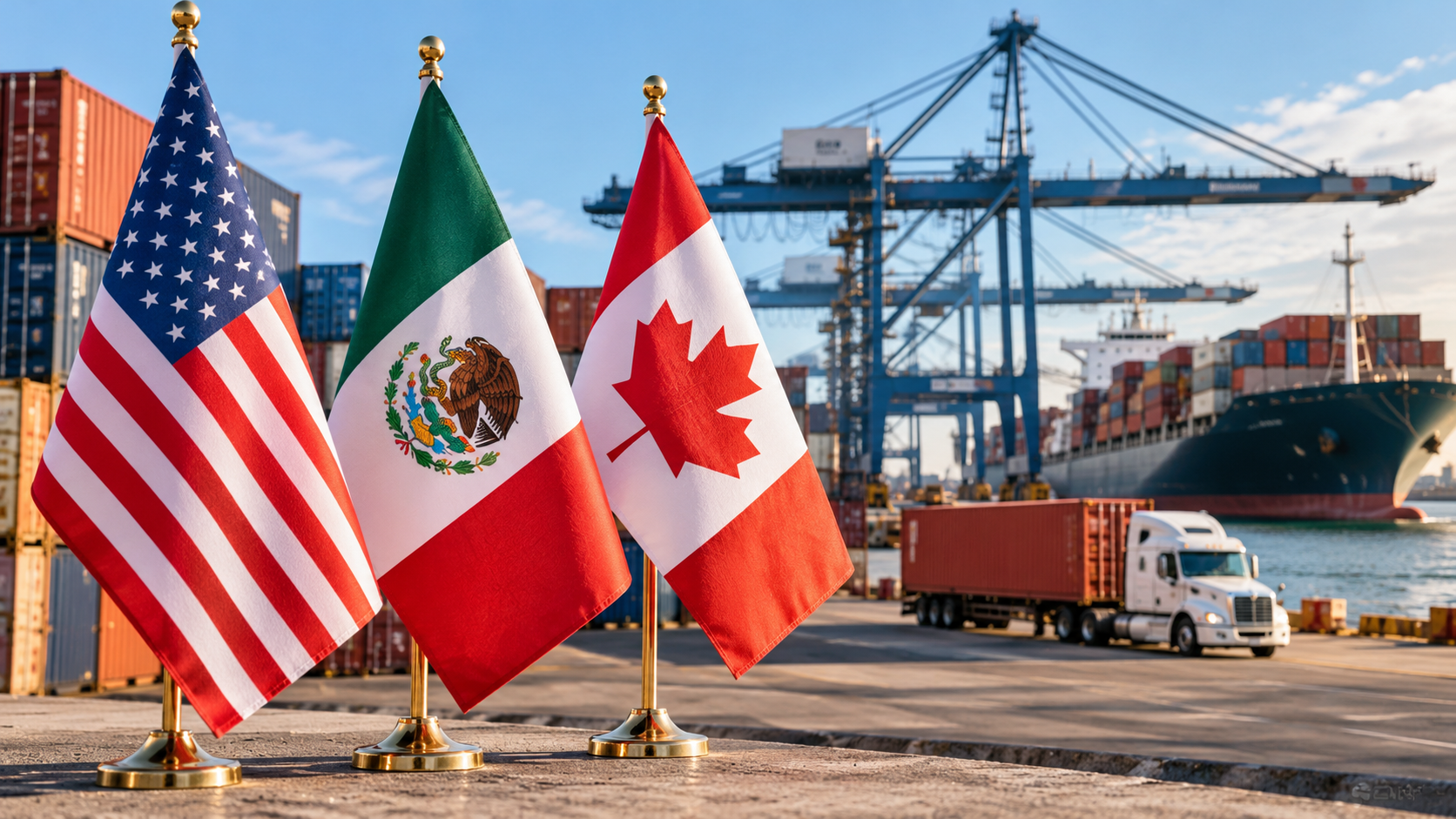
NewsNationOnline | North America Desk | October 21, 2026. The United States–Mexico–Canada Agreement, known as USMCA, is the trade framework connecting three major North American economies. It replaced the North American Free Trade Agreement in 2020. Its provisions address trade in goods, rules of origin, labor commitments, intellectual property, digital trade and dispute settlement. Preferential treatment is not automatic for every shipment: goods must meet applicable origin and documentation rules. Automotive requirements are especially important because parts and assembly work cross borders. For consumers, the agreement shapes the environment in which firms source products, but it does not guarantee low prices or eliminate all tariffs. Policymakers periodically review its operation, making official government updates essential for exporters.
Why this matters
Why it matters: North America’s economies are tightly linked through investment, production, migration and consumer markets. A change in one country can affect decisions elsewhere, although the scale and timing of any impact depend on the details. Readers should distinguish confirmed policy, reported negotiations and longer-term projections.
What happens next
What readers should watch: official government announcements, regulatory texts, court decisions where relevant, and updated data. Early headlines can describe intentions rather than rules that have actually taken effect. Businesses and households should check the latest primary-source guidance before acting.
The bigger picture
The wider context: trade, technology, employment and energy decisions often create both opportunities and costs. Policymakers must balance economic growth with affordability, security and predictable rules. This explainer provides context rather than personal legal, immigration or financial advice.
Source and further reading: Read the original report or official guidance. Explore more coverage on NewsNationOnline.
Related North America coverage: USMCA review | US–Mexico trade negotiations.
When did USMCA begin?
USMCA entered into force on July 1, 2020, replacing NAFTA. The agreement covers trade in goods, customs procedures, digital trade, intellectual property, labour and environmental commitments. Preferential tariff treatment is not automatic: goods must satisfy applicable rules of origin and other requirements. In the automotive industry, components may cross borders multiple times before a finished vehicle reaches consumers, making origin documentation especially important.
USMCA includes labour provisions and a facility-specific rapid-response mechanism addressing certain collective-bargaining and freedom-of-association violations. It also contains a digital-trade chapter covering electronic commerce and certain cross-border data issues, subject to exceptions and domestic law.
The agreement provides for a joint review six years after its July 2020 entry into force, making 2026 an important review year. A joint review is not the same as automatic termination. Businesses should monitor official decisions, customs guidance, tariff measures and dispute-settlement outcomes rather than assuming that a political announcement immediately changes legal obligations.
For consumers, the agreement can influence supply chains and business costs, but retail prices also depend on energy, transportation, exchange rates and market conditions. Official source: Office of the US Trade Representative: USMCA.
Who benefits from preferential tariffs? The agreement can reduce trade barriers for qualifying goods, but eligibility depends on origin and product-specific requirements. Exporters need appropriate records, while importers remain responsible for declarations made to customs authorities.
Small-business implications: Smaller exporters can benefit from predictable procedures but may face proportionally higher compliance costs. Before entering a new market, a business should check classification, labelling, customs rules, tax obligations and sector-specific standards.
Environmental and labour commitments: USMCA contains enforceable obligations and cooperation provisions that go beyond traditional tariff schedules. How effectively these provisions operate depends on implementation and dispute-resolution mechanisms. The official agreement text is the best starting point for detailed questions.
Discover more from NewsNation Online
Subscribe to get the latest posts sent to your email.
आपके लिए सुझाव






Leave a Reply