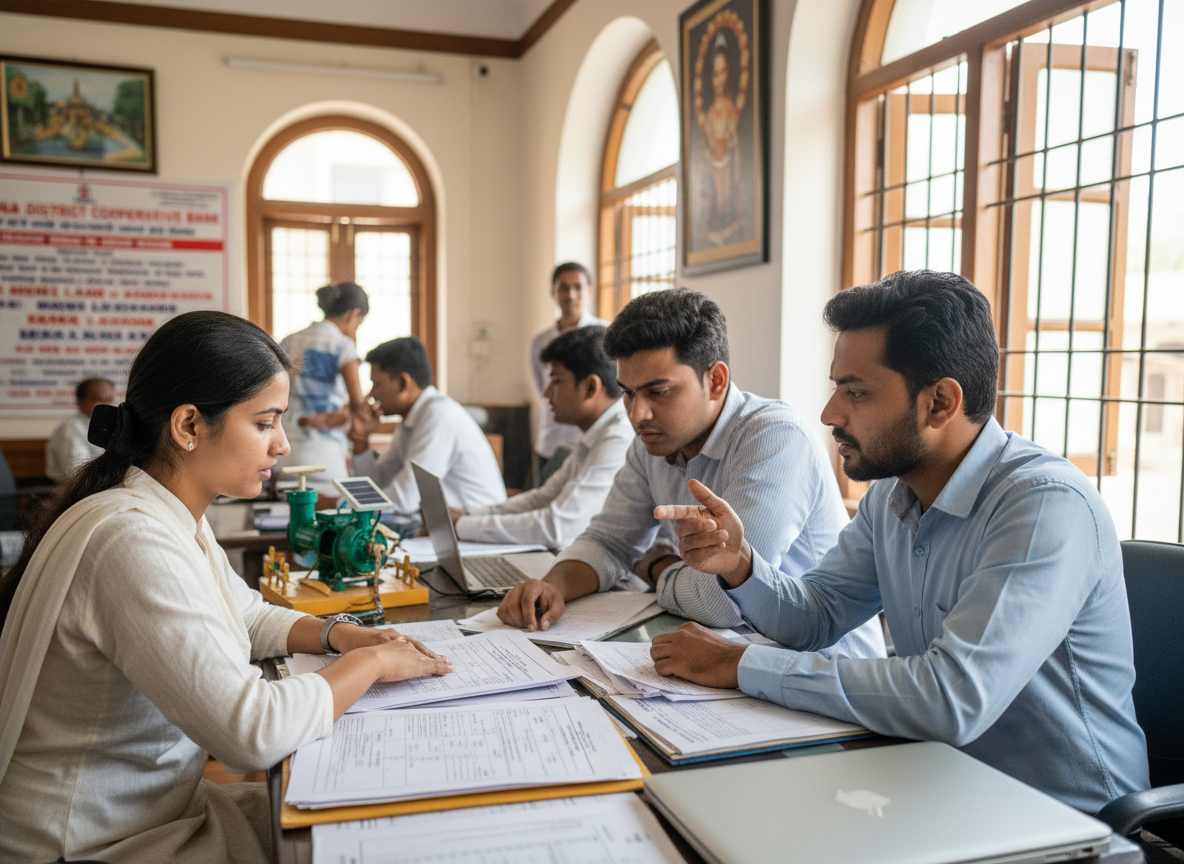
JALNA, October 3, 2026: Banks have approved 137 loan proposals under the Chief Minister Employment Generation Programme in Jalna during the 2026–27 financial year, giving aspiring entrepreneurs a potential route into self-employment at a time when the district’s rural economy is under pressure.
The number is an important milestone, but it also shows how much work remains. The district has a broader target of 1,300 cases for the year, according to information reported by the District Industries Centre.
How the 137 approvals break down
Jalna had been given a target of 780 loan approvals under the programme. The District Industries Centre recommended 569 proposals to banks, of which 111 were approved. The District Khadi and Village Industries Board recommended 247 proposals, of which 26 received bank approval. Together, those approvals total 137.
Officials have encouraged eligible young people from rural and urban areas to apply online and have asked banks to process viable proposals promptly. The programme is intended to help applicants establish businesses and self-employment ventures that can support their own income and, in some cases, create jobs for others.
Why self-employment matters in a drought year
Jalna’s current drought conditions make non-farm income especially relevant. When agricultural earnings fall, household spending often weakens across the local economy. Small manufacturing, repair services, food processing, retail and other enterprises can diversify income sources, although every business carries risk and requires realistic planning.
Why this matters for Jalna
Jalna is navigating several pressures at once in October 2026: drought-related crop losses, low water availability, fodder concerns, employment needs and major infrastructure decisions. Each issue affects household finances differently, but together they shape the district’s economic outlook. Agriculture remains central to rural demand, so a weak farm season can also affect shops, transport, services and small businesses.
For that reason, developments involving credit, infrastructure and administration deserve attention alongside daily breaking news. A loan approval can create a new enterprise; a railway alignment can improve regional connectivity while disrupting individual landholdings; and a government decision can have different effects across talukas. Useful coverage needs both the immediate event and the context needed to understand what happens next.
Readers should distinguish targets from completed outcomes. A project target is not the same as work delivered, a recommended loan is not the same as money disbursed, and a proposed acquisition is not the same as possession of land. Tracking those stages prevents headline numbers from being mistaken for final results.
Approval is not the final step
A bank approval should not be confused with a fully operational enterprise. Applicants may still need to complete documentation, margin requirements, training or other scheme and lender conditions before disbursement. After disbursement, the business must still purchase equipment, obtain any necessary registrations and build a customer base.
For that reason, the most useful performance measure is not only the number of proposals approved but also how many receive funds, begin operations and remain viable. Employment created by those businesses is another important outcome.
How interested applicants should proceed
Applicants should use the official Maharashtra CMEGP portal and carefully check eligibility, required documents and the permitted project structure. They should avoid agents who promise guaranteed sanction in exchange for unofficial payments. A credible project report should reflect realistic costs, expected sales and the applicant’s ability to operate the proposed business.
Deputy Commissioner Yogesh R. Saranikar of the District Industries Centre has urged interested youth to use the scheme and banks to cooperate in meeting the district target.
How NewsNation Online is following the story
This report is based on information available as of October 3, 2026. We are prioritising developments that can be tied to named officials, police records, court proceedings, government information or clearly attributed reporting. Where a matter remains disputed, the article identifies it as an allegation rather than converting a claim into a fact.
Local stories often develop in stages. A new official order, court hearing, police statement, bank disbursement, land-acquisition notice or administrative response can materially change the picture. The article will therefore be updated when reliable new information becomes available. Readers with a direct interest in a legal, financial or administrative process should rely on the relevant official notice for deadlines and individual eligibility.
This approach also helps Google Discover readers understand why a development matters without turning the article into speculation. The goal is to combine the newest verified event with enough local background to make the story useful to readers who may not have followed earlier coverage.
Verification and updates
Because this is a developing local story, later official information may add names, dates, procedural steps or clarifications that were not available in the first reports. NewsNation Online will preserve the distinction between what authorities have confirmed and what a complainant, witness or other party alleges. That is especially important in crime and administrative coverage, where premature conclusions can be misleading.
Readers should also note that procedural developments can occur quickly. Police custody, notices, hearings, administrative inquiries, loan processing and other stages have their own timelines. The latest verified update should therefore be read together with the date and time of publication.
Source: The 137 approvals and district targets were reported by Pudhari on October 2. Applicants should verify current rules on the official CMEGP portal before applying.
आपके लिए सुझाव
