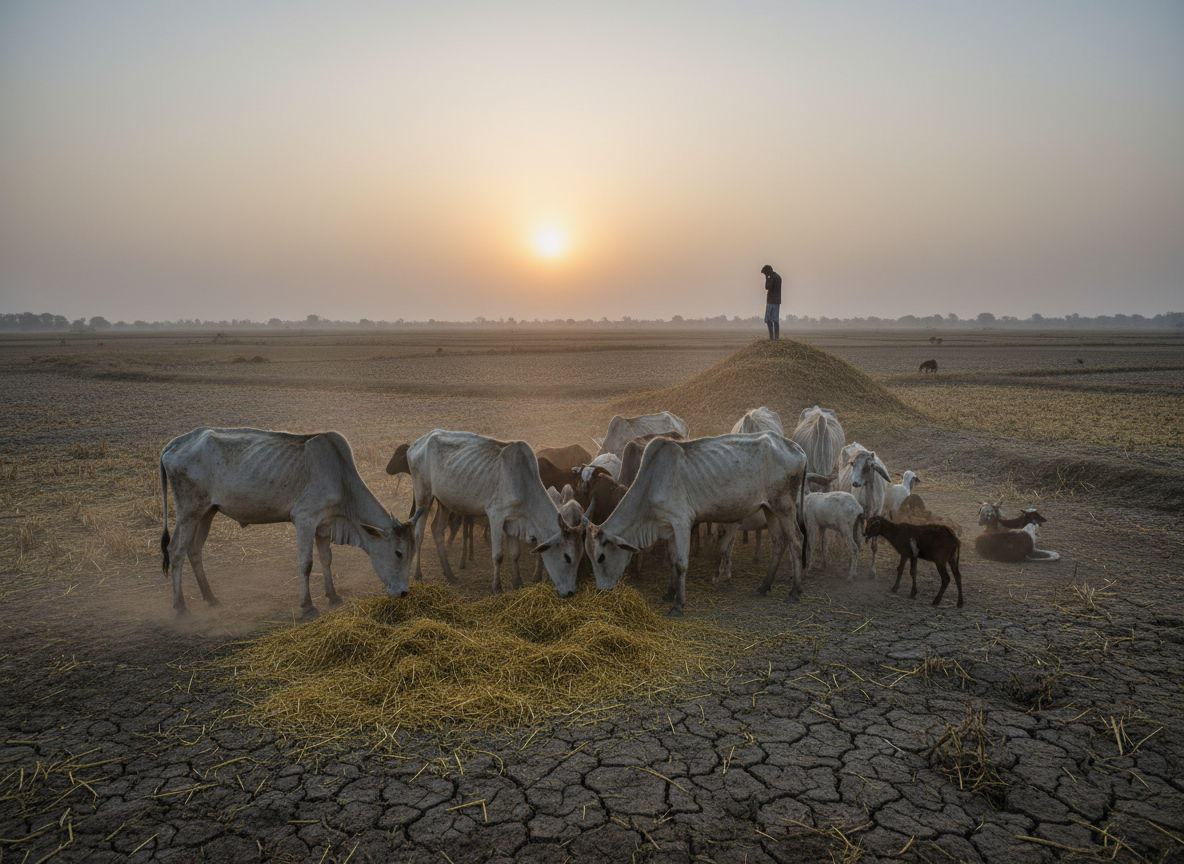
JALNA, October 3, 2026: Jalna’s drought stress is spreading from crop fields to cattle sheds as farmers and livestock owners confront a shrinking supply of green fodder and water. Local reporting estimates the district has around 8.3 lakh animals, making fodder planning a major part of the drought response.
Farmers say available green fodder could become increasingly tight in the coming months. Poor rainfall has affected not only food and cash crops but also grass and fodder crops, while failed crops produce less residue for feeding cattle.
District restricts fodder movement
Collector Ashima Mittal has ordered restrictions on taking dry or green fodder and specified animal feed outside Jalna district. The order, effective from shortly after midnight on September 30 until further orders, covers green fodder, kadba, chopped fodder, straw, total mixed ration and other feed. Authorised government, animal-husbandry or district-administration movements are exempt.
The objective is to keep locally available stocks inside the district. The administration has warned that severe fodder scarcity could threaten livestock and create wider social and law-and-order problems.
Why Jalna’s 2026 drought context matters
Jalna entered October after a weak southwest monsoon. Regional data reported that the district received about 74.7% of its normal June-to-September rainfall. Across Marathwada, rainfall was only 65.5% of normal, and water tankers had already returned to many settlements. Jalna itself had 22 tankers deployed as the monsoon period ended. These numbers help explain why the administration is treating crop damage, drinking water, groundwater and livestock fodder as connected problems rather than isolated issues.
The state has placed Jalna’s eight talukas under drought-related measures. For rural households, the consequences can accumulate quickly: a failed kharif crop reduces farm income, crop residue for cattle becomes scarce, wells receive less recharge, and the next sowing decision becomes harder. Families may also have to spend more on purchased fodder, drinking water, farm inputs and debt servicing at precisely the time their agricultural earnings are under pressure.
The district administration has responded with village-level farmer meetings, field crop assessments and contingency planning. Officials say the purpose of the farmer-dialogue programme is both to understand local needs and to explain compensation and welfare measures. The information gathered village by village is expected to guide decisions on issues that can be resolved locally and those that require district or state-level intervention.
Water, fodder and the next crop cycle
Water availability will be one of the most important indicators to watch through the coming months. Reservoir storage, groundwater levels and tanker demand will determine how severe the dry season becomes. Farmers also need reliable information before committing money to the next crop cycle. Where irrigation is uncertain, crop choice and acreage can change significantly.
Livestock adds another layer to the challenge. Cattle are productive assets for many farm families, providing milk, draught power or supplementary income. When green fodder and crop residue become scarce, maintaining animals becomes expensive. Jalna has therefore restricted the transport and sale of fodder outside the district, with authorised government or animal-husbandry movements exempted. The measure is intended to preserve local stocks as the dry period develops.
For readers, the key distinction is between measures already announced and relief that has actually reached individual beneficiaries. Crop assessment, eligibility verification, sanction and payment are separate stages. NewsNation Online will continue to distinguish official decisions from demands made by farmers or political organisations.
Why livestock protection is economically important
For many households, cattle are not separate from the farm economy. Dairy animals generate regular cash income, bullocks may support farm work, and livestock can serve as an asset during financial stress. Distress sales caused by fodder shortages can therefore have effects lasting beyond one drought season.
Farmers are seeking timely arrangements for fodder and water, including intervention before stocks become critically low. Early planning matters because transporting and distributing large quantities of feed becomes more difficult once shortages are widespread.
The next signals to watch are local fodder prices, cattle-market activity, water availability and any official decision on fodder depots or camps. These will indicate whether preventive measures are keeping pace with the developing shortage.
What readers should keep in mind
Drought coverage can change quickly as fresh field surveys, reservoir readings and government orders are issued. A rainfall percentage describes the season at district level; it does not by itself prove the loss on an individual farm. Similarly, an announced relief measure does not mean every farmer automatically qualifies. Eligibility, assessment and implementation remain important. News reports should therefore distinguish measured conditions, official orders, farmers’ demands and political claims.
October will be a key month for Jalna because authorities now have a clearer picture of the completed monsoon while the district still has months of dry weather ahead. Decisions taken now on drinking water, fodder, crop assessment and rural support could determine how much pressure communities face later in the season. Residents should use official district notices for applications and emergency arrangements and treat unverified social-media messages about compensation or deadlines with caution.
Sources: Pudhari reported the livestock and fodder situation on October 1. Follow NewsNation Online Jalna and the official Jalna district website.
आपके लिए सुझाव
