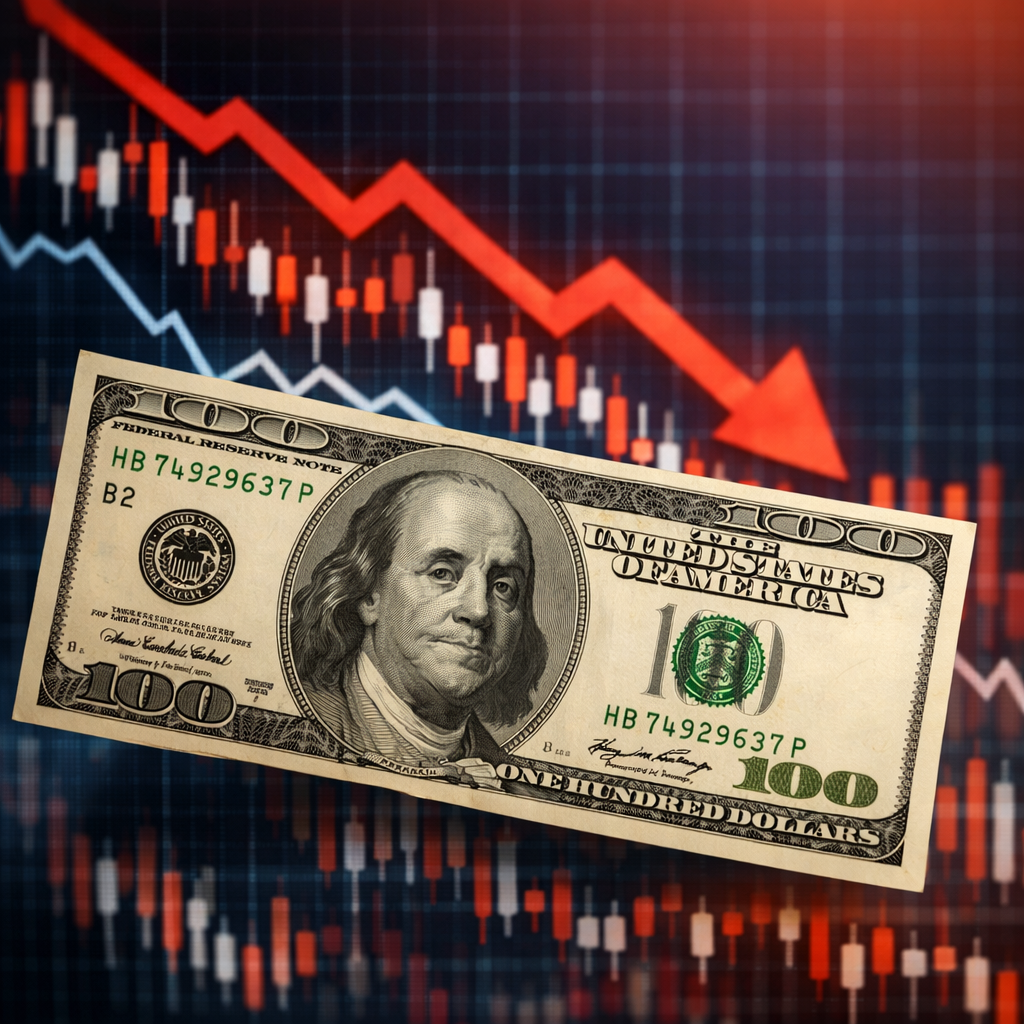
USD Outlook: Fed Uncertainty and Ceasefire Tensions Keep Dollar Under Pressure – ING Report
📍 Global Markets | Date: April 11, 2026
The US Dollar (USD) has shown signs of stability in recent sessions, but downside risks remain, according to a latest report by ING strategists Francesco Pesole, Frantisek Taborsky, and Chris Turner. The report highlights that the dollar is currently being influenced by two major factors—uncertainty around Federal Reserve policy and ongoing geopolitical tensions in the Middle East.
⚖️ Fed’s ‘Dual Risk’ Scenario Adds Market Uncertainty
The report points out that the outlook for the Federal Reserve remains unclear, creating volatility in currency markets.
- If the US economy weakens, the Fed may cut interest rates sooner
- If inflation persists, the Fed may keep rates higher for longer
This “dual risk” scenario has left investors uncertain about the future direction of monetary policy. Analysts believe there is increasing scope for a dovish shift, which could weigh on the US Dollar.
🌍 Ceasefire Tensions Driving Short-Term Dollar Moves
Geopolitical developments, particularly related to Iran and ceasefire violations, have also played a key role.
- Reports of ceasefire breaches have provided temporary support to the USD
- However, the situation remains fragile and unpredictable
- Escalation → boosts USD (safe-haven demand)
- De-escalation → pressures USD
Markets are currently reacting sharply to geopolitical headlines, contributing to increased volatility.
⛽ Oil Supply and Global Risks in Focus
ING analysts emphasize that several global factors will influence the dollar’s trajectory:
- Stability in the Middle East
- Conditions in key oil routes like the Strait of Hormuz
- US economic indicators, especially inflation and employment data
A stable oil supply and easing tensions could lead to renewed weakness in the dollar.
📉 Outlook: Stable for Now, But Downside Risks Persist
According to ING:
- The USD has stabilized in the short term
- However, there is still potential for renewed weakness
- A dovish Fed combined with easing geopolitical risks could push the dollar lower
What are the main factors currently influencing the US Dollar according to the recent ING report?
The recent ING report states that the US Dollar is primarily influenced by uncertainty around Federal Reserve policy and ongoing geopolitical tensions in the Middle East.
- USD’s Short-term Stability and Downside Risks: The US Dollar has recently stabilized, but ongoing risks such as Federal Reserve policy uncertainty and geopolitical tensions keep its outlook precarious.
- Federal Reserve’s Dual Risk Scenario Creates Market Volatility: Uncertainty about whether the Fed will cut interest rates or maintain high rates due to inflation or economic weakness fuels market volatility.
- Geopolitical Tensions in the Middle East Influence USD Movements: Short-term fluctuations in the US Dollar are driven by Middle Eastern ceasefire breaches and escalation fears, with safe-haven demand increasing during escalation.
- Global Oil Supply and Risks Affect USD Trajectory: Factors such as Middle East stability, key oil route conditions, and US economic data significantly influence the dollar’s future performance.
- Near-term Outlook: Stabilization with Persistent Downside Risks: While the US Dollar is currently stable, potential dovish Fed policies and easing geopolitical tensions may lead to further decline.
Why does the Federal Reserve’s outlook create market uncertainty?
The Federal Reserve’s outlook creates uncertainty because its future monetary policy direction is unclear, with risks of either interest rate cuts if the economy weakens or maintaining higher rates if inflation persists, leading to potential market volatility.
How do geopolitical tensions in the Middle East impact short-term movement of the US Dollar?
Geopolitical tensions in the Middle East affect the US Dollar by causing short-term movements: reports of ceasefire breaches can temporarily boost the dollar as a safe-haven asset, while escalation increases pressure on the dollar due to geopolitical uncertainty.
What global factors could lead to a decline in the US Dollar’s value?
A decline in the US Dollar could result from stability in the Middle East, easing tensions in key oil routes like the Strait of Hormuz, and positive US economic indicators such as low inflation and strong employment data.
What is the overall outlook for the US Dollar in the near term according to ING?
The ING outlook suggests that the US Dollar has stabilized in the short term but remains vulnerable to downside risks, such as a dovish Federal Reserve policy and easing geopolitical tensions, which could cause the dollar to weaken further.
👉 Read more global market updates: https://www.newsnationonline.com/category/business
👉 Latest international news: https://www.newsnationonline.com/category/global-markets
👉 ING Official Website: https://www.ing.com
👉 Federal Reserve Information: https://www.federalreserve.gov
Discover more from NewsNation Online
Subscribe to get the latest posts sent to your email.
आपके लिए सुझाव