

1066: The Battle of Hastings changes the English crown
On October 14, 1066, the army of Harold Godwinson met the invading forces of William, Duke of Normandy, near Hastings in southern England. Harold had become king earlier that year after Edward the Confessor died without a direct heir. William disputed the succession and crossed the English Channel with an army. The battle lasted much of the day. Harold was killed, his army collapsed, and William moved toward the crown, which he received at Christmas in 1066. The outcome was far more consequential than a change of monarch. Norman rule transformed landholding, the political elite and administrative practices. Over time, Norman French also shaped the vocabulary and institutions of English society. Yet historians distinguish the broad result, which is well documented, from uncertain details. The familiar claim that Harold died from an arrow in the eye, for example, should not be treated as an uncontested eyewitness report. English Heritage’s detailed account explains the battlefield evidence and competing narratives.1912: Theodore Roosevelt survives an assassination attempt
On October 14, 1912, former US president Theodore Roosevelt was shot in Milwaukee while campaigning for the presidency as the Progressive Party candidate. The bullet lodged in his chest. Remarkably, he went ahead with his speech before receiving further medical treatment. The US National Park Service documents the attack, the campaign setting and the speech. Roosevelt survived, but his party did not win the election: Democrat Woodrow Wilson became president. The story is often retold as a display of extraordinary personal toughness. A more useful historical reading also recognizes the fragility of public debate when political violence enters an election. Roosevelt’s candidacy reflected a major split in the Republican Party, and the attempt on his life took place during an already intense campaign. The episode therefore belongs to the history of both American elections and the risks faced by public figures. See the National Park Service biography.1947: Chuck Yeager breaks the sound barrier
On October 14, 1947, US Air Force pilot Charles ‘Chuck’ Yeager flew the rocket-powered Bell X-1 beyond Mach 1 in controlled, level flight above California’s Mojave Desert. It was a breakthrough in experimental aviation. The aircraft, nicknamed Glamorous Glennis, had been built to investigate a region of flight where shock waves, stability and control raised difficult engineering questions. NASA records the X-1 reaching about Mach 1.06 at roughly 43,000 feet. The achievement was not simply the result of one daring flight. The Bell Aircraft company, the US military and the National Advisory Committee for Aeronautics, NASA’s predecessor, contributed design work, instruments and analysis. Data from successive tests informed the development of later high-performance aircraft. Because the speed of sound changes with air conditions, ‘Mach 1’ is a more precise description than a fixed speed in miles or kilometres per hour. NASA’s X-1 history explains the programme and why its evidence mattered.1956: B. R. Ambedkar’s Buddhist conversion in Nagpur
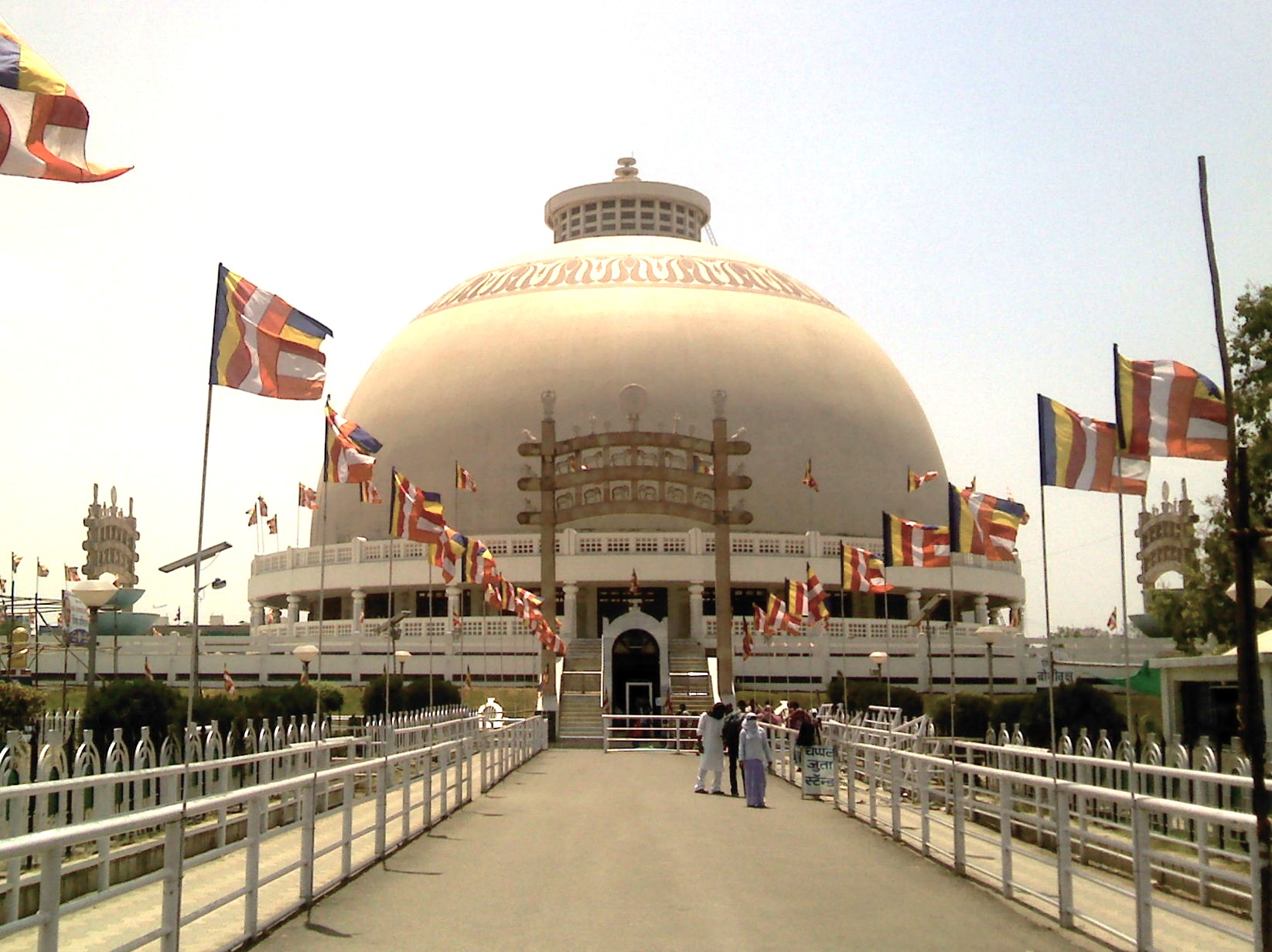
On October 14, 1956, Dr B. R. Ambedkar embraced Buddhism at a public ceremony in Nagpur, together with a vast gathering of followers. The site is remembered as Deekshabhoomi. The Nagpur district administration identifies the occasion as the beginning of the Dalit Buddhist movement, while records published by India’s Ministry of External Affairs preserve Ambedkar’s earlier announcement that the ceremony would take place on that date. Ambedkar’s decision emerged from decades of campaigning against caste discrimination and for equal citizenship. As a leading architect of India’s Constitution, he knew that formal rights and everyday social equality did not always advance at the same pace. For followers, conversion represented a collective assertion of dignity and the freedom to choose a religious path. The anniversary remains important to social history, Buddhist communities and discussions about liberty of conscience. Read the Nagpur government’s history page and the published Ambedkar documents.1964: Martin Luther King Jr. learns of his Nobel Peace Prize
The Nobel Peace Prize was announced for Martin Luther King Jr. on October 14, 1964, in recognition of his nonviolent campaign for civil rights. Stanford University’s King Institute records that his wife, Coretta Scott King, telephoned him with the news while he was resting in an Atlanta hospital. The formal presentation took place in Oslo on December 10, 1964. That distinction matters in an anniversary article: October 14 marks the announcement, not the ceremony. King’s leadership grew from a wider movement of organizers, church groups, students and communities challenging racial segregation. His approach drew inspiration from Mahatma Gandhi’s principles of nonviolent resistance. International recognition did not end racism or settle the struggle for voting rights and equal treatment, but it amplified the movement’s message. The Stanford King Institute and the official Nobel archive document the award.2012: A supersonic freefall from the stratosphere
On October 14, 2012, Austrian skydiver Felix Baumgartner jumped from a balloon-borne capsule nearly 39 kilometres above New Mexico. During freefall he exceeded the speed of sound without the powered aircraft that had enabled Yeager’s earlier achievement. The feat required careful planning for pressure, temperature, oxygen and parachute deployment. Its scientific and safety questions were different from those of the Bell X-1, although both events pushed the limits of human flight. The Stratos project account confirms the date and mission.Why the distinctions matter
October 14 illustrates why reliable history writing must do more than collect striking headlines. The Hastings battle involved conquest and loss of life; Ambedkar’s gathering concerned rights and religious choice; King’s prize recognized a movement; Yeager’s test generated scientific data; and the two aviation stories involved very different technologies. Each event should be understood in its own setting, without implying that all achievements were alike or that every popular detail is certain. For the previous day’s edition, read October 13 in History. Explore more verified anniversaries in our Today in History archive. Featured image: Deekshabhoomi in Nagpur, the modern memorial associated with Ambedkar’s October 1956 ceremony; it is not an image of the original gathering.Also read:
➤ Jalna Teacher-Poet Sheetal Bhoite Wins Praise at State Literary Meet in Amravati
➤ 250 Years of Heritage: The Spiritual, Architectural and Educational Importance of Shri Sant Narharinath Maharaj Sansthan
➤ Paralives Tops One Million Sales as Indie Studio Prepares Its First Major Update
जालना, महाराष्ट्र और देश-दुनिया की ताज़ा खबरें
सीधे अपनी Facebook फ़ीड में पाएँ — News Nation Online पेज को Follow करें।
👍 Facebook पर Follow करेंसीधे अपनी Facebook फ़ीड में पाएँ — News Nation Online पेज को Follow करें।
Discover more from NewsNation Online
Subscribe to get the latest posts sent to your email.
Never miss a storyFollow News Nation Online on WhatsApp for breaking news from India and the world.
आपके लिए सुझाव


