How to Verify AI-Generated News Images. A practical guide to checking the provenance and context of potentially synthetic news images. This article is an evergreen explainer, not an unverified breaking-news claim.
Why appearances are unreliable
AI-generated images can resemble documentary photographs. Unusual fingers, shadows or text can be clues, but their presence or absence does not establish authenticity.
Find the earliest credible source
Look for the original photographer, agency, official account or publisher. A cropped screenshot without a publication date is weak evidence.
Verify the claim, not just the pixels
Check whether the claimed event, location and date are supported by primary statements and independent reporting. Genuine old images are often recycled with misleading captions.
Provenance information
Content Credentials can document the history of supported media, but not every authentic image carries them. Learn more from Content Credentials.
Reverse image search
Search for earlier versions and alternative crops. A match may establish prior use but does not by itself prove every part of a caption.
Limits of detection tools
Automated AI-image detectors may make mistakes. Treat their results as supporting clues rather than conclusive evidence.
Editorial disclosure
Clearly label illustrations and synthetic images. Avoid presenting a fabricated scene as an actual event. Read more publisher guidance.
Editorial note: Verify current policies, prices and dates with the relevant primary source before making decisions.
Start with the specific claim attached to the image
Before examining pixels, write down exactly what the caption alleges. Does it claim to show a particular person, location, disaster, protest or date? An image can be genuine while the accompanying caption is false. Separating the visual evidence from the written assertion helps editors avoid confirming a claim that the image cannot establish.
Search for the original publication
Look for the earliest credible publication of the photograph, including the photographer’s name, agency credit, original caption and date. Newsroom archives, official government accounts and primary organizational statements may help. A screenshot circulating in a messaging group is not equivalent to the original file, and repost counts do not establish authenticity.
Use reverse-image searches carefully
Reverse-image search can uncover older appearances, alternate crops or the original context of a photograph. Try more than one crop if the first search returns nothing. A match from several years ago can disprove a claim that an unchanged image depicts today’s event. A lack of matches, however, does not prove that the picture was generated by AI.
Check location clues without overclaiming
Signs, building layouts, road markings, landscape features and weather conditions may help assess a claimed location. Compare them with reliable maps or official imagery where available. Do not publish a precise location inferred from weak visual clues, especially when doing so could endanger people or expose private information.
Look for inconsistent details, but avoid the ‘six fingers’ shortcut
Distorted hands, unreadable text, inconsistent reflections and impossible geometry can raise questions. Modern image-generation systems may avoid these errors, while ordinary photographs can contain motion blur, compression artifacts or unusual perspectives. No single visual anomaly is a dependable authenticity test.
Understand what metadata can and cannot tell you
Original files sometimes contain camera, date or editing metadata. Social platforms often strip metadata, and metadata can be altered. Its presence may offer a lead for further checking, while its absence is not proof that an image is synthetic. Treat metadata as one piece of evidence, not the final answer.
What Content Credentials mean
Content Credentials are a provenance framework that can carry information about the origin and edits of supported media. Their usefulness depends on how the content was created, exported and distributed. A file without credentials is not necessarily fake. The initiative’s official resources at contentcredentials.org explain the approach and its limitations.
Why AI detection scores are not verdicts
Automated detectors can produce false positives and false negatives. Image resizing, recompression, editing and differences between generation models may affect results. Editors should not label a person, photographer or news organization as dishonest solely because a detector returns a high probability score.
Verify the underlying event independently
Search for primary statements, contemporaneous reporting and other independently sourced photographs or video. If an image allegedly shows a major public event, credible evidence of the event should not depend entirely on that single picture. Distinguish between corroborating the event and confirming that a particular image depicts it.
Contact the creator or publisher when possible
Ask the credited photographer or organization for the original caption, location and circumstances. If a newsroom receives a picture from a reader, it can request the unedited original and a description of how the image was captured. The response should be weighed alongside other evidence rather than accepted automatically.
How to caption illustrative images responsibly
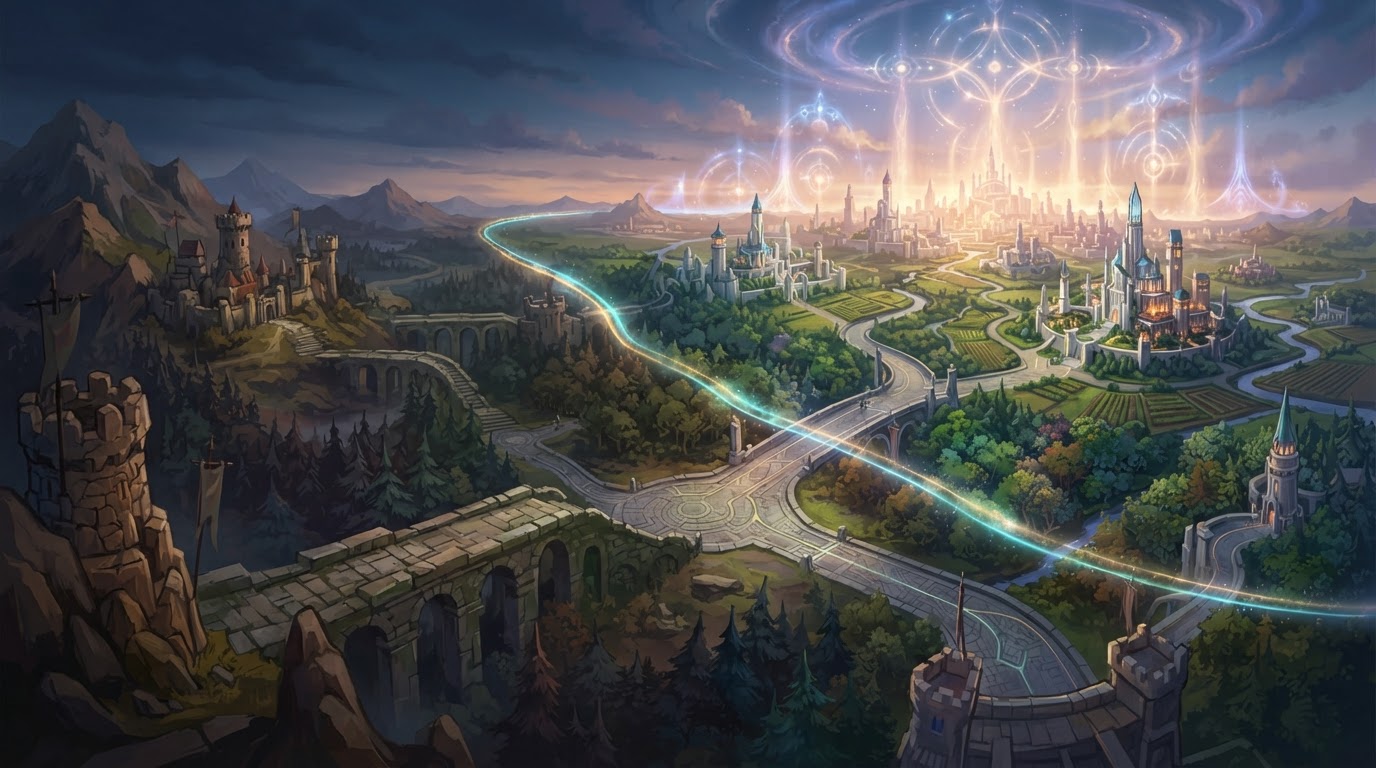
An AI-generated illustration can be useful for explaining an abstract topic, but it should be clearly labeled as illustrative or synthetic. Do not place a generated image next to a breaking-news headline in a way that makes readers believe it is documentary evidence. Likewise, archive photographs should carry accurate dates and context.
What to publish when verification remains incomplete
Use cautious language such as ‘the image has not been independently verified’ rather than declaring it authentic or fabricated without adequate evidence. Explain which claims have been confirmed, what remains unknown and why the image is relevant to the story. In sensitive cases, withholding the image may be the better editorial decision.
A newsroom verification checklist
Record the original claim, source URL, first known publication, credited creator, claimed date and place, results of reverse searches, corroborating sources and any unresolved questions. Keep notes so another editor can repeat the process. If a correction becomes necessary, update the article transparently and preserve the factual distinction between the event and the image.
For related editorial guidance, see our publisher-quality explainer. This article describes verification methods; it does not authenticate any particular viral image.
सीधे अपनी Facebook फ़ीड में पाएँ — News Nation Online पेज को Follow करें।
Discover more from NewsNation Online
Subscribe to get the latest posts sent to your email.
आपके लिए सुझाव